


Key facts about coffee and trying to conceive
- Female fertility: Studies do not clearly link moderate coffee consumption to lower fertility.
- Recommended amount: EFSA considers up to 200 mg of caffeine per day safe during pregnancy, which is about two cups of filter coffee. This limit is also a sensible guide while you are trying to conceive.
- Miscarriage risk: Higher caffeine intake during pregnancy is associated with an increased risk.
- Implantation: In humans, there is no clear evidence that coffee prevents implantation.
- Men: High amounts, energy drinks and caffeinated soft drinks stand out most negatively, but the results are inconsistent.
- IVF and ICSI: A large meta-analysis found no link with treatment success, although some individual studies report poorer outcomes with high intake.
How much caffeine is okay when trying to conceive?
While you are trying to conceive, it is best to aim for no more than 200 mg of caffeine per day. A pregnancy often goes unnoticed in the first few weeks, and the stricter recommendation already applies during that time.
EFSA considers up to 200 mg per day safe for pregnant and breastfeeding women, while the WHO advises pregnant women who consume more than 300 mg per day to reduce their intake. 200 mg is roughly equal to two cups of filter coffee, two and a half espressos, three and a half cups of black tea, two and a half cans of energy drink or five cans of cola.
Does coffee affect female fertility?
Based on current studies, moderate coffee consumption in women is not clearly linked to lower fertility. A US cross-sectional study of 2,099 women found no significant association between coffee or caffeine and infertility (Zhang et al., 2024). However, a study of this kind cannot prove cause and effect.
In women with one or two previous pregnancy losses, neither caffeine levels in the blood nor usual low to moderate intake were linked to the chance of conceiving (Purdue-Smithe et al., 2022). A meta-analysis also found no clear link with natural fertility or time to pregnancy, although this finding was based on only a few studies (Lyngsø et al., 2017).
For more everyday steps, read our guide to nutrition when trying to conceive and our tips for getting pregnant.
Does coffee increase the risk of miscarriage?
Yes, studies associate higher caffeine intake during pregnancy with an increased risk of miscarriage. In the meta-analysis by Lyngsø et al. (2017), the relative risk was 37% higher at 300 mg per day and 132% higher at 600 mg per day. The authors even suggest that the upper limit of two to three cups may be too high.
A larger meta-analysis linked each additional cup of coffee per day to a 3% higher risk. For each additional 100 mg of caffeine per day, the risk rose by 14% in cohort studies and by 26% in case-control studies (Jafari et al., 2022).
Intake before pregnancy has also been studied. In a cohort study of 15,590 pregnancies, women who had at least four servings of coffee per day had a 20% higher risk than women who drank no coffee. Decaffeinated coffee did not perform better, and the result for more than 400 mg of caffeine per day was not statistically significant (Gaskins et al., 2018).
These figures describe relative risks in observational studies and do not prove what happened in any individual case. Intake is usually self-reported, and pregnancy nausea can further distort the results. If you have experienced a miscarriage, this does not mean that coffee was the cause. For support with your next step, read our article Getting Pregnant After a Miscarriage.
Does coffee affect male fertility?
This is not yet clear, but high amounts and caffeinated soft drinks are the most notable concerns. A systematic review of 28 publications and 19,967 men found in most studies that caffeine from coffee, tea or cocoa did not impair semen parameters. Cola and caffeinated soft drinks showed negative effects in some studies. Caffeine was also linked to some markers of sperm DNA damage but not to others, and the authors describe the evidence as inconsistent (Ricci et al., 2017).
In a North American cohort study, the chance of conception was 28% lower for men consuming at least 300 mg of caffeine per day than for men consuming less than 100 mg (Wesselink et al., 2016). This association was driven mainly by soft drinks and energy drinks. For men who had at least one energy drink per day, the chance was 54% lower, although this finding involved only a small number of men.
Read more in our articles on energy drinks and fertility and improving sperm quality. A semen analysis shows where your values currently stand.
Does coffee harm IVF or ICSI?
The best available analysis found no link between caffeine and the success of IVF or ICSI. A meta-analysis on caffeine and alcohol, covering a total of 26,922 patients, found no significant effect of either women's or men's caffeine intake on pregnancy or live birth rates (Rao et al., 2022).
Individual studies still show a mixed picture, especially at very high amounts. In a small study of 171 men and 205 treatment cycles, the adjusted live birth rate was 19% when the man consumed at least 272 mg of caffeine per day and 55% when he consumed less than 99 mg (Karmon et al., 2017). A Danish analysis presented at a scientific conference linked five or more cups per day in women to markedly poorer IVF outcomes, but not one to five cups.
An analysis of 296 couples found a live birth probability of 33% with high male intake of caffeinated coffee, compared with 49% with low intake (Salas-Huetos et al., 2024). This applied to IVF cycles; for caffeinated beverages overall, the study found no association.
Does coffee prevent implantation?
In humans, there is no clear evidence of this. In a study of 2,474 couples and 4,716 IVF cycles, women's caffeine intake was not linked to the implantation rate (Choi et al., 2011). The concern stems partly from experiments in mice, which cannot be applied directly to humans. Even after an embryo transfer, the 200 mg limit is therefore a sensible guide, unless your clinic advises otherwise.
To learn what influences implantation overall and how you can support it, read our article Promoting Embryo Implantation.
Is anything different if you have been diagnosed with infertility?
There is no clear answer as to whether caffeine makes an existing fertility problem worse. A systematic review with 12,912 participants instead examined whether caffeine increases the risk of infertility, and found no significant association at any dose (Bu et al., 2020). However, the authors rate this evidence as low quality, and the result is very uncertain at high doses in particular. It is therefore best to discuss your coffee intake directly with your fertility clinic.
What can you do?
- Add up your caffeine: Black tea, cola and energy drinks all count toward your daily total.
- Start early: Gradually cut back to no more than 200 mg per day before you get a positive test.
- Include your partner: Energy drinks and caffeinated soft drinks are a good place for men to start.
- During pregnancy: Stay within the limit and discuss anything further with your doctor. Read more in our article on nutrition during pregnancy.
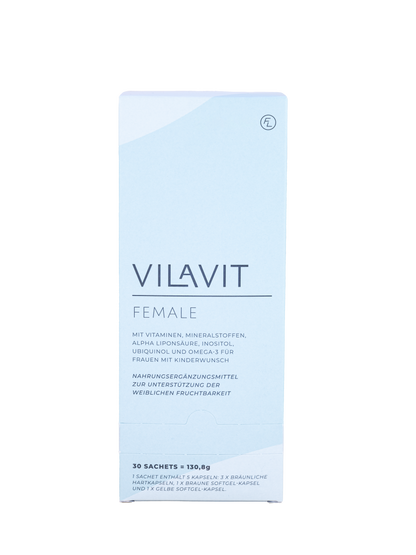
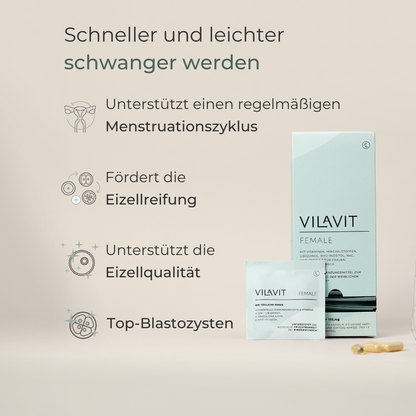
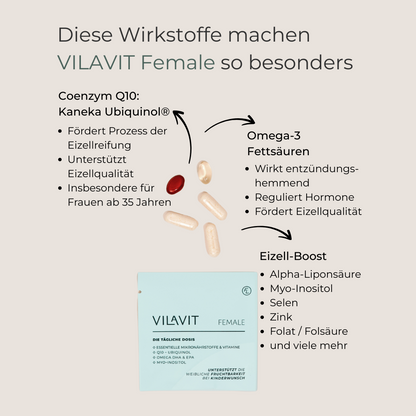
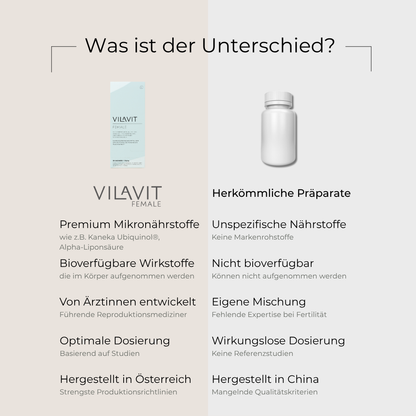
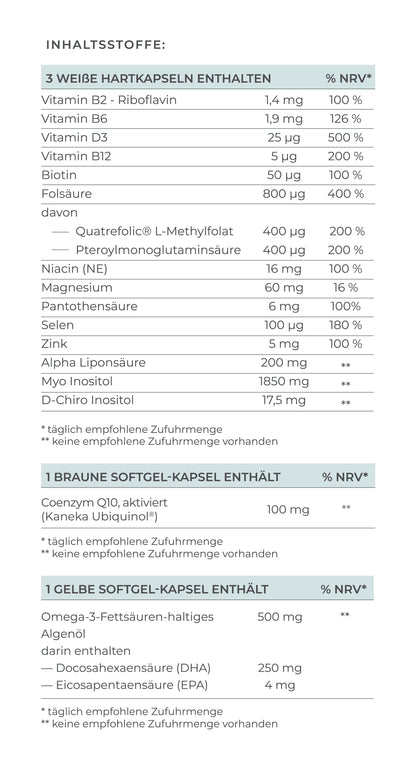
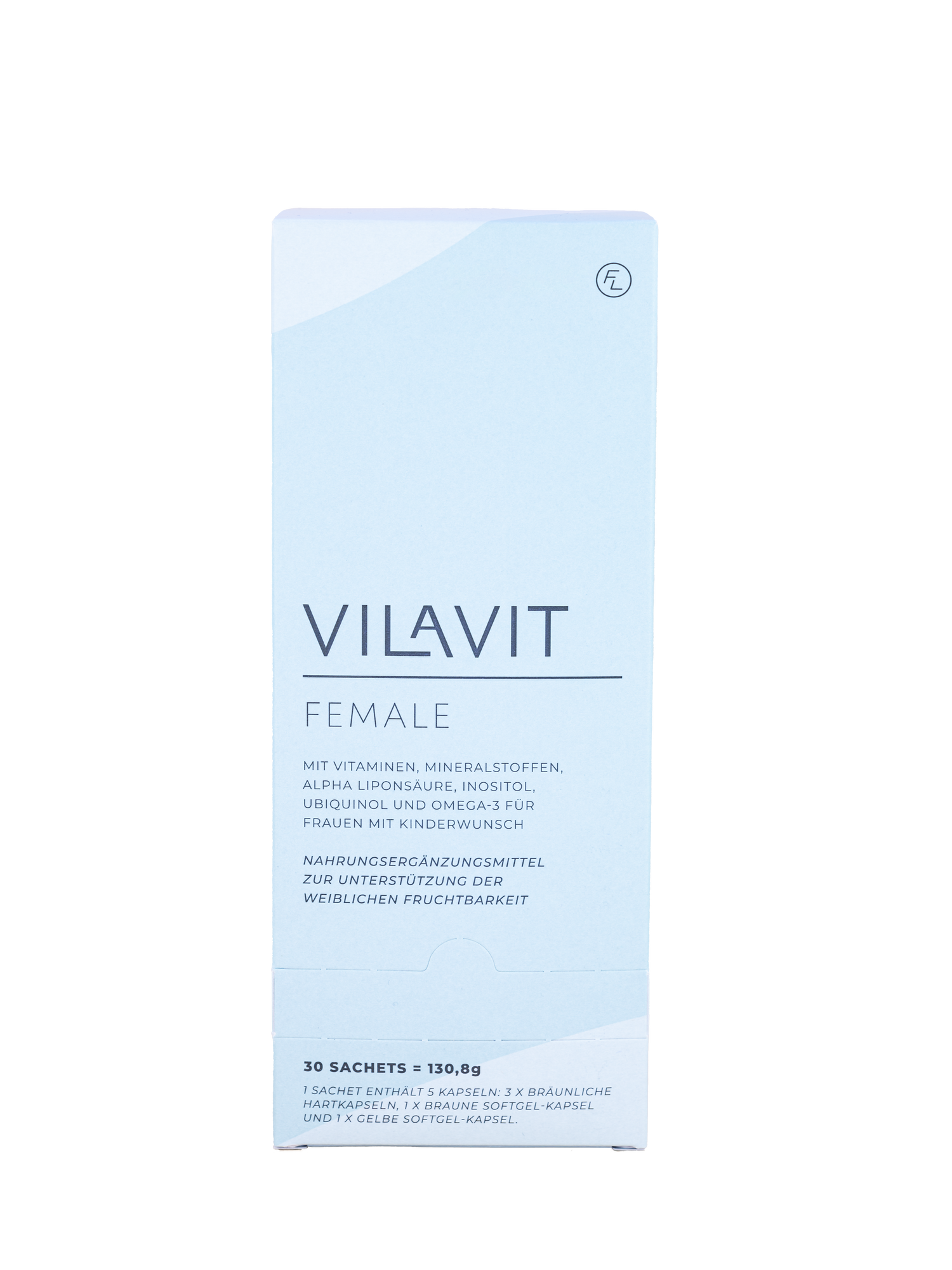
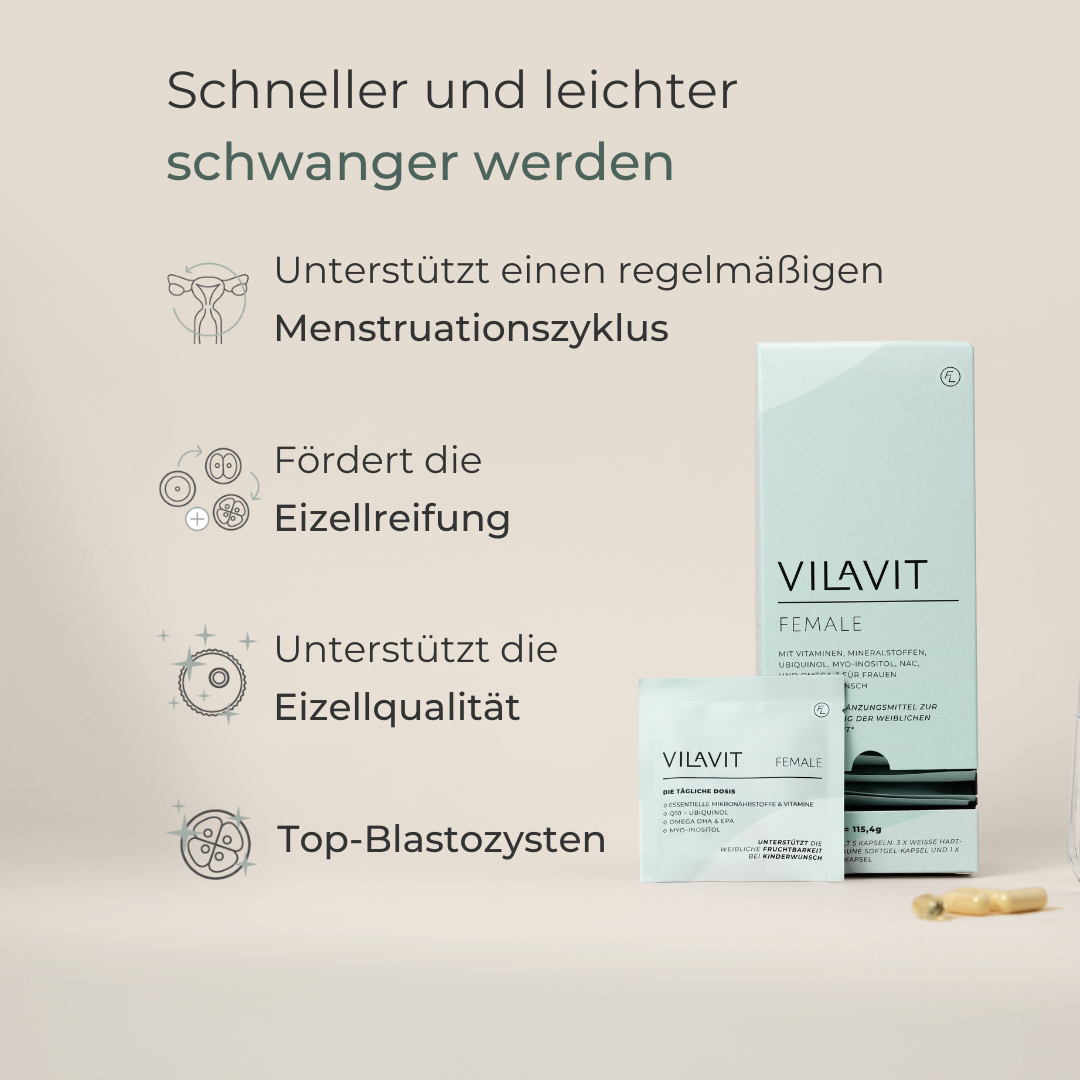
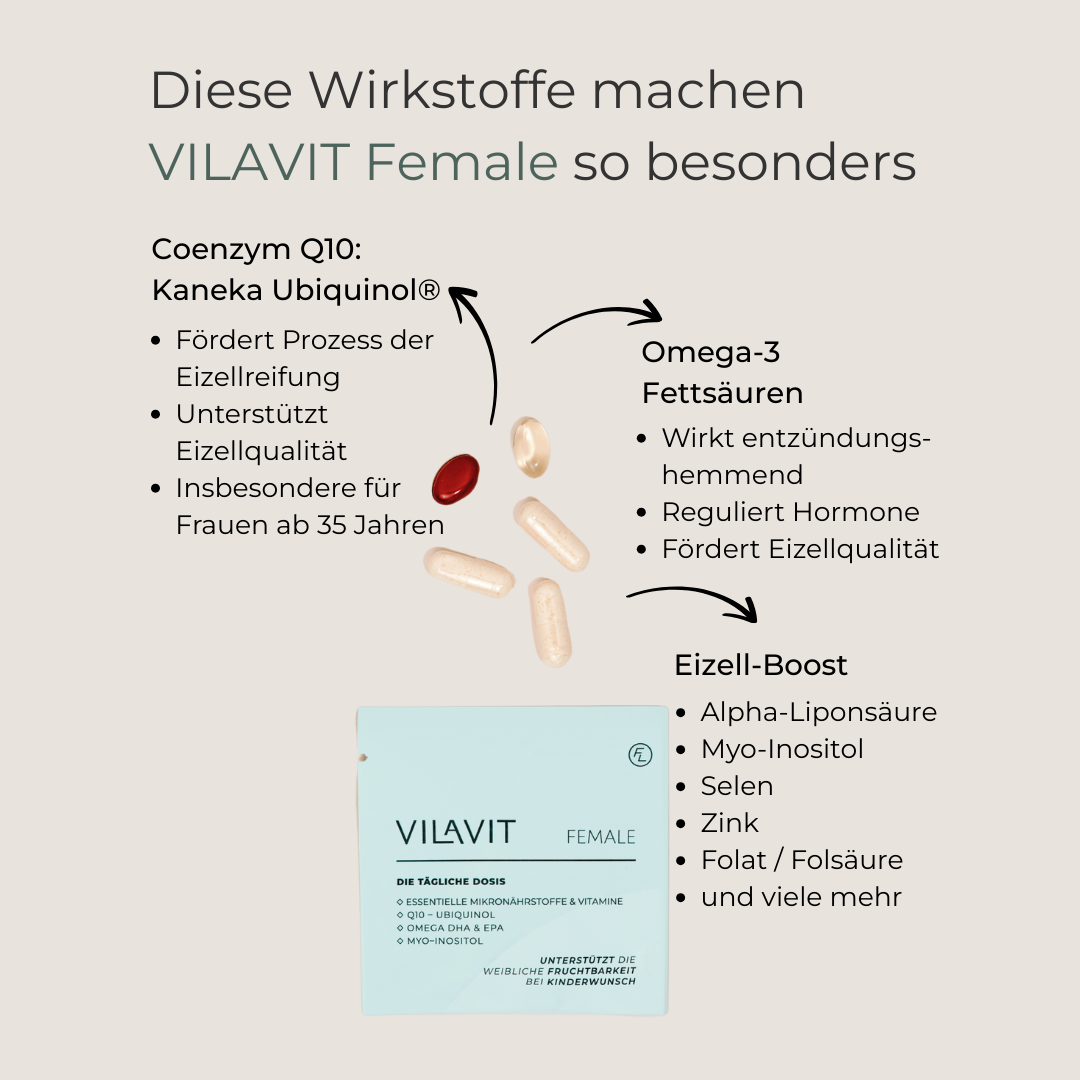
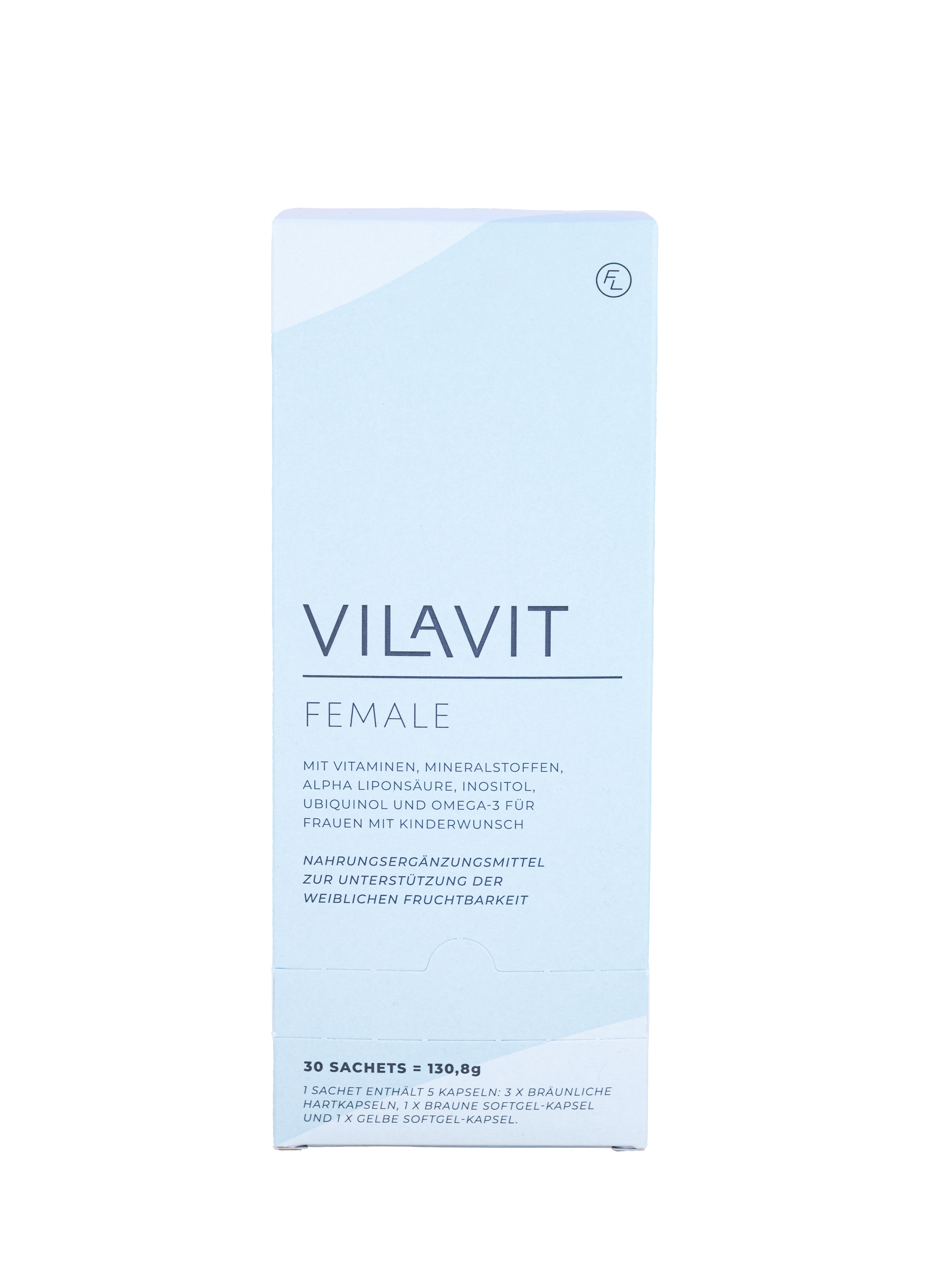
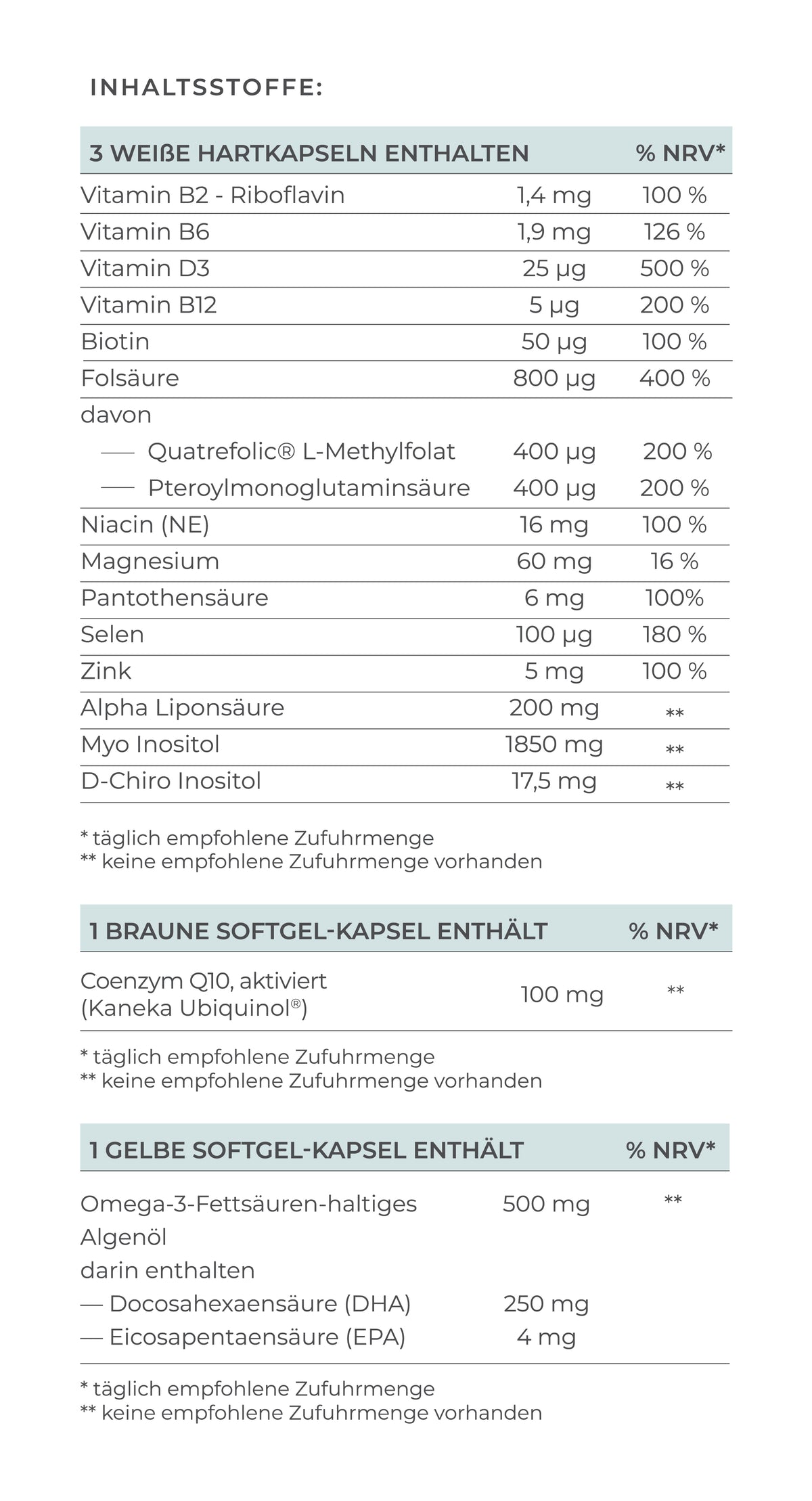
If you would like to supplement your nutrient intake while trying to conceive, VILAVIT Female and VILAVIT Male are all-in-one food supplements, also available as a couple's set. They do not replace a balanced diet or medical advice. You can find all our products in our overview of fertility supplements for women and men.
Frequently Asked Questions on the Topic
Can I drink coffee when trying to conceive?
Yes, studies do not clearly link moderate coffee consumption to lower fertility. Because an early pregnancy often goes unnoticed, no more than 200 mg of caffeine per day is a sensible guide.
How many cups of coffee are allowed during pregnancy?
EFSA considers up to 200 mg of caffeine per day safe, which is about two cups of filter coffee. The WHO advises pregnant women who consume more than 300 mg per day to reduce their intake.
At what amount does the risk of miscarriage increase?
One meta-analysis found a 37% higher relative risk at 300 mg of caffeine per day. Another suggests an increase with each additional 100 mg per day, and no safe threshold has been clearly established.
Does coffee prevent implantation?
In humans, there is no clear evidence of this: in a study of 4,716 IVF cycles, women's caffeine intake was not linked to the implantation rate. Even after an embryo transfer, no more than 200 mg of caffeine per day is a sensible guide, unless your clinic advises otherwise.
Does coffee affect sperm quality?
In most studies, semen parameters were unaffected by caffeine from coffee, tea or cocoa. High caffeine intake, cola and energy drinks showed negative effects in some studies, but the data are inconsistent.
Does coffee affect the success of IVF or ICSI?
A large meta-analysis found no significant association in either women or men. Some individual studies report poorer outcomes with very high intake.
Is decaffeinated coffee a better choice?
It contains much less caffeine. However, in a large cohort study, the link with miscarriage was no weaker for decaffeinated coffee consumed before pregnancy, so the cause has not been fully established.
This article is for general information only and does not replace medical advice.
References
Bu, F. L., et al. (2020). Relationship between caffeine intake and infertility: a systematic review of controlled clinical studies. BMC Women's Health, 20(1), 125. https://doi.org/10.1186/s12905-020-00973-z
Choi, J. H., et al. (2011). Effects of caffeine consumption by women and men on the outcome of in vitro fertilization. Journal of Caffeine Research, 1(1), 29–34. https://doi.org/10.1089/jcr.2011.0001
EFSA Panel on Dietetic Products, Nutrition and Allergies (2015). Scientific opinion on the safety of caffeine. EFSA Journal. https://doi.org/10.2903/j.efsa.2015.4102
EUFIC. Is caffeine good or bad for pregnancy and breastfeeding? View source
Gaskins, A. J., et al. (2018). Pre-pregnancy caffeine and caffeinated beverage intake and risk of spontaneous abortion. European Journal of Nutrition, 57(1), 107–117. https://doi.org/10.1007/s00394-016-1301-2
Jafari, A., et al. (2022). Relationship between maternal caffeine and coffee intake and pregnancy loss. Frontiers in Nutrition, 9, 886224. https://doi.org/10.3389/fnut.2022.886224
Karmon, A. E., et al. (2017). Male caffeine and alcohol intake in relation to semen parameters and in vitro fertilization outcomes among fertility patients. Andrology, 5(2), 354–361. https://doi.org/10.1111/andr.12310
Lyngsø, J., et al. (2017). Association between coffee or caffeine consumption and fecundity and fertility. Clinical Epidemiology, 9, 699–719. https://doi.org/10.2147/CLEP.S146496
Purdue-Smithe, A. C., et al. (2022). Preconception caffeine metabolites, caffeinated beverage intake, and fecundability. The American Journal of Clinical Nutrition, 115(4), 1227–1236. https://doi.org/10.1093/ajcn/nqab435
Rao, W., et al. (2022). The association between caffeine and alcohol consumption and IVF/ICSI outcomes. Acta Obstetricia et Gynecologica Scandinavica, 101(12), 1351–1363. https://doi.org/10.1111/aogs.14464
Ricci, E., et al. (2017). Coffee and caffeine intake and male infertility: a systematic review. Nutrition Journal, 16(1), 37. https://doi.org/10.1186/s12937-017-0257-2
Salas-Huetos, A., et al. (2024). The association of men's beverage intake with semen quality and assisted reproduction outcomes in patients undergoing fertility treatment. Andrology. https://doi.org/10.1111/andr.13795
Wesselink, A. K., et al. (2016). Caffeine and caffeinated beverage consumption and fecundability in a preconception cohort. Reproductive Toxicology, 62, 39–45. https://doi.org/10.1016/j.reprotox.2016.04.022
Zhang, H., et al. (2024). Association between tea, coffee and caffeine consumption and risk of female infertility: a cross-sectional study. Reproductive Biology and Endocrinology, 22(1), 91. https://doi.org/10.1186/s12958-024-01261-3