


Key points at a glance
- Social media is full of claims that everyday stress keeps your body stuck in permanent "survival mode" and that this is what's blocking your pregnancy.
- A real emergency mode does exist: functional hypothalamic amenorrhea (FHA). But it's usually triggered by low energy availability, a lot of exercise or severe strain, and hardly ever by a busy schedule alone.
- Whether stress lowers fertility or an unfulfilled wish for a baby causes stress is still not settled. Probably a bit of both is true.
- Exercises meant to calm your nervous system can do you good. They don't replace a medical check-up, though.
You've probably heard it too: if it's not working out with getting pregnant, stress is to blame. On Instagram and TikTok, lots of women are sharing how they "regulated" their nervous system and got pregnant shortly after. Sounds tempting. But what's really behind it? And what can you actually do without quitting your job and building your whole life around avoiding stress?
We've already covered in detail what stress does to hormones, ovulation and sperm in our article Stress and its Effects on Fertility. In this post, we take a closer look at the claims circulating on social media and sort out which ones hold up and which don't.
What does social media mean by "survival mode"
The idea behind the survival mode theory goes roughly like this: every stress signal triggers the same reaction in your body as spotting a sabre-toothed tiger did in the Stone Age. Your body switches to "fight or flight" and shuts down everything that isn't essential for survival right now, reproduction included. And because emails, deadlines and push notifications reach us around the clock, the body supposedly stays stuck in this mode for good.
It's not entirely made up. Stress can in fact affect fertility through hormonal and neurological pathways (Phumsatitpong et al., 2021). But our bodies are also pretty good at coping with stress. It takes more than a tough week at work for your body to actually switch off reproduction.
When the body really does switch to emergency mode: functional hypothalamic amenorrhea (FHA)
There is, however, a "survival mode" that's medically well documented. It's called functional hypothalamic amenorrhea, or FHA for short. Your period, and with it ovulation, stops even though nothing is organically wrong (Saadedine et al., 2023).
Causes of FHA
With FHA, the hypothalamus, a control centre in the brain, turns down the signals it sends to the ovaries. This happens when the body has too little energy available over a longer period. Common triggers are very strict diets or disordered eating, a lot of intense exercise without enough rest and calories, and severe psychological strain.
Usually several factors come together. And not every woman reacts the same way: some develop FHA with a fairly small energy deficit, while others are spared for a long time. Genes and epigenetic differences probably play a role here (Saadedine et al., 2023). No wonder the topic does the rounds mostly in the fitness bubble on social media, where hard training and tight eating often go hand in hand.
Signs and consequences
The most obvious sign is a period that stays away for months. And the energy deficit doesn't just affect fertility. Bones, heart and circulation, concentration and mood can suffer too (Saadedine et al., 2023).
What to do if you suspect FHA
If your period stops or becomes very irregular, please take it seriously and talk to your gynaecologist. FHA is only diagnosed once other causes have been ruled out, such as pregnancy, a thyroid disorder or PCOS. Treatment starts where the energy deficit comes from, which usually means nutrition, training and stress.
Can I still exercise while trying to conceive?
Absolutely. Even if some creators say otherwise: exercise is allowed while you're trying to conceive and it's good for you, even when it gets more demanding. What matters is that your training, recovery and what you eat are in balance.
Does everyday stress make you infertile? What the studies say
In short: it depends on which study you ask. And often it's impossible to say which came first, the chicken or the egg.
There's no question that stress is common among people trying to conceive. Around 40% of women with reduced fertility are already stressed before treatment even starts (Vakili et al., 2026), and depression, anxiety and stress are considerably more common in women undergoing fertility treatment (Wójtowicz et al., 2026). Then again, anyone who's been hoping for a positive test for months and going through treatments has every reason to feel stressed.
A few studies suggest that stress does have an effect. In the American LIFE study, women with the highest levels of the stress marker alpha-amylase in their saliva were less likely to get pregnant per cycle and had a higher risk of infertility (Lynch et al., 2014). Stressed women may need more cycles before it works, and stress at work or from difficult life events could reduce the chances of success with IVF (Vakili et al., 2026). In some studies, anxiety and low mood before treatment were also linked to lower pregnancy rates (Purewal et al., 2017; Rooney & Domar, 2018).
Other researchers come to a different conclusion. In a large meta-analysis, emotional stress before fertility treatment had no effect on whether it was successful (Boivin et al., 2011). And in women without known fertility problems, it didn't take any longer to get pregnant when they felt more stressed day to day (Park et al., 2019).
Why do the results differ so much? Stress is simply hard to measure. Two people with the same cortisol or amylase levels can feel completely differently about how stressed they are. On top of that, stress rarely comes alone. Whether it's the stress itself that has an effect, or rather what often comes with it, like more caffeine, more alcohol or poor sleep, is still an open question.
And what about men? For them too, more stress is linked to fewer and less mobile sperm. Whether stress is the cause or the result, though, the studies can't say (Costa et al., 2026). One interesting study found that men with high psychological resilience had better sperm and embryo quality (Raad et al., 2026). There's no evidence so far for a “survival mode” in men as described on social media. Still, chronic stress, too little energy and overdoing it at the gym aren't a good idea for them either. What partners can do themselves is covered in our article Improve Sperm Quality.
Social media tips for nervous system regulation: a fact check
Scroll through fertility accounts and you'll quickly come across tips that supposedly help you "discharge" your nervous system. No study has shown so far that any of them improves your chances of getting pregnant. Most of them don't do any harm either, though, and some simply feel good.
Shaking off stress, yawning and sighing
Shaking your whole body, yawning on purpose or sighing out loud is meant to release built-up tension. If it helps you wind down for a moment, go for it. As far as we know today, it has nothing to do with your fertility.
Vagus nerve exercises and eye movements
The vagus nerve is part of the nervous system that's responsible for rest and recovery. Slow exhaling, humming or certain eye movements are said to stimulate it. Breathing calmly really does help many people switch off. There are no studies, however, showing that vagus nerve exercises make you more fertile.
Cold showers and dunking your face in ice water
Cold water on your face briefly slows your heart rate. Some people find it wonderfully calming, for others it's just one more source of stress. No benefit for fertility is known.
Bitters
Bitters are often promoted as a way to bring the nervous system back into balance. There's no scientific basis for this.
Giving up demanding exercise
Some creators advise giving up strenuous exercise altogether while trying to conceive. That's not true across the board. If exercise is a good outlet for you, your mental health benefits too. It only becomes a problem when training and energy intake stay out of balance for a longer time, as described under FHA.
That said, there are also tips on social media that really aren't advisable. If you're unsure, it's better to check with your doctor or midwife.
"Just relax and it'll happen": why this advice doesn't help
Most women trying to conceive have probably heard this one, from a friend, an aunt or a colleague. It's meant kindly. But many hear something quite different, namely that it's their own fault if it isn't working.
The research doesn't back this up. Normal everyday stress is generally not enough to stand in the way of a pregnancy. Much more often there are physical causes, such as blocked fallopian tubes, endometriosis, PCOS or reduced sperm quality, and you simply can't relax those away. If it hasn't worked after twelve months, or after six months if you're over 35, both partners should get a medical check-up. How best to go about it is explained in Starting at the Fertility Clinic. And if other well-meant advice is still going round in your head, we've collected more in The Biggest Myths Surrounding Fertility.
What actually helps, according to studies
So how much stress really affects fertility is still up for debate. Less pressure is a good goal anyway, if only because it makes this time easier to get through.
Yoga is well studied. It can improve the emotional wellbeing of people trying to conceive (Sormunen et al., 2026), and regular meditation helps many people too. What yoga can do for women and men is explained in our article Fertility Yoga.
If you notice your thoughts revolving only around getting pregnant, cognitive behavioural therapy or a mind-body programme can help. Both can ease stress, anxiety and low mood (Rooney & Domar, 2018).
A study on music therapy in women undergoing insemination came up with a small surprise. The music had hardly any measurable effect on their mental state, but the pregnancy rate was considerably higher than in the comparison group. Why that was the case wasn't investigated further (Jin et al., 2026). With music therapy, it may well be a case of just giving it a try.
And then there's everything that personally helps you switch off, whether that's running, going for a walk, cooking or an evening with friends. If the strain still doesn't seem to let go of you, fertility counselling or psychotherapy is a good next step.
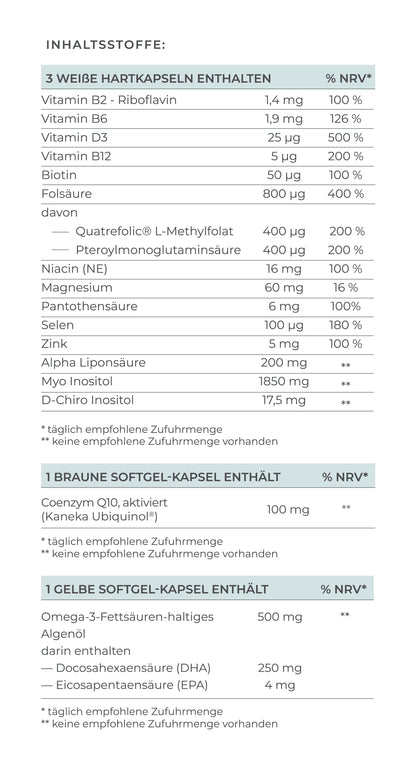
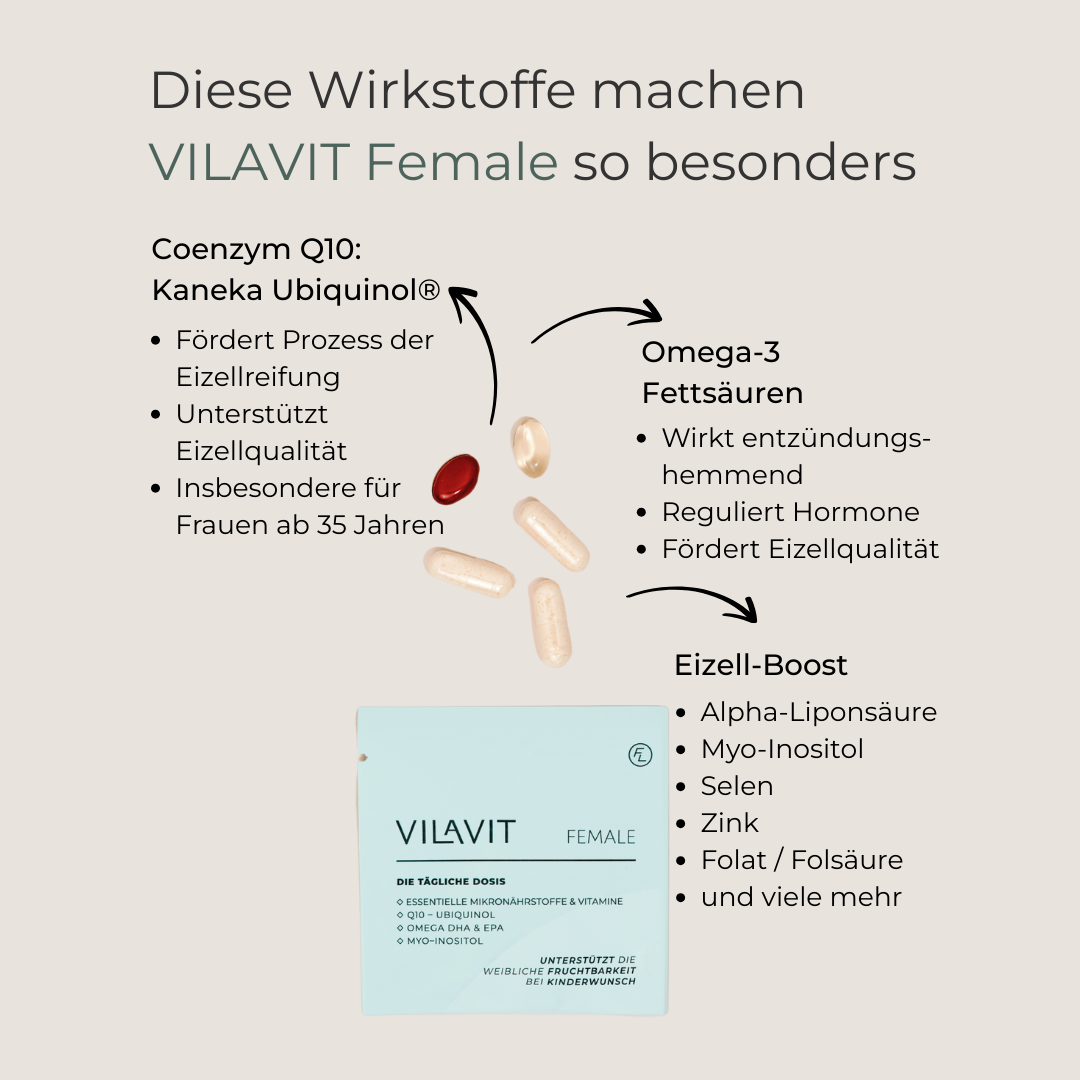
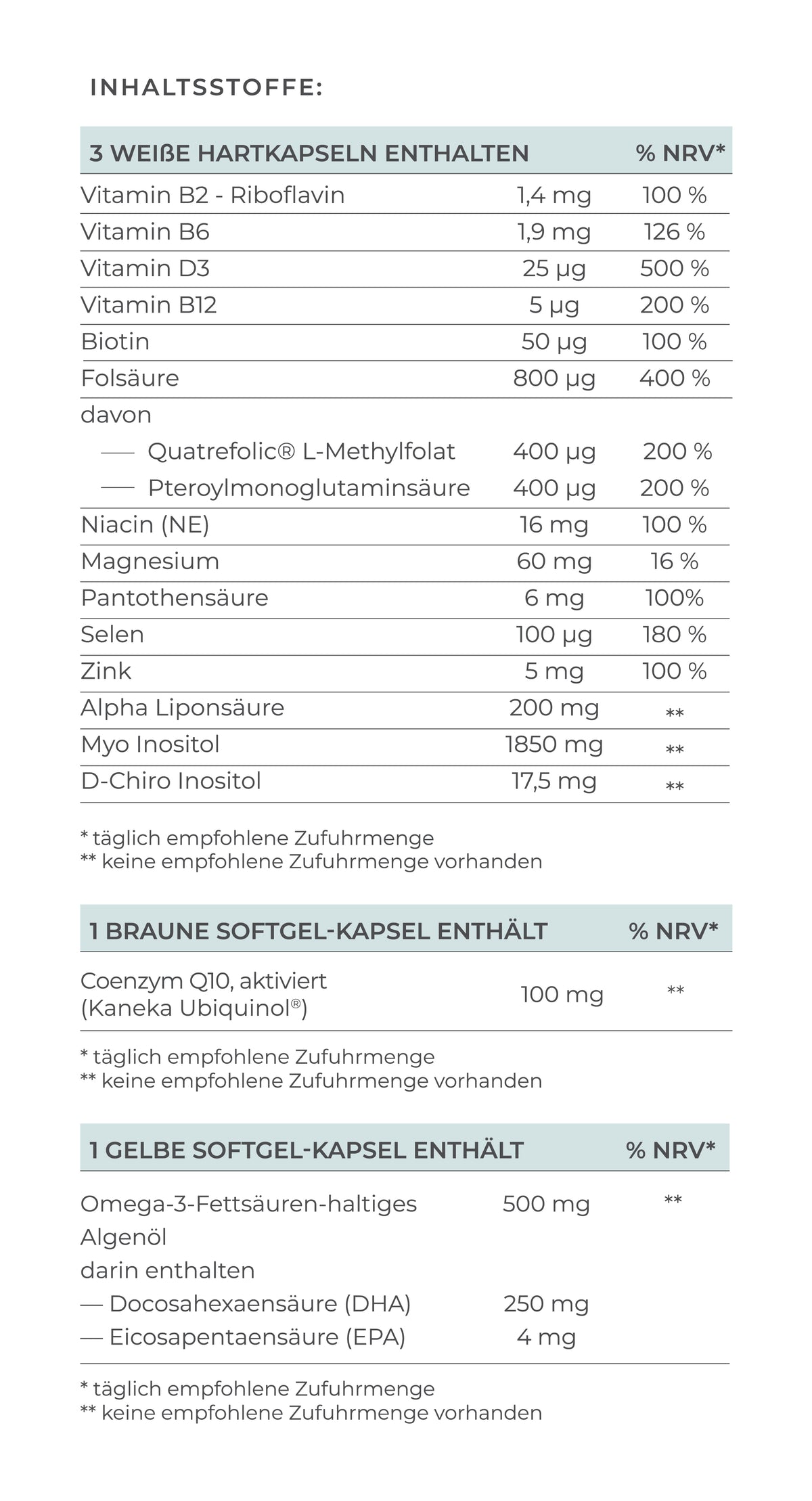
Stress is only one piece of the puzzle, by the way. Nutrition, your gut microbiome and your micronutrient supply also influence your fertility. What you can do for your eggs is covered in How to Improve Egg Quality and Pimp My Eggs. So that you have one less thing to worry about, we developed VILAVIT Female and VILAVIT Male, containing among other things zinc, which contributes to normal fertility and reproduction. You'll find all our products in our shop.
Conclusion: do you really need to balance your nervous system?
Not in the way social media often makes it sound. Your body and your nervous system are generally well equipped to deal with stress. A real “survival mode” like FHA is mainly triggered by low energy availability, a lot of exercise or severe strain, and it shows itself through a missing period.
It becomes unhealthy when the stress never lets up or other pressures pile on top. If you can switch off well through exercise, meditation or your hobbies, there's no need to worry. If not, try one of the methods above and get some support. And if it's taking longer to get pregnant, have the physical causes checked by a doctor instead of blaming stress.
Frequently asked questions
What does "survival mode" mean on social media?
It refers to a supposedly permanent “fight or flight” state. The idea is that modern everyday stress feels like a predator to your body, so it puts fertility on hold. In this form, it isn't supported by science.
Is there a real "survival mode" that blocks pregnancy?
Yes, functional hypothalamic amenorrhea (FHA). When the body gets too little energy, for example from eating very little, exercising a lot or severe strain, the brain turns down the signals to the ovaries. Ovulation and periods then stop.
Do vagus nerve exercises help with fertility?
They can be good for relaxing. There's no evidence, however, that they make you more fertile. They don't solve physical causes such as endometriosis, PCOS or reduced sperm quality.
Will I get pregnant if I just relax?
Unfortunately, it's not that simple. Normal everyday stress is rarely the reason it isn't working. Relaxing is still good for you. But if you haven't fallen pregnant after a longer time, don't put off getting a medical check-up.
Can I do intense exercise while trying to conceive?
Yes, demanding exercise is fine too, as long as training, recovery and food are in balance. If your period stops, please have it checked by a doctor.
How do I find a healthy balance between mental health and medical care?
Mindfulness, exercise and relaxation are a good support for your mental health. Physical symptoms and a pregnancy that's taking a long time should still be looked at by specialists. One doesn't rule out the other.
References
Boivin, J., Griffiths, E., & Venetis, C. A. (2011). Emotional distress in infertile women and failure of assisted reproductive technologies: meta-analysis of prospective psychosocial studies. BMJ, 342, d223.
Costa, A. F., Silveira, L. V., Onofre, F. B. M., & Onofre, A. S. C. (2026). Psychological stress and semen quality impairment: A systematic review. JBRA Assisted Reproduction, 30(3), 628–640.
Jin, X., Hu, R., Zhu, X., & Chen, X. (2026). Music therapy in artificial insemination by husband: Effects on psychological distress and clinical pregnancy rate. Medicine, 105(37), e50655.
Lynch, C. D., Sundaram, R., Maisog, J. M., Sweeney, A. M., & Buck Louis, G. M. (2014). Preconception stress increases the risk of infertility: results from a couple-based prospective cohort study – the LIFE study. Human Reproduction, 29(5), 1067–1075.
Park, J., Stanford, J. B., Porucznik, C. A., Christensen, K., & Schliep, K. C. (2019). Daily perceived stress and time to pregnancy: A prospective cohort study of women trying to conceive. Psychoneuroendocrinology, 110, 104446.
Phumsatitpong, C., Wagenmaker, E. R., & Moenter, S. M. (2021). Neuroendocrine interactions of the stress and reproductive axes. Frontiers in Neuroendocrinology, 63, 100928.
Purewal, S., Chapman, S. C. E., & van den Akker, O. B. A. (2017). A systematic review and meta-analysis of psychological predictors of successful assisted reproductive technologies. BMC Research Notes, 10(1), 711.
Raad, G., Mourad, Y., El Asmar, G., et al. (2026). Sex-specific associations between psychological resilience and blastocyst quality. Reproduction & Fertility, 7(3), RAF260105.
Rooney, K. L., & Domar, A. D. (2018). The relationship between stress and infertility. Dialogues in Clinical Neuroscience, 20(1), 41–47.
Saadedine, M., Kapoor, E., & Shufelt, C. (2023). Functional Hypothalamic Amenorrhea: Recognition and Management of a Challenging Diagnosis. Mayo Clinic Proceedings, 98(9), 1376–1385.
Sormunen, T., Wahlström, M., Tyrrell, M., et al. (2026). The potential benefits of yoga for psychological well-being among people facing infertility. Sexual & Reproductive Healthcare, 49, 101272.
Vakili, S., Namavar Jahromi, B., & Goharitaban, S. (2026). Maternal Psychological Distress and Repeated Implantation Failure: A Mini Review. Galen Medical Journal, 15, e4201.
Wójtowicz, K., Kot, J., Makara-Studzińska, M., et al. (2026). Depression, Anxiety and Stress Among Women Treated Due to Infertility. Journal of Clinical Medicine, 15(13), 5086.