


Key facts on Egg Quality
- An egg is considered good quality if it has the right number of chromosomes and can develop into a healthy embryo after fertilisation.
- The most important factor is age: embryos have the fewest chromosomal errors between 26 and 30, and the share rises clearly from the mid-30s.
- AMH shows the number of eggs, not their quality. You can have very good eggs even with a low AMH level.
- The biggest lever is in your own hands: not smoking, little alcohol, a healthy weight and good sleep.
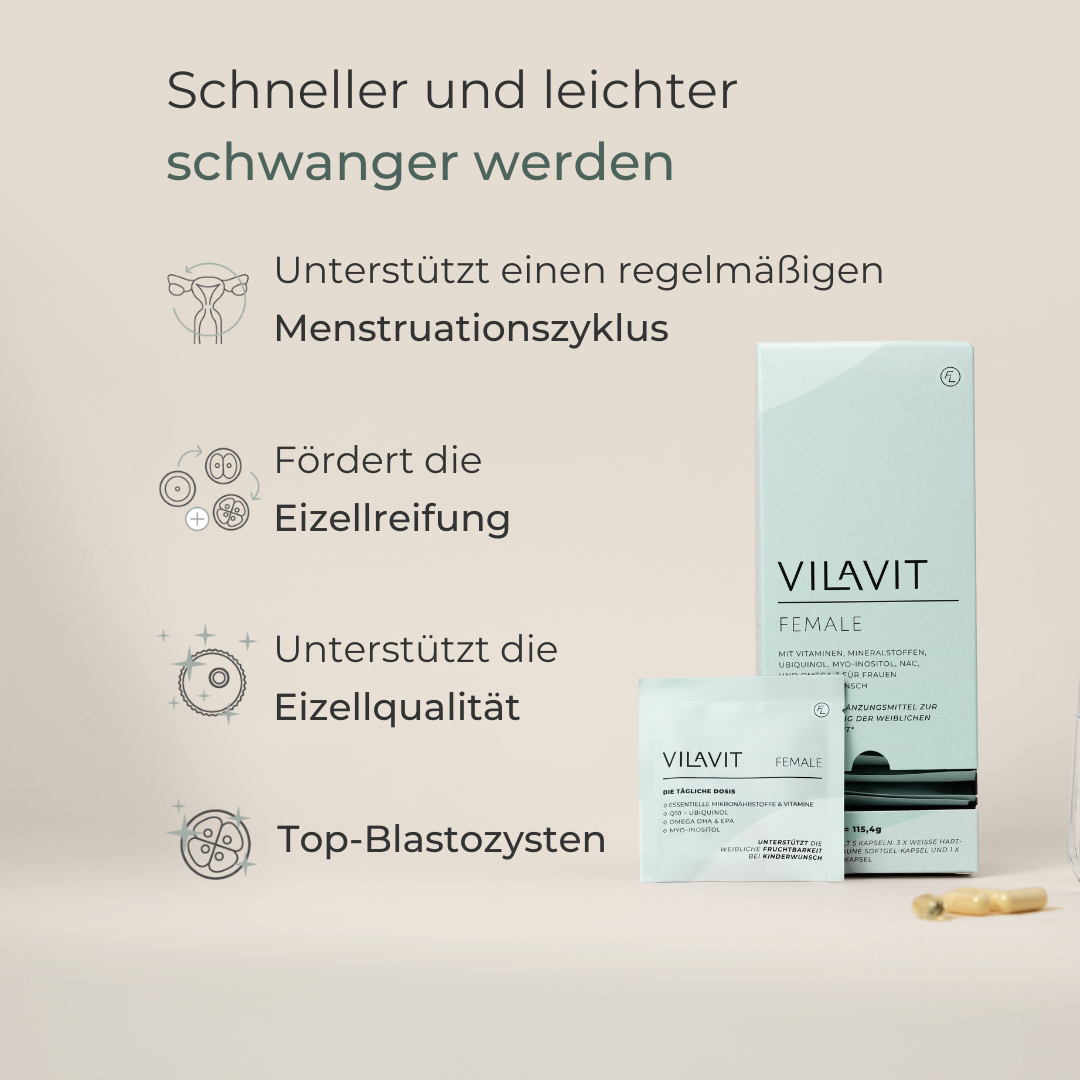
- For coenzyme Q10, omega-3, vitamin D and other nutrients, there are promising studies.
- An egg matures over around three months, so what you start today benefits the eggs of the coming months.
Many women first hear the term egg quality when getting pregnant takes longer than expected or IVF is coming up. And the next question is almost always: Can I do anything about it? The good news is: yes, there is a lot you can influence yourself. Here you can read what egg quality means, what affects it according to studies and how to make the best use of the three months before a pregnancy or treatment.
What does egg quality mean?
A good-quality egg has exactly 23 chromosomes. Specialists call this euploid. Only then can an embryo develop after fertilisation that implants and becomes a healthy pregnancy. If a chromosome is missing or there is one too many, the embryo usually does not implant, or an early miscarriage occurs.
Whether the chromosomes are divided correctly is decided during the final cell division shortly before ovulation. The egg needs a great deal of energy for this, supplied by its power plants, the mitochondria. Over the years, mitochondria work less efficiently, and more oxidative stress builds up in the cell. Both increase the risk of errors during division (Rodríguez-Varela et al., 2021).
How age changes egg quality
A large analysis of more than 15,000 embryos shows how strongly age matters (Franasiak et al., 2014). Chromosomal errors were least common in women aged 26 to 30, and their share rose year by year after that. How often none of the embryos in an IVF cycle had the right number of chromosomes shows this particularly well:
|
Age of the woman |
No embryo with the right number of chromosomes |
|---|---|
|
26 to 37 |
2 to 6% |
|
42 |
33% |
|
44 |
53% |
Many women still get pregnant after 40. It often just takes a few more eggs to find a good one. How this affects IVF is explained in IVF Success Rates.
Can egg quality be measured?
No, not directly. There is no blood test or ultrasound that shows whether an egg has the right number of chromosomes.
AMH is often confused with it. But it only shows how many eggs are left, the quantity, not the quality. A woman with a low AMH level can have very good eggs, and a woman with a high level less good ones.
Clues to egg quality only appear during IVF: how many eggs can be fertilised, how the embryos develop in the first five days and, with preimplantation genetic testing, how many embryos have the right number of chromosomes.
Are there signs of poor egg quality?
You cannot feel it in everyday life; there are no typical symptoms. Possible signs are that pregnancy takes a long time despite a regular cycle, several early miscarriages, or that few eggs can be fertilised during IVF or the embryos stop developing early. Only a fertility clinic can assess whether the egg is the cause.
What affects egg quality and what can you do?
Besides age, the main factors are those that increase oxidative stress in the egg. You can influence many of them yourself, and this is where the evidence is clearest.
Smoking
Smoking is one of the strongest factors within your control. Women who smoke reach menopause one to four years earlier on average, because their eggs are lost faster (ASRM, 2018). Ideally, stop at least three months before trying to conceive and avoid second-hand smoke too.
Alcohol
Even moderate amounts make a difference: around 84 g of alcohol per week, about one glass of wine a day, lowered the chance of pregnancy with IVF by 7% (Rao et al., 2022). While trying to conceive, it is best for both of you to avoid alcohol completely.
Sleep
Good sleep is real preparation for pregnancy. Women who slept less than seven hours a night had fewer mature eggs during IVF (Yao et al., 2022). Plan seven to nine hours and put your phone away earlier in the evening.
Weight and diet
Being significantly over- or underweight disrupts hormones and the cycle. A diet rich in vegetables, whole grains, legumes, fish and healthy fats, on the other hand, is linked to better fertility (Skoracka et al., 2021). Eating a Mediterranean diet, cutting down on highly processed food and avoiding crash diets is the best approach. You can find lots of tips in Nutrition When Trying to Conceive.
Hormone-disrupting chemicals
Plasticisers such as phthalates and bisphenol A can affect the ovaries (Land et al., 2022). A few simple steps reduce your exposure significantly: use glass instead of plastic and never heat food in plastic. More in How Microplastics Threaten Fertility.
Conditions such as endometriosis or PMOS (formerly PCOS) can also affect egg quality. Good medical care helps most here.
Vitamins and Supplements for Egg Quality: What Studies Show
The good news: there has never been more research on micronutrients for fertility, and some of the results are very promising. Coenzyme Q10, vitamin D and omega-3 are particularly well studied. Here is what the research shows for the most important nutrients.
Coenzyme Q10 as ubiquinol
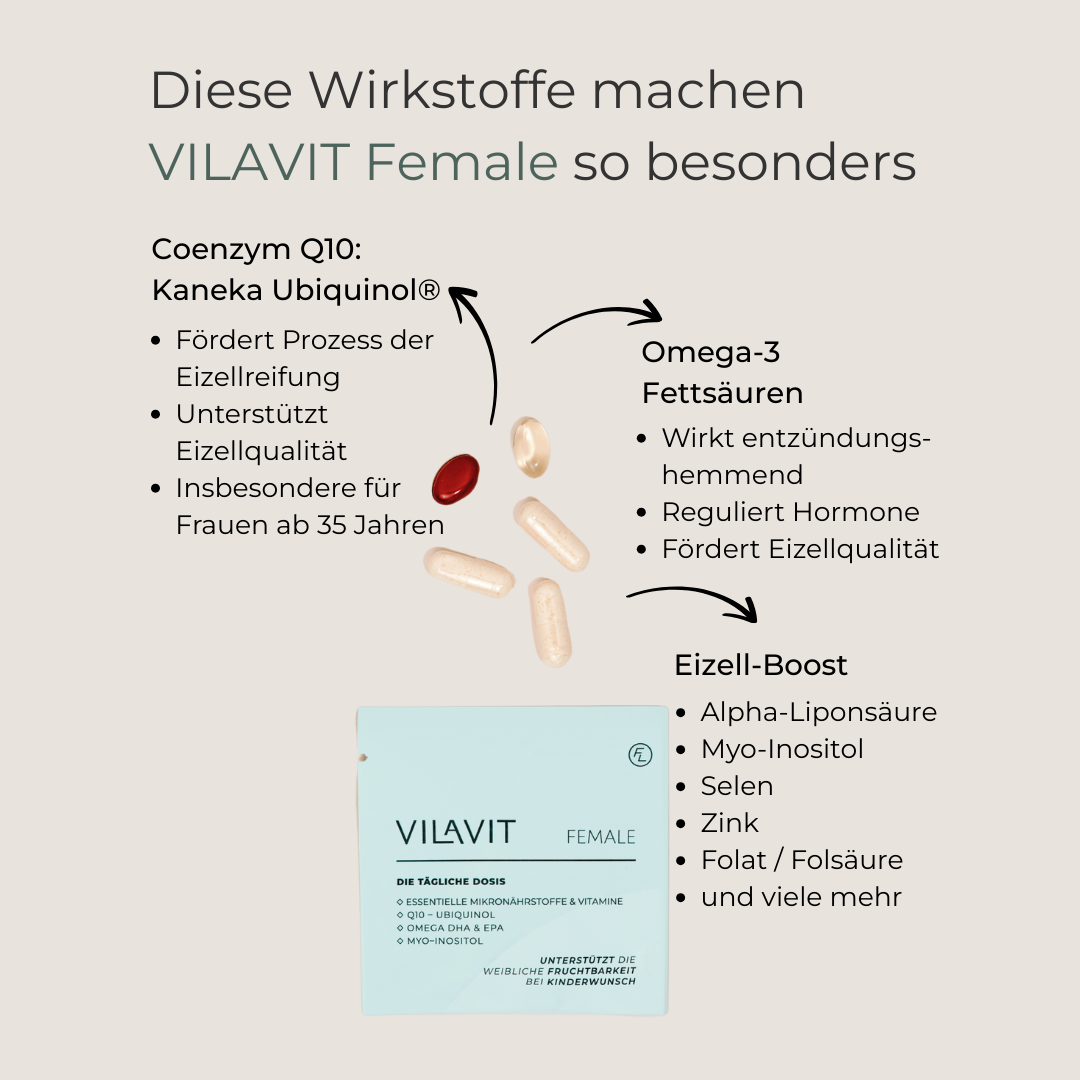
Coenzyme Q10 is an important component of the mitochondria, the egg's power plants. Its level in follicular fluid falls with age. No other nutrient has been researched as intensively in fertility. In an analysis of five randomised trials with 449 women undergoing IVF, twice as many women became pregnant with CoQ10 as without: 28.8% compared with 14.1% (Florou et al., 2020). In younger women with low ovarian reserve, the ovaries responded better to stimulation and more good-quality embryos developed (Xu et al., 2018). Research on CoQ10 continues, and the results so far are encouraging.
The form matters: the body first has to convert ubiquinone into ubiquinol, the active form. In a comparison study, blood levels of CoQ10 rose much more with ubiquinol than with ubiquinone (Langsjoen et al., 2014). More in Ubiquinol and Fertility.
Vitamin D
Vitamin D has a role in the process of cell division, and deficiency is common, especially in winter. In a meta-analysis, women with sufficient vitamin D levels had a birth more often after IVF than women with a deficiency (Chu et al., 2018). It is therefore worth having your level checked. More in Vitamin D and Fertility.
Omega-3 fatty acids (DHA)
Omega-3 fatty acids, especially DHA, are building blocks of all cell membranes, including the egg's. A 2024 meta-analysis found links between good omega-3 status and better fertility outcomes in women (Trop-Steinberg et al., 2024). Good intake is worthwhile in any case: DHA contributes to the maintenance of normal brain function with a daily intake of 250 mg. During pregnancy, maternal DHA intake contributes to the normal development of the baby's brain and eyes, which requires an additional 200 mg of DHA per day. More in Omega-3 and Fertility.
Folate
Folate has a role in the process of cell division and is one of the most important nutrients of all when you want to get pregnant. Professional societies recommend 400 µg of folic acid daily, starting at least four weeks before pregnancy. Supplemental folic acid intake increases maternal folate status, and low maternal folate status is a risk factor for neural tube defects in the developing foetus.
Zinc
Zinc contributes to normal fertility and reproduction and has a role in the process of cell division. A deficiency can impair egg maturation (Garner et al., 2021). The right dose matters, because with zinc more is not better.
Antioxidants: alpha-lipoic acid, NAC, selenium and vitamin E
Oxidative stress is one of the reasons egg quality declines with age. That is why antioxidants such as alpha-lipoic acid, and selenium and vitamin E are being studied intensively in fertility, and smaller studies suggest possible benefits for female fertility (Vašková et al., 2023). Selenium and vitamin E contribute to the protection of cells from oxidative stress.
Myo-inositol for PMOS
For women with PMOS (formerly PCOS), myo-inositol is one of the most promising nutrients of all. In PMOS, insulin metabolism and hormones are often out of balance, and this is exactly what can disrupt egg maturation. This is where myo-inositol comes in: in a meta-analysis of nine randomised trials, fasting insulin levels fell significantly with myo-inositol, and after at least 24 weeks the hormone SHBG, which binds excess male hormones, rose (Unfer et al., 2017). Balanced metabolism creates good conditions for egg maturation, which is why myo-inositol is now a standard part of many fertility treatments for PMOS. More in Myo-Inositol for PCOS.
Which dose and which plan?
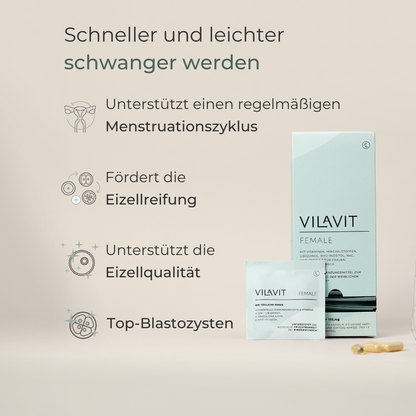
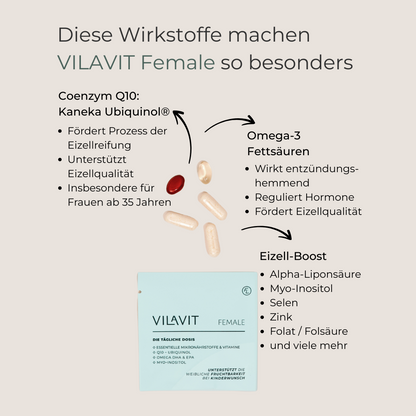
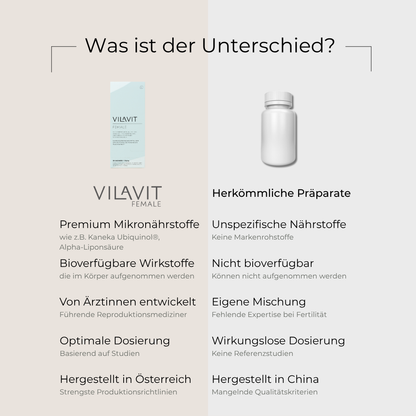
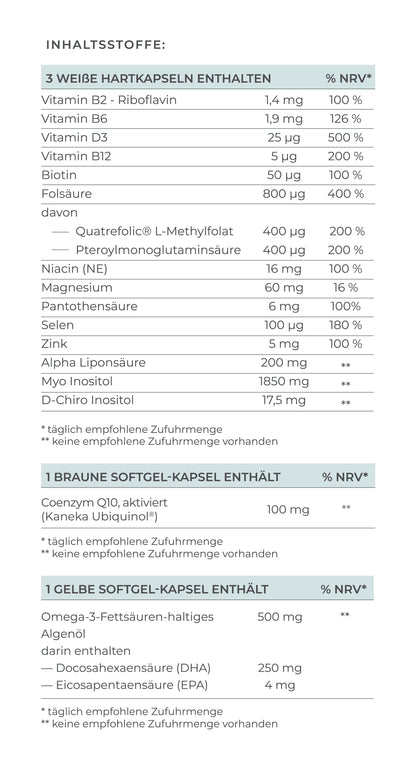
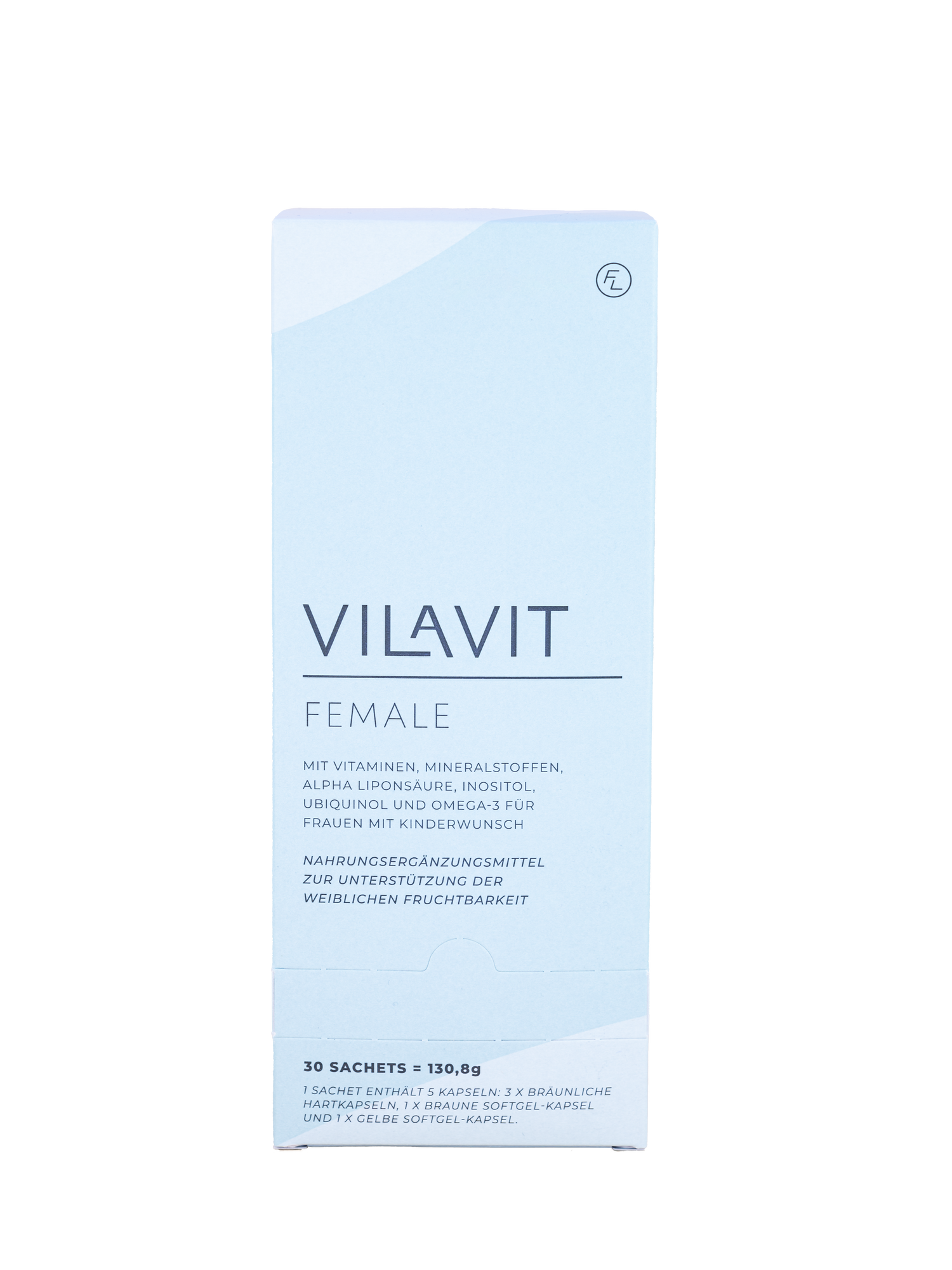
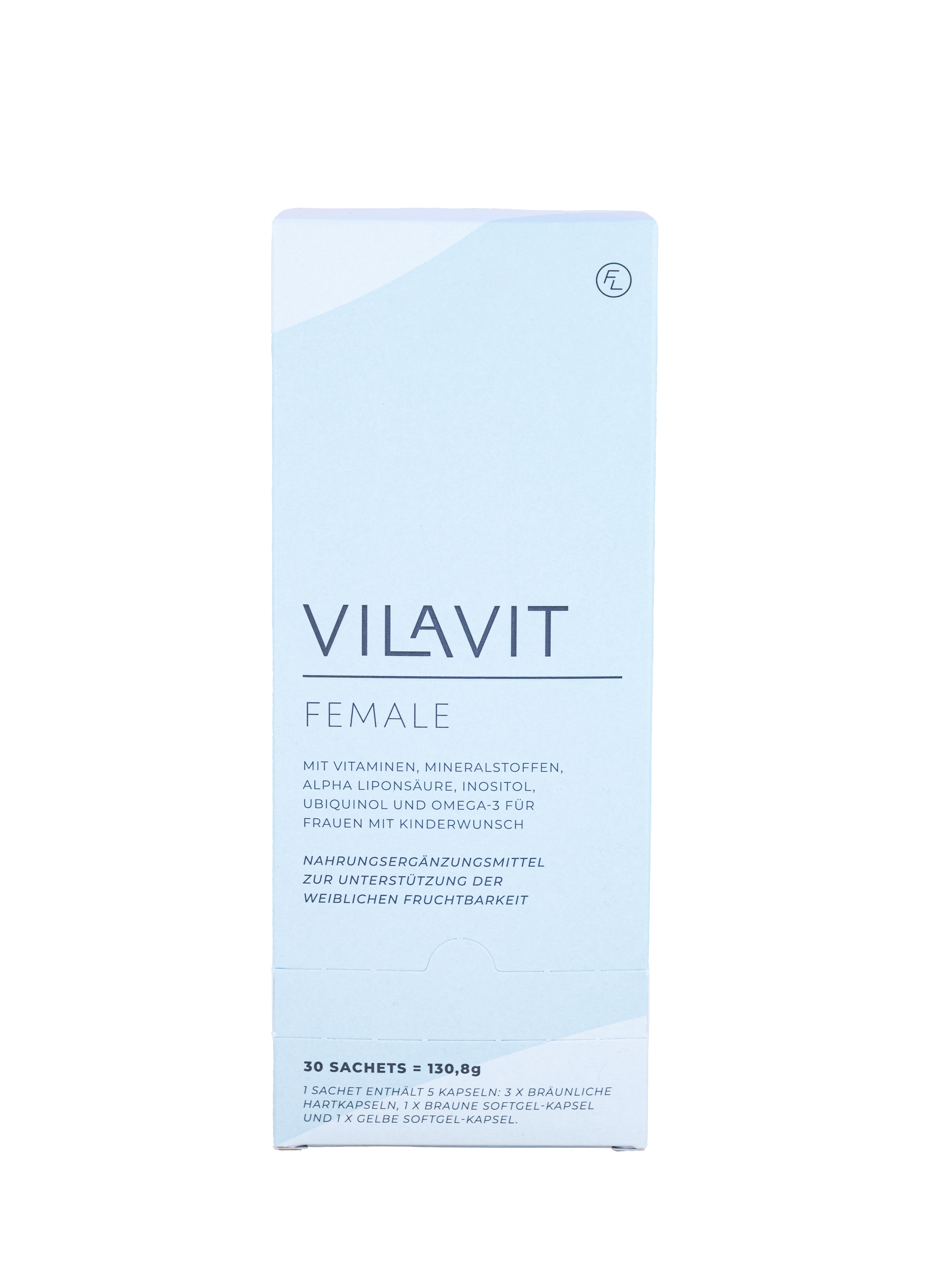
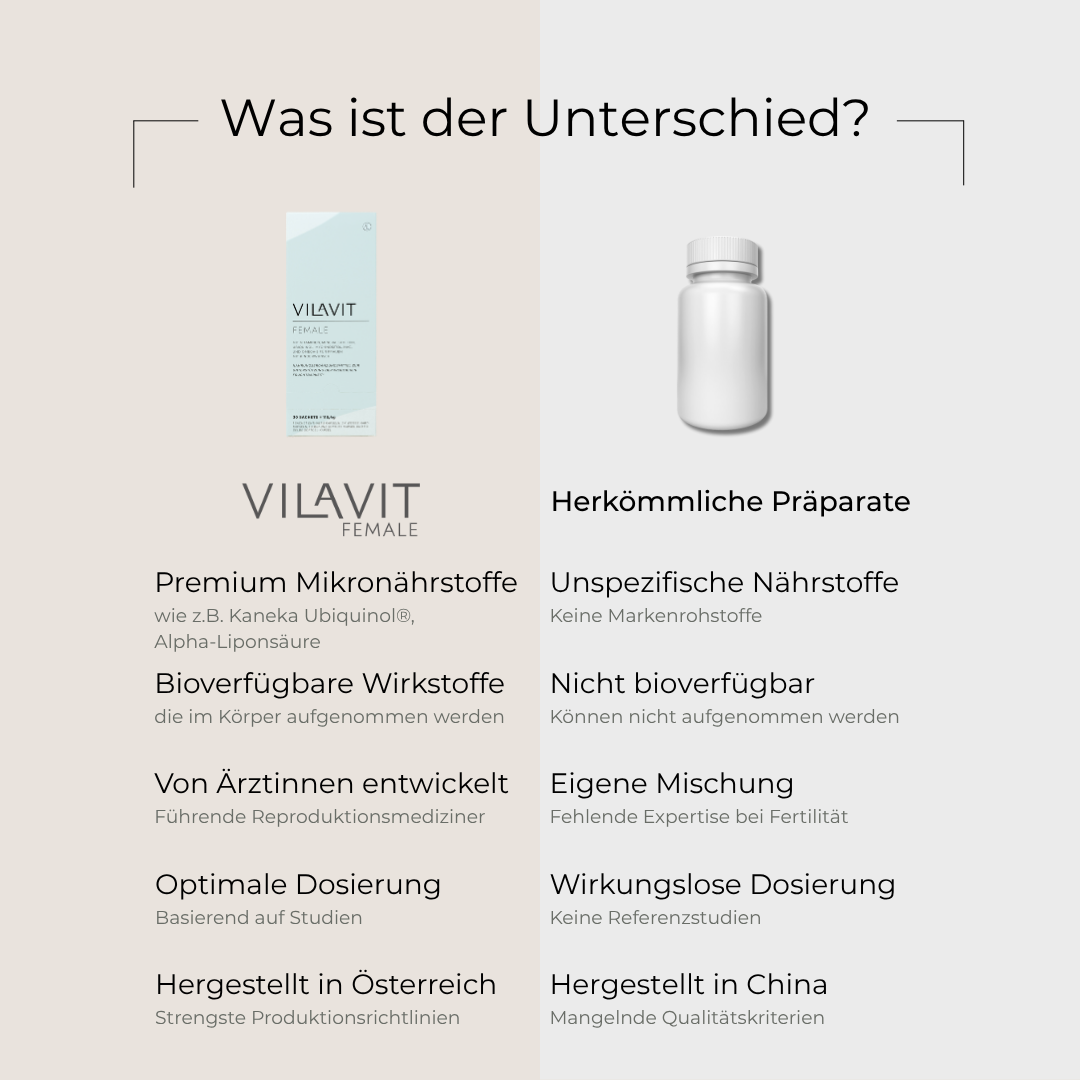
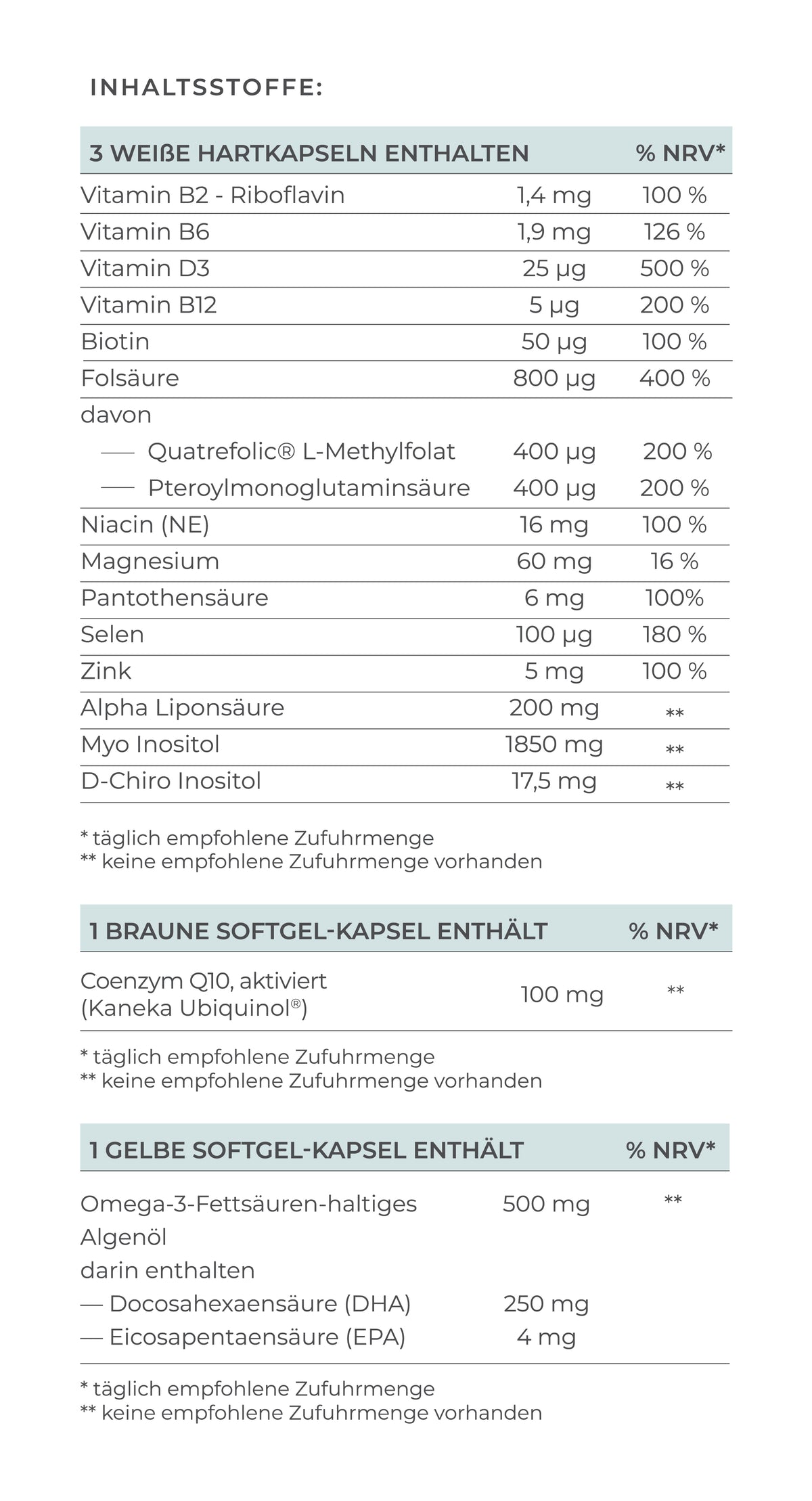
How much of each nutrient makes sense, and why too much can even be harmful, is shown with a concrete plan in Pimp my Eggs. VILAVIT Female contains ubiquinol, DHA, folate, vitamin D, selenium, zinc, alpha-lipoic acid and myo-inositol, among others, in one daily serving.
How long does it take to improve egg quality?
Expect around three months. That is how long the final maturation phase of an egg takes before it is released at ovulation. During this time it responds to its environment: blood flow, hormones, oxidative stress and nutrients. What you change today affects the eggs that will ovulate or be retrieved for IVF in about three months.
If you are planning treatment, it is therefore worth starting as soon as the decision is made, not only when stimulation begins. The same applies to your partner: sperm also need about three months. How he can prepare is explained in Pimp my Sperm.
Improving egg quality after 40
From 40, egg quality is the decisive factor when trying to conceive, much more than the number of eggs. And this is exactly when every egg counts, and anything that reduces oxidative stress affects the few eggs still maturing.
In practice, this means:
- Don't wait: Get advice from a fertility clinic early. In Austria, the IVF Fund only covers cycles that start before the woman's 40th birthday. Details in IVF Fund Austria.
- Stick to the basics: no smoking, no alcohol, enough sleep. They do not matter less after 40, if anything more.
- Plan nutrients carefully: coenzyme Q10 as ubiquinol, vitamin D if you are deficient, folate and omega-3. What the plan looks like after 40 is shown in Pimp my Eggs.
All the facts about age are in Getting Pregnant at 40.
Frequently asked questions about egg quality
Are there natural remedies to improve egg quality?
The most effective "remedies" are the unspectacular ones: not smoking, not drinking alcohol, getting enough sleep, eating a Mediterranean diet and keeping a stable weight. This is where the evidence is strongest. There is no reliable evidence for herbal teas or individual superfoods.
Does AMH measure egg quality?
No. AMH shows how many eggs are left, not how good they are. Which levels are normal at which age is shown in our AMH chart by age.
Can you improve egg quality in a month?
You achieve the most with around three months' lead time, because that is how long an egg's final maturation phase takes. But every day counts, so it is worth starting right away.
Ubiquinol or ubiquinone when trying to conceive?
Ubiquinol is the better choice. It is the active form of coenzyme Q10, which the body can use directly. Ubiquinone, on the other hand, first has to be converted into ubiquinol, and this conversion declines with age. In a comparison study, blood levels of CoQ10 rose much more with ubiquinol than with ubiquinone (Langsjoen et al., 2014). If you take coenzyme Q10 while trying to conceive, ubiquinol is the form to choose.
Does myo-inositol improve egg quality?
Myo-inositol is mainly of interest for women with PMOS (formerly PCOS). In studies, it improved insulin metabolism and raised the hormone SHBG after a few months (Unfer et al., 2017). Because balanced metabolism matters for egg maturation, myo-inositol is being researched intensively in PMOS. There is hardly any data yet for women without PMOS.
Does freezing make eggs worse?
Hardly, according to current knowledge. With modern flash-freezing, known as vitrification, eggs are preserved very well. A UK fertility clinic analysed its results over 15 years: the chances with frozen eggs were comparable to routine IVF (Garratt et al., 2024). What mattered was age at freezing. For women who froze their eggs before 35, about one in four transferred embryos led to a birth; for women aged 40 and over, only one in twenty.
Can cordyceps improve egg quality?
We advise against it. Cordyceps is a mushroom from traditional Chinese medicine and is often promoted online as a fertility booster. Yet there is not a single reliable study in humans, only a few animal experiments. Whether it is safe to take while trying to conceive or in early pregnancy has never been studied. In addition, it is often unclear how much active ingredient mushroom products actually contain. Your money and energy are much better spent on measures with proven benefits.