


The most important facts about cancer treatments and the desire to have children
- Unfortunately, fertility is often impaired by cancer treatments
- Nevertheless, many women can successfully become pregnant after cancer
- New treatment options such as AMH (anti-Müllerian hormone) administration are also being tested
- Cryopreservation is a proven and widely used method of preserving fertility before cancer treatment
A cancer diagnosis is a heavy blow for those affected. Many painful and unpleasant procedures, examinations, and treatment steps are necessary to defeat the cancer. Once this has been achieved, life outside of the illness begins to take on greater importance again, and for many, the next question arises: Can I still have children?
To give you a realistic insight into this complex topic, we have summarized the most relevant and latest scientific findings for you.
What do the statistics say about fertility after cancer?
The figures on how former cancer patients fare in terms of fertility vary greatly. First of all, we would like to point out that most of the figures and data in this article refer to women, as there is still little data available on men. In the section “Modern approaches to fertility preservation” you will also find some information on male cancer patients.
A study from 2024 found that around 70% of female cancer survivors who participated in the study had returned to a normal menstrual cycle a few years after cancer treatment (around 3 to 8 years). Unfortunately, the same study also showed that around 28% of the study participants were infertile during the same study period (Reiser, E., et al., 2024).
The level of AMH (anti-Müllerian hormone) is often used as an indicator of female fertility. You can find more information on this here. However, it seems to be difficult to determine fertility based on AMH levels in women who had cancer during childhood: A study shows that although AMH levels tend to be too low, the fertility of these women is not necessarily impaired. The authors of the study attribute this apparent contradiction to the fact that AMH is an indicator of the number of eggs present, but not of their quality (Nyström, A. et al., 2024).
In short, premature ovarian failure (POI) is the loss of ovarian activity before the age of 40. Among other things, it can lead to infertility. Unfortunately, premature ovarian failure seems to be a common obstacle on the journey to parenthood for women who have beaten cancer as children: Depending on the type of cancer and treatment, between 14 and 69% of former cancer patients suffer from premature ovarian failure, while this figure is only around 1.9% in the general population of Sweden (where this study was conducted) (Nyström, A. et al., 2024).
Pregnancy after cancer
Unfortunately, the data on pregnancies after cancer treatment is even scarcer than that on fertility. For this reason, further research is clearly needed. Nevertheless, we would like to present the currently available figures and data here:
According to a 2020 study, the rate of spontaneous pregnancies and subsequent successful births was 20% approximately 6 years after cancer treatment. Only one woman who participated in the study had attempted to become pregnant with the help of cryopreservation, but unfortunately without success. However, it should be noted that the figures in this study do not take into account ongoing cancer treatment, the desire to have children, the marital status of the women, or other factors (Goeckenjan, M., et al., 2020).
A study conducted in 2024 reported higher chances of success: The women in this study had all been treated for breast cancer. In addition, they had been informed about options for “preserving” their fertility before starting cancer treatment and had also opted for such treatment. The therapies used to preserve fertility were various forms of cryopreservation. The study authors showed that nearly 40% of women who had tried to become pregnant had a live birth. These were both natural conceptions and artificial inseminations performed using cells obtained before cancer treatment. The study also found that 79.3% of all reported pregnancies were achieved naturally and that frozen cells were only used by 27% of patients. (Peigné, M. et al., 2024)
Similar results were found in another study, in which 11 of 16 recorded pregnancies were natural and only 5 were achieved using cryo-embryos (Reiser, E., et al., 2024).
Unfortunately, a Swedish study found that although natural pregnancies are more common than artificial insemination even among (former) cancer patients, there is a downside, at least for patients who had cancer in childhood. These women are more likely to undergo additional examinations or treatments than non-cancer patients and are likely to have reduced fertility overall compared to the average population (Nyström, A. et al., 2024). Unfortunately, we do not have any such data for women whose cancer occurred in adulthood.
Modern approaches to fertility preservation
As you may have noticed, we have already mentioned cryopreservation several times in this article as a measure to preserve fertility. This therapy is considered promising for both men and women, as the eggs, sperm, embryos, or tissue can be removed before cancer treatment and are therefore not damaged. However, you have probably also noticed that many of the women who have undergone cryopreservation never use the frozen cells. Nevertheless, women report that cryopreservation is beneficial for their psychological well-being – this is also an important and legitimate factor in the journey to have children. Many scientists therefore recommend cryopreservation whenever possible. Unfortunately, cryotherapy is only suitable for patients who have a sufficient number of good-quality eggs or sperm before starting treatment. Cryotherapy is therefore only suitable from the onset of puberty at the earliest, and even then, fertilization and successful pregnancy can be difficult to achieve if the quality of the eggs or sperm is poor (Vakalopoulos, I., et al., 2015 and Goeckenjan, M., et al., 2020).
However, a study in mice may give hope to female cancer patients in particular: if the animals are given AMH in addition to conventional cancer therapy, their ovarian resources could be protected. Furthermore, AMH administration appears to have an antiproliferative effect, at least in certain types of cancer, thereby inhibiting the growth of cancer cells. However, AMH therapy must be discontinued slowly and gradually to avoid negative effects. The study authors also note that AMH has not yet been administered to humans. However, the scientists assume that the administration of AMH should be safe. Further research is definitely needed (Rodgers, R. J., et al., 2021).
Important questions about cancer treatment and fertility
Can I still get pregnant after cancer treatment?
Many women can still get pregnant after cancer treatment—most of them even naturally. Unfortunately, there is no reliable data available on fertility in men, but we assume that the chances are similar. However, your personal chances are very individual and depend on many factors.
How high is the risk of infertility?
Unfortunately, the risk of infertility is higher after cancer treatment than for other women. While some women have hardly any problems, some studies show that around 30% of patients are infertile. However, this is strongly related to their age. Men can also become infertile as a result of cancer treatment.
What options are available for preserving fertility before treatment?
There are several options that could help you or at least appear promising in initial studies:
- Cryopreservation of eggs, ovarian tissue, sperm, or embryos
- Hormone therapy (AMH administration, but only tested in animal studies so far)
- Individual consultation with reproductive medicine specialists before starting therapy
Are there other ways to increase the chances of pregnancy?
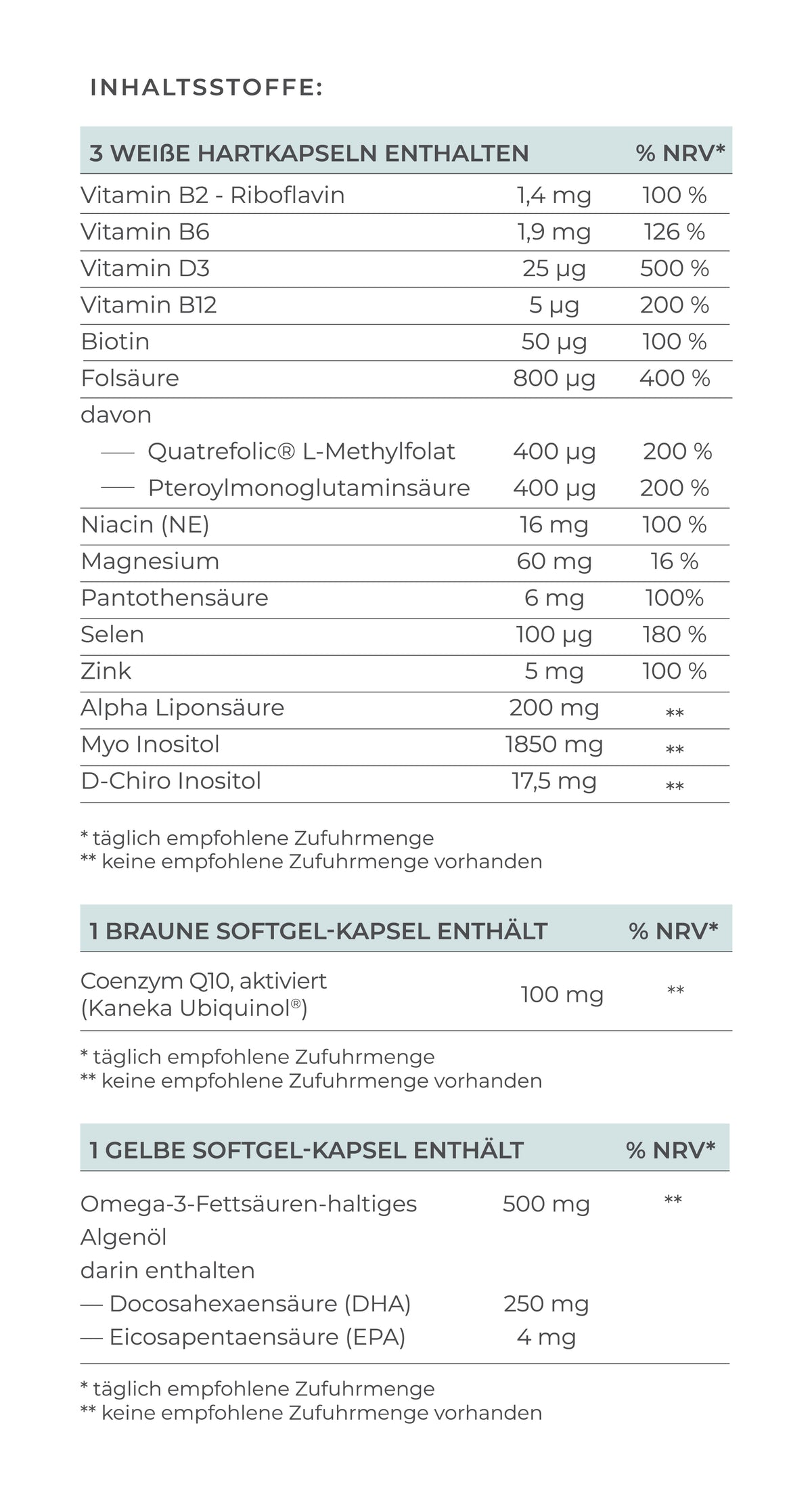
As with all people who want to have children, there are many lifestyle factors such as diet, smoking, alcohol consumption, but also stress and sleep quality that have an impact on fertility. According to recent findings, even energy drinks appear to have a negative impact on fertility – you can find out more about this here. In addition, you can try taking dietary supplements to support your fertility journey or track your cycle closely.
What is AMH and why is it important?
AMH (anti-Müllerian hormone) is a marker for ovarian reserve and can help to estimate the egg reserve. However, AMH cannot determine the quality of the eggs and is not a guarantee of either a successful pregnancy or fertility.
References:
- Reiser, E., Böttcher, B., Ossig, C., Schiller, J., Tollinger, S., & Toth, B. (2024). Female cancer survivors: sexual function, psychological distress, and remaining fertility. Journal of assisted reproduction and genetics, 41(4), 1057–1065. https://doi.org/10.1007/s10815-024-03051-7
- Rodgers, R. J., Abbott, J. A., Walters, K. A., & Ledger, W. L. (2021). Translational Physiology of Anti-Müllerian Hormone: Clinical Applications in Female Fertility Preservation and Cancer Treatment. Frontiers in endocrinology, 12, 689532. https://doi.org/10.3389/fendo.2021.689532
- Nyström, A., Mörse, H., Øra, I., Henic, E., Engellau, J., Wieslander, E., Tomaszewicz, A., & Elfving, M. (2024). Anti-Müllerian hormone and fertility in women after childhood cancer treatment: Association with current infertility risk classifications. PloS one, 19(8), e0308827. https://doi.org/10.1371/journal.pone.0308827
- Goeckenjan, M., Freis, A., Glaß, K., Schaar, J., Trinkaus, I., Torka, S., Wimberger, P., & Germeyer, A. (2020). Motherhood after cancer: fertility and utilisation of fertility-preservation methods. Archives of gynecology and obstetrics, 301(6), 1579–1588. https://doi.org/10.1007/s00404-020-05563-w
- Peigné, M., Mur, P., Laup, L., Hamy, A. S., Sifer, C., Mayeur, A., Eustache, F., Sarandi, S., Vinolas, C., Rakrouki, S., Benoit, A., Grynberg, M., & Sonigo, C. (2024). Fertility outcomes several years after urgent fertility preservation for patients with breast cancer. Fertility and sterility, 122(3), 504–513. https://doi.org/10.1016/j.fertnstert.2024.04.033
- Vakalopoulos, I., Dimou, P., Anagnostou, I., & Zeginiadou, T. (2015). Impact of cancer and cancer treatment on male fertility. Hormones (Athens, Greece), 14(4), 579–589. https://doi.org/10.14310/horm.2002.1620