


The most important things to know about birth control and your fertility:
- Many women notice a change in their menstrual cycle after stop taking birth control
- Studies have shown that these changes last for an average of around six cycles
- Despite these physical changes, women who previously used the pill as contraception become pregnant almost as often and almost as quickly as women who did not take the pill
- After twelve months at the latest, there is no longer any difference in pregnancy rates between women who used the pill for contraception and women who did not
- However, specifically addressing nutrient deficiencies caused by the pill can be beneficial when planning for a baby
The pill is one of the best-known and most widely used contraceptives. Despite this, or perhaps because of it, there are many rumors and misconceptions about the pill. But is it really true that getting pregnant after taking the pill is as difficult as is often claimed? Or is it not as bad as it seems at first glance? Amidst all the confusion, this article aims to provide you with fact-based information that you can rely on.
Changes in your cycle after stopping the pill
For many women, stopping the pill is accompanied by physical and mental changes. Some women report mood swings, headaches, or acne. But you have probably also heard many different experiences from friends or family members. The fact that experiences differ is literally in the nature of us humans, but even so, scientific studies can characterize certain “common” changes. After stopping the pill, some changes in women's menstrual cycles can indeed be observed.
Scientists found that the consistency of mucus changed in the first menstrual cycles after stopping hormonal contraception. In addition, ovulation was slightly delayed and menstrual bleeding was lighter than usual. These changes were only noticeable in the first six cycles after stopping the medication. The human body probably needs this time to adjust to the “new” hormonal situation before the changes slowly subside and the cycle returns to normal (Nassaralla, C. L., et al., 2011).
Duration of the journey to pregnancy after stopping the pill
The topic of getting pregnant after stopping contraception is particularly important for many women, which is completely understandable. For most women, the ideal contraceptive should not only be practical, reliable, and have as few side effects as possible, but also be easy to stop taking when they want to have a baby, so that nothing stands in the way of their plans. If you are feeling uncertain because you have heard some sobering stories from other women about trying to conceive after the pill, we can reassure you on behalf of science and give you the all-clear!
A study involving over 3,700 women from Denmark found that taking the pill earlier leads to only a short delay in successful conception. The difference compared to women who did not use the pill becomes greater when the pill has been taken over a longer period of time. However, the differences or delays in the time it takes to become pregnant are so small that the study authors give hope to affected women: it was not found that the fertility of women who had used the pill for contraception was seriously or permanently impaired (Mikkelsen et al, 2013).
Other studies also give cause for optimism regarding future pregnancy after taking the pill! These studies also found that women who had taken the pill may take a little longer to become pregnant again, but that fertility was hardly impaired in the long term. However, it should be noted that as women get older, the time it takes to get pregnant is longer than for younger women. This phenomenon can be observed regardless of previous contraceptive methods and therefore does not necessarily seem to be attributable to the pill (Damtie Y., et al., 2023).
For those who love numbers, there is another study with an incredible 14,884 women participating! Even among this large group of women, who had previously used various types of hormonal contraception, no significant difference in the duration of their journey to conceive was found. The differences were so small that the experts responsible concluded that contraceptives should not be selected on the basis of this concern, but rather on the basis of other criteria and advantages (Girum T., et al., 2018).
Finally, we would like to reassure you with two studies that examined pregnancy rates 12 months after discontinuing contraception: Here, too, there was hardly any difference compared to other non-hormonal contraceptives such as condoms or natural family planning (Barnhart, K. T. et al., 2009 and Hassan, J., et al, 1994).
Of course, your desire to have children is your own personal, exciting journey, but you don't have to start it with worry. Despite (previous) contraception with the pill, you can look forward to the coming period with joy!
Recommendations to gently support your fertility
Basically, there is clearly no reason to worry if you want to get pregnant after taking the pill. However, if you are still concerned or want to support your fertility in the best possible way, there are a few tips and tricks that can help you.
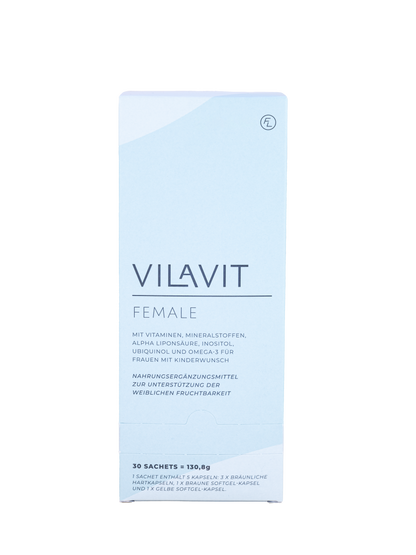
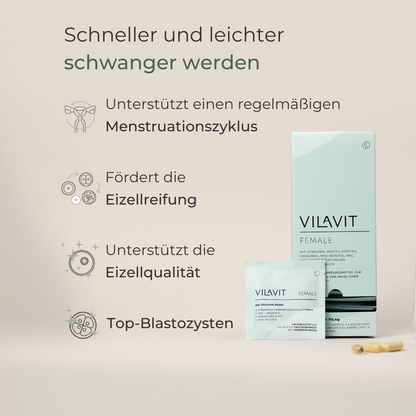
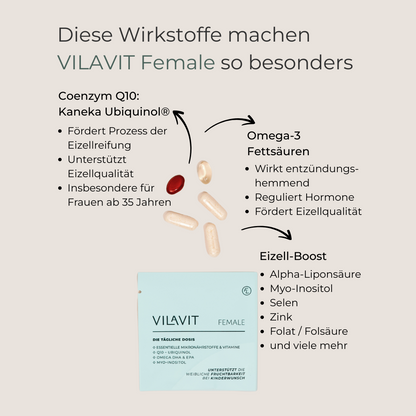
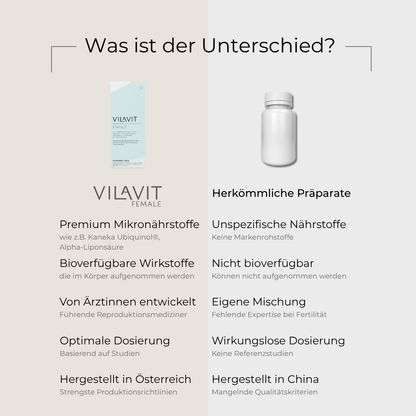
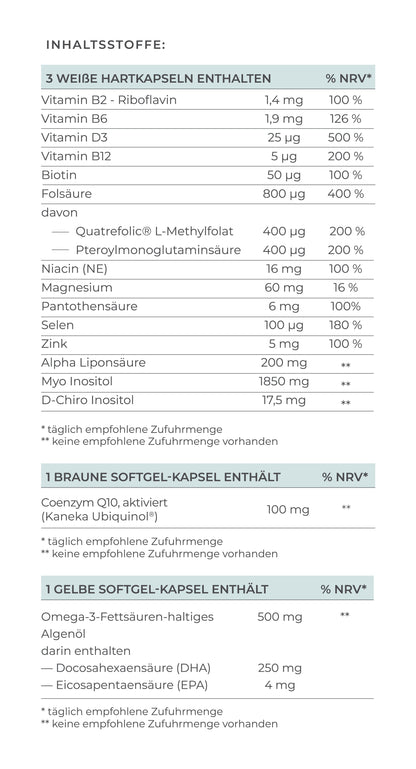
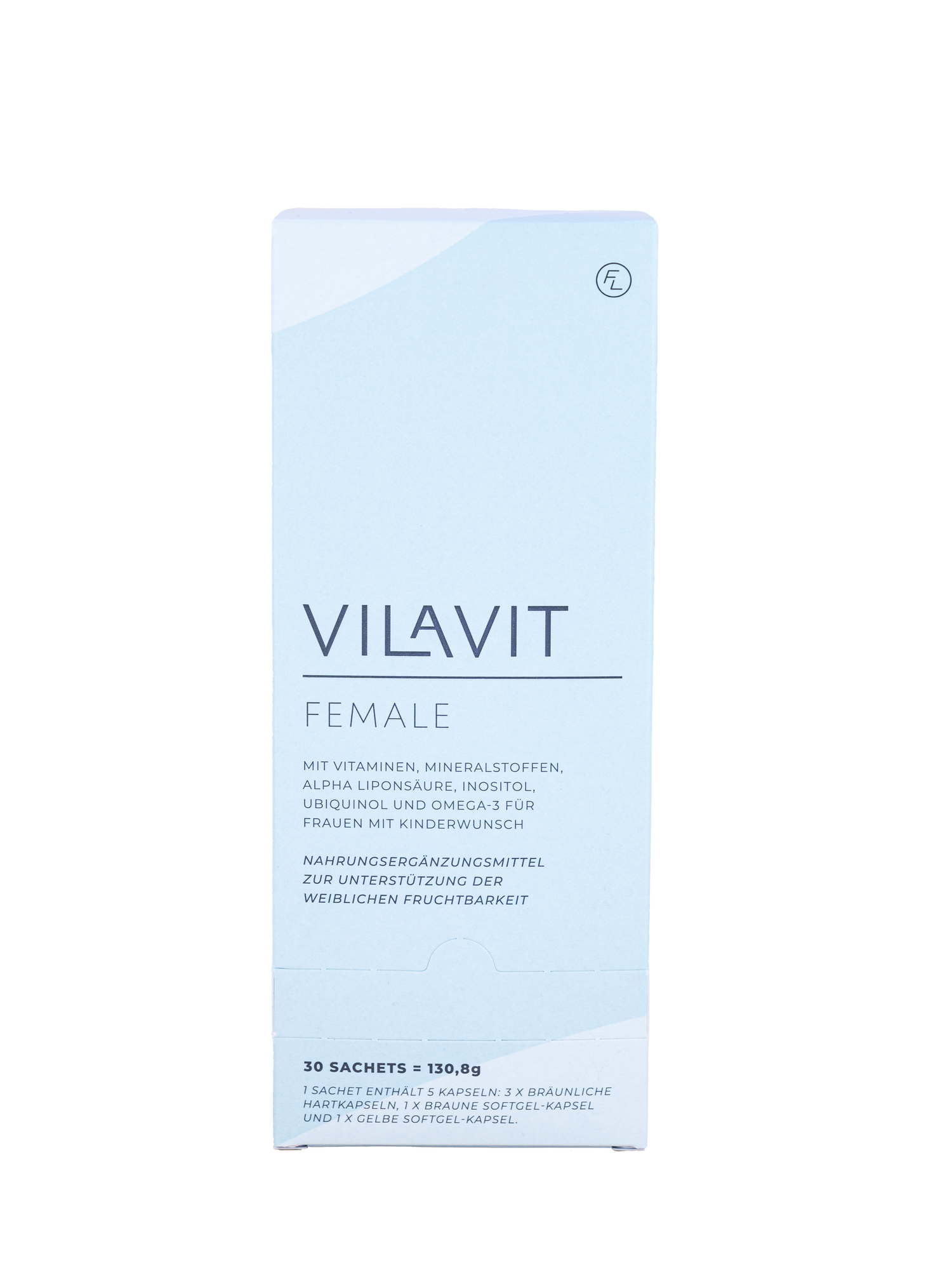
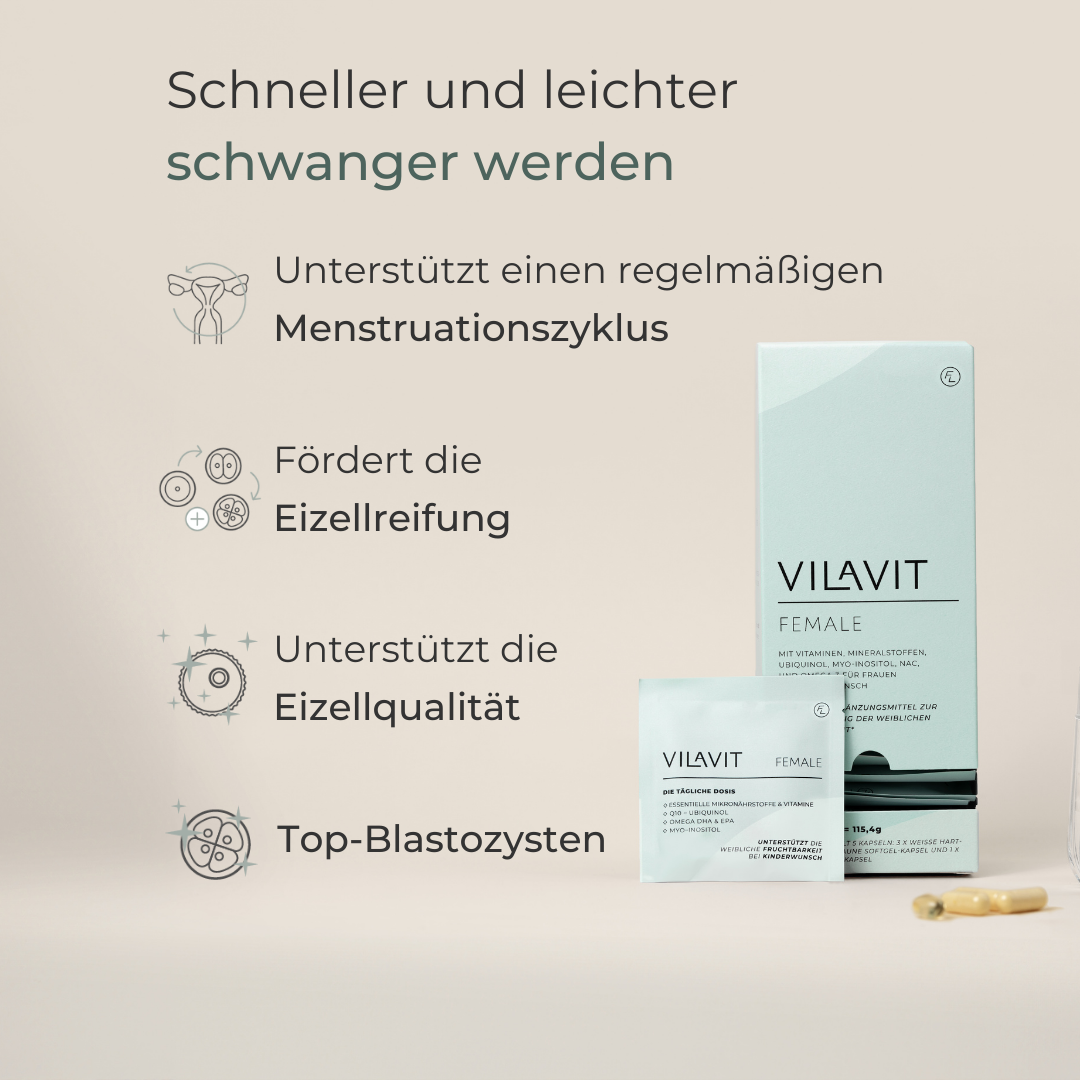
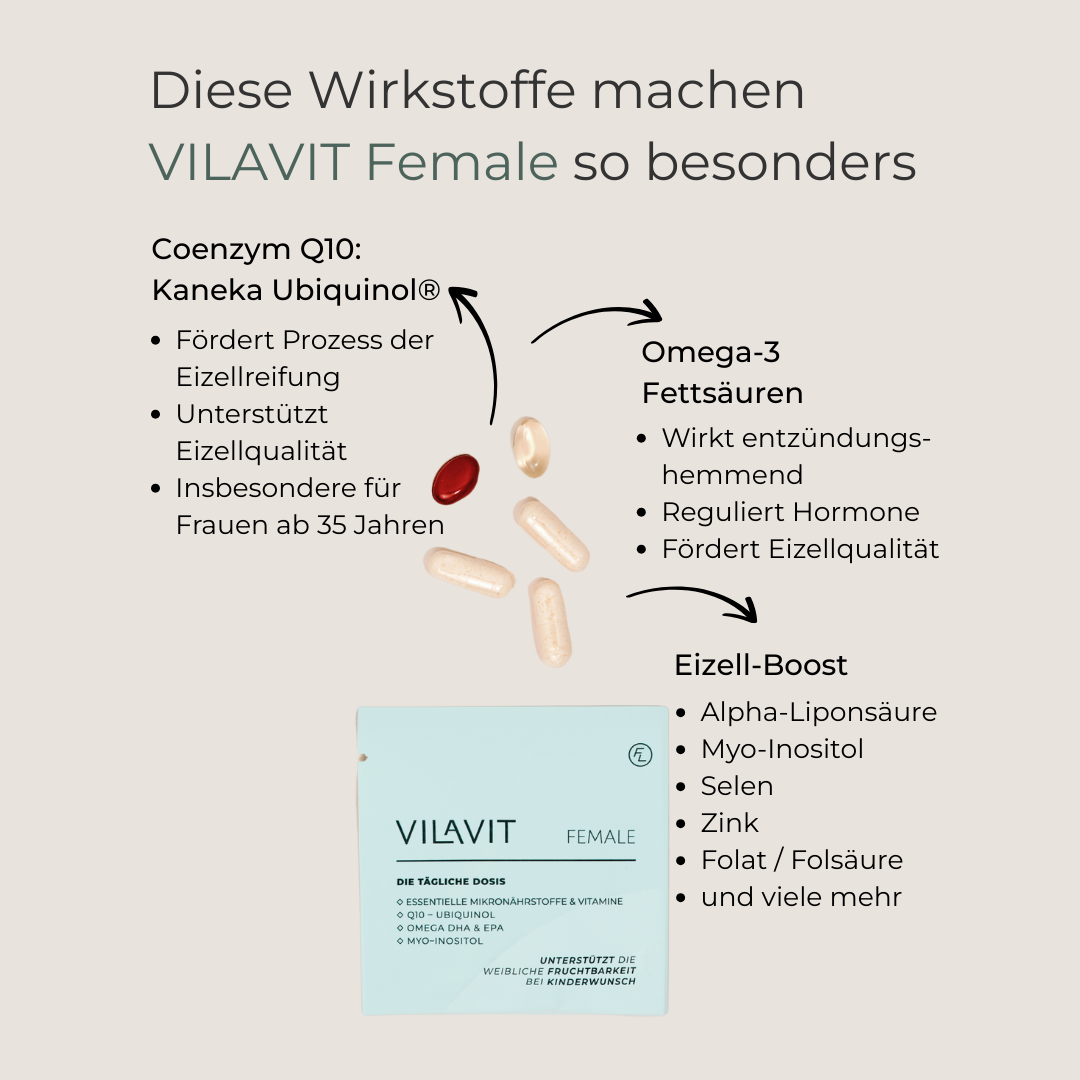
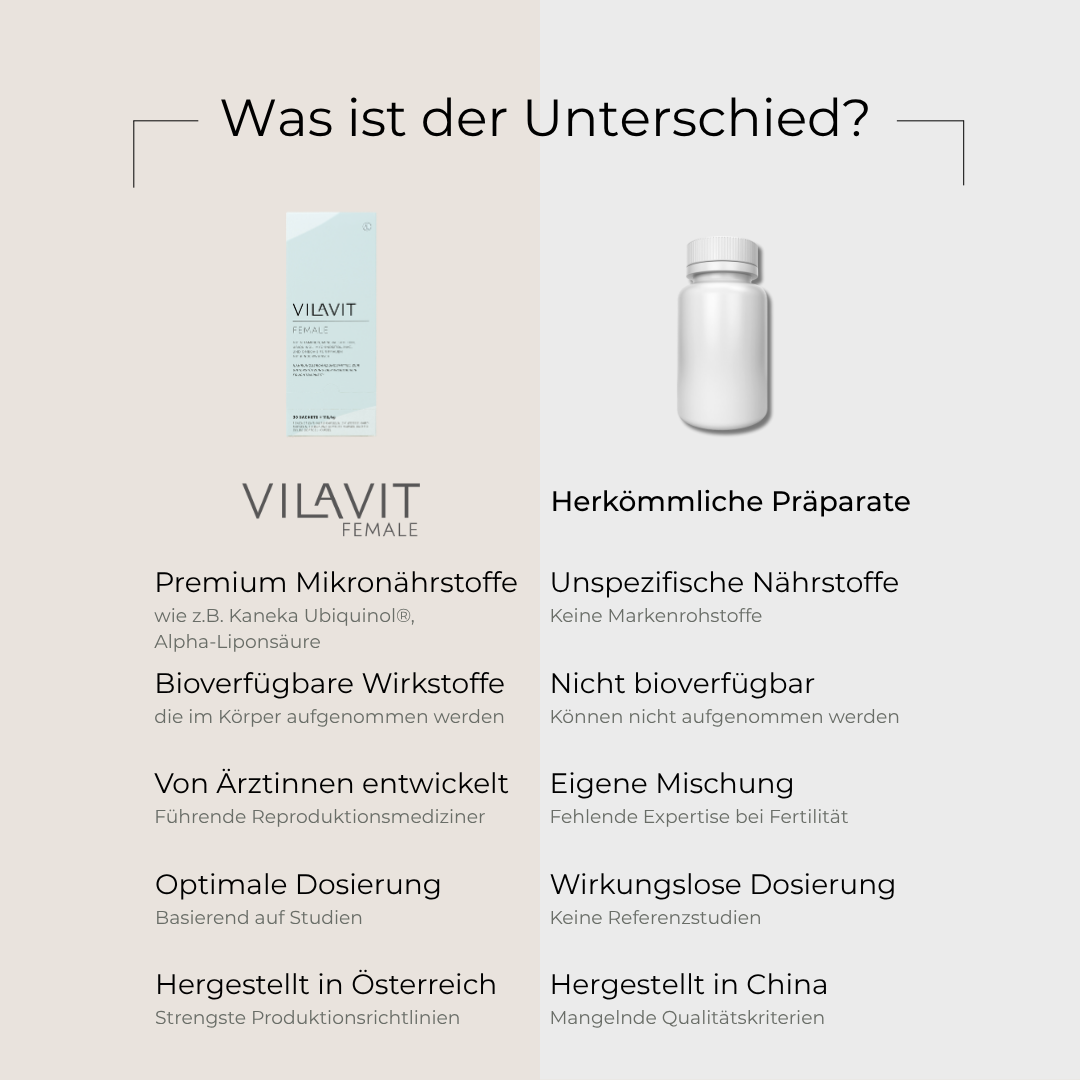
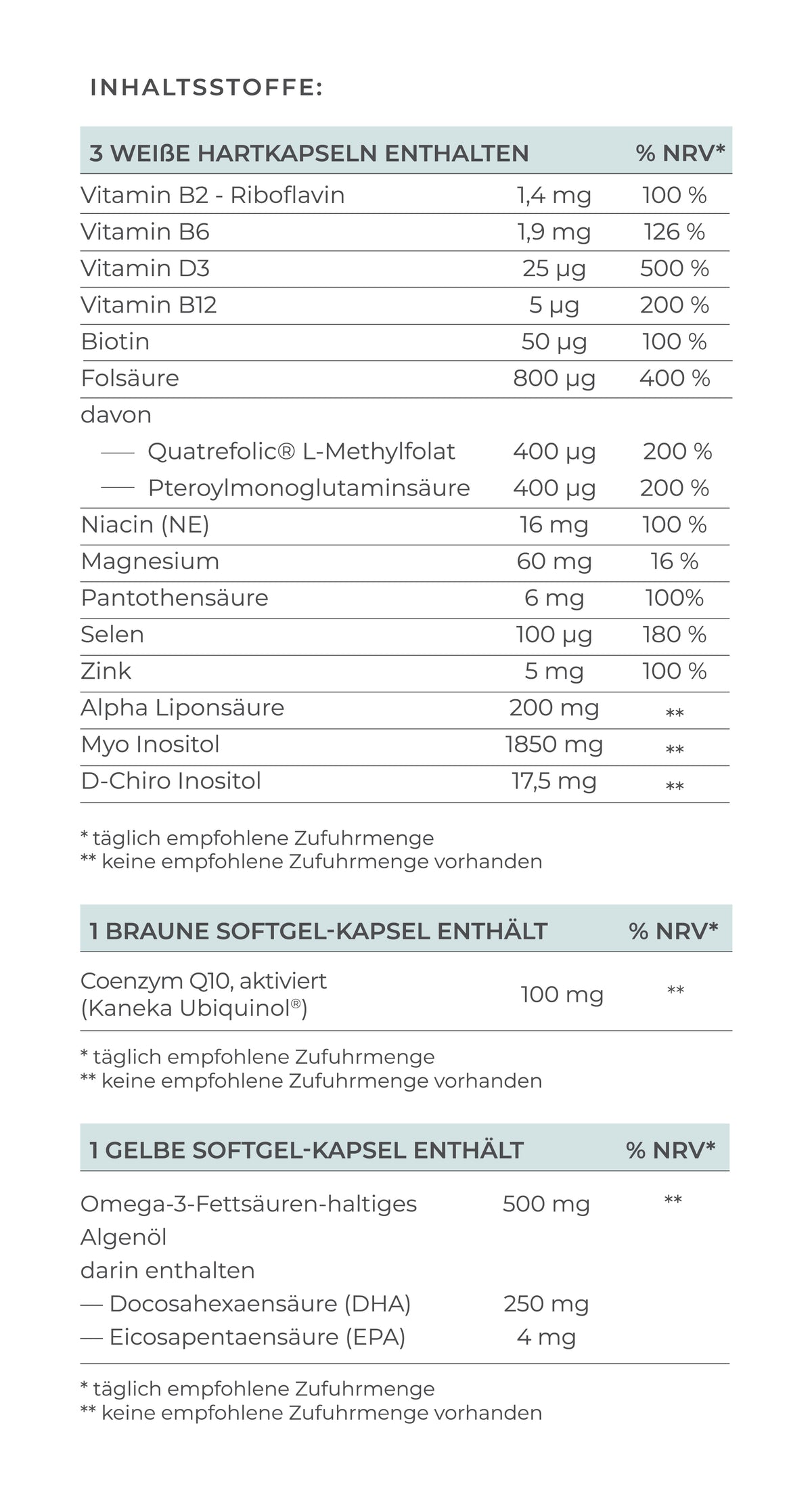
With regard to your previous (or current) use of the pill, you should be aware that it can contribute to a deficiency in vitamins B, E, and C, as well as folic acid, magnesium, selenium, and zinc (Palmery M., et al., 2013). A nutrient deficiency at the beginning of pregnancy is always unfavorable, which is why targeted supplementation can be useful here. However, you should definitely have enough folic acid if you are planning a pregnancy – you can find out exactly why here. So if you are looking for a suitable combination supplement for your baby planning, we recommend VILAVIT Female. VILAVIT Female has been developed by experts to help you get off to the best possible start on your journey to parenthood.
Apart from nutrients, stress, exercise, and dietary habits such as the consumption of energy drinks play an unexpectedly large role in a possible pregnancy. Dental health can also be important for successful conception! If you are curious, we have linked some interesting articles that you can access by clicking directly on the topics.
Frequently asked questions on this topic
How soon after stopping the pill can I get pregnant?
You can get pregnant as soon as you ovulate. This can happen in the first cycle after stopping the pill or it can take a few months. If you feel that something is wrong, please consult a doctor.
Do I have to wait to get pregnant after stopping the pill?
No, this is not necessary from a medical point of view. However, if it makes you feel more comfortable, you can and should do so.
Does the pill affect my fertility in the long term?
No, the pill's effect usually wears off very quickly within the first few weeks and months. According to studies, no differences can be detected after a year at the latest.
I want to get pregnant as soon as possible. What can I do?
Even before you actually become pregnant (i.e., when you are planning to have a baby), supplementation with certain important nutrients—especially folic acid—is recommended. Since the pill can contribute to folic acid deficiency, you should not underestimate this risk. Ultimately, regardless of your previous method of contraception, you can also increase your chances of becoming pregnant through your lifestyle.
References
- Mikkelsen, E. M., Riis, A. H., Wise, L. A., Hatch, E. E., Rothman, K. J., & Sørensen, H. T. (2013). Pre-gravid oral contraceptive use and time to pregnancy: a Danish prospective cohort study. Human reproduction (Oxford, England), 28(5), 1398–1405. https://doi.org/10.1093/humrep/det023
- Damtie, Y., Kefale, B., Arefaynie, M., Yalew, M., & Adane, B. (2023). Fertility return after hormonal contraceptive discontinuation and associated factors among women attended Family Guidance Association of Ethiopia Dessie model clinic, Northeast Ethiopia: A cross-sectional study. PloS one, 18(7), e0287440. https://doi.org/10.1371/journal.pone.0287440
- Girum, T., & Wasie, A. (2018). Return of fertility after discontinuation of contraception: a systematic review and meta-analysis. Contraception and reproductive medicine, 3, 9. https://doi.org/10.1186/s40834-018-0064-y
- Barnhart, K. T., & Schreiber, C. A. (2009). Return to fertility following discontinuation of oral contraceptives. Fertility and sterility, 91(3), 659–663. https://doi.org/10.1016/j.fertnstert.2009.01.003
- Hassan, J., Kulenthran, A., & Thum, Y. S. (1994). The return of fertility after discontinuation of oral contraception in Malaysian women. The Medical journal of Malaysia, 49(4), 348–350.
- Nassaralla, C. L., Stanford, J. B., Daly, K. D., Schneider, M., Schliep, K. C., & Fehring, R. J. (2011). Characteristics of the menstrual cycle after discontinuation of oral contraceptives. Journal of women's health (2002), 20(2), 169–177. https://doi.org/10.1089/jwh.2010.2001
- Palmery, M., Saraceno, A., Vaiarelli, A., & Carlomagno, G. (2013). Oral contraceptives and changes in nutritional requirements. European review for medical and pharmacological sciences, 17(13), 1804–1813.