


- Certain sex hormones decrease with the consumption of highly processed foods
- Many key parameters of a semen analysis deteriorate as consumption of highly processed products increases
- The causes can be varied but have not yet been fully researched
- However, by making targeted changes to your diet, you can actually improve your fertility
You shouldn’t choose your daily meals based solely on taste and convenience; you should take a closer look, especially while you’re trying to conceive. That’s because highly processed foods (also known as UPCs, short for Ultra-Processed Foods) aren’t just bad for your health—they can also have a very real negative impact on your fertility. Below, we explain the shocking truth based on scientific studies.
Declining hormone levels due to increased consumption of industrially produced foods
A study last year found that higher consumption of ultra-processed foods can lead to a reduction in FSH and testosterone levels (Preston, J. M., et al., 2025). Both hormones play a key role in spermatogenesis, or “sperm production.” If these hormones become imbalanced, a variety of disorders can occur that affect fertility. If these hormones become imbalanced, a variety of disorders can occur that may impair fertility. Interestingly, another study was also unable to demonstrate an effect on hormone levels, although it did show an impact on sperm quality (Petre, G. C., et al., 2025). Whether and to what extent highly processed foods affect hormone levels therefore clearly still needs to be conclusively clarified. What is clear, however, is that a connection cannot currently be ruled out.
Dying sperm and other abnormalities
It is undisputed, however, that highly processed foods lead to a decline in male fertility in general and in sperm quality in particular (Alesi, S., et al., 2022). But what exactly can highly processed foods do? Among other things, they directly affect the “classic” sperm parameters in reproductive medicine: men who consume more of these industrially manufactured products generally have a lower sperm concentration compared to men who consume fewer of these foods (Soltani, M., et al., 2025). In addition to concentration, however, the total sperm count also suffers from the consumption of highly processed foods (Valle-Hita, C., et al., 2024).
Sperm morphology is also adversely affected by the consumption of such products. Sperm morphology refers to the assessment of the shape of the sperm. Among other things, this means whether they are normally shaped and have one tail (rather than multiple tails or none at all). Sperm motility is also affected (Ceretti, E., et al., 2024). Motility refers to the ability to move and is particularly important for the sperm to reach the egg in the first place. Incidentally, this is important not only for spontaneous conception but also for traditional IVF. In ICSI, however, the sperm do not need to move on their own, which is why this method of artificial insemination may be more suitable for some men.
You can find more detailed information and explanations about sperm quality and semen analysis here…
In search of the causes…
In their search for possible causes of these effects, researchers have uncovered some intriguing connections: Typically “Western” (often highly processed) foods such as ready-made meals, heavily processed grains and meat, sugary drinks and foods, and fried foods can lead to increased sperm apoptosis. This means that the body’s own immune system causes more sperm to undergo cell death. If more sperm are killed, there are naturally fewer available for successful fertilization—whether through natural or assisted reproduction. In addition, consuming these foods disrupts energy metabolism in Sertoli cells—important nourishing and supportive cells involved in sperm maturation. Here, too, such disruption leads to less healthy sperm. Ultimately, these foods also exacerbate abnormalities in the proteins found in the testicles. These abnormal proteins affect your fertility in many ways—but unfortunately almost never in a positive way (Pecora, G., et al., 2023).
Boosting Fertility Through Dietary Changes
Given all these negative prospects, the question naturally arises: how—and whether—can one optimize one’s diet to preserve or even improve sperm quality?
If you manage to replace just 10% of your energy intake from highly processed foods with minimally processed food sources, your sperm count, concentration, motility, and morphology have been shown to increase (Valle-Hita, C., et al., 2024). A great step in the right direction on your journey to having the child you desire!
You can take it a step further by trying a Mediterranean diet: This has a positive effect on your sperm quality! The key characteristics of a Mediterranean diet are low consumption of red meat and saturated fats. Instead, it emphasizes plenty of fruits and vegetables as well as unsaturated fats (Pecora, G., et al., 2023). Of course, even the smallest change in this area is a positive step, and it’s perfectly fine to take things slowly as you adjust to a new diet! You might find it easier if, for example, your partner also changes her diet. Since the Mediterranean diet is also beneficial for female fertility, you could boost your fertility together! But even people who aren’t planning to have children can benefit greatly from this diet. Maybe there’s someone in your circle who’d like to try the delicious Mediterranean diet with you!
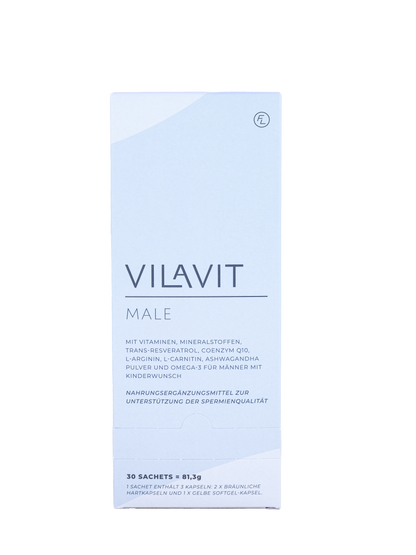
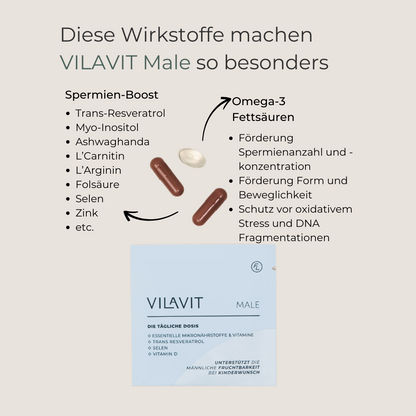
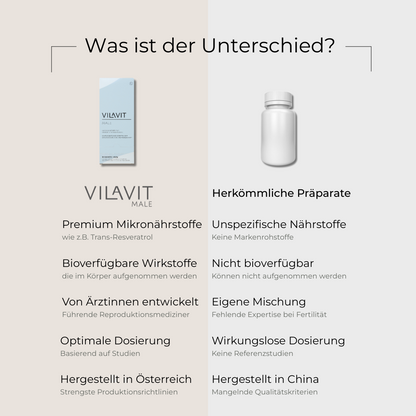
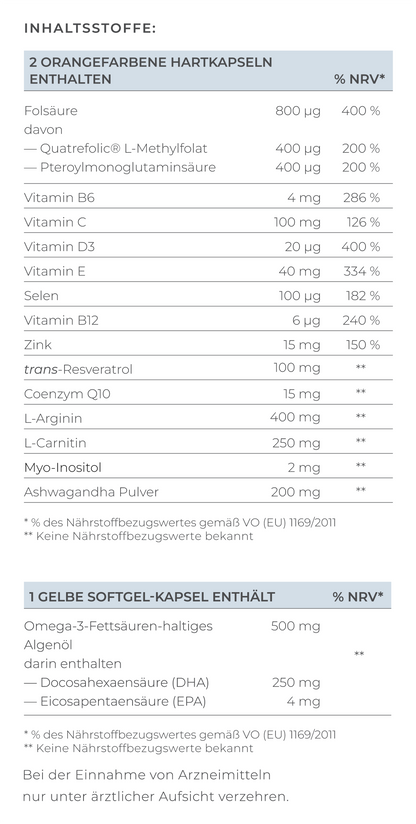
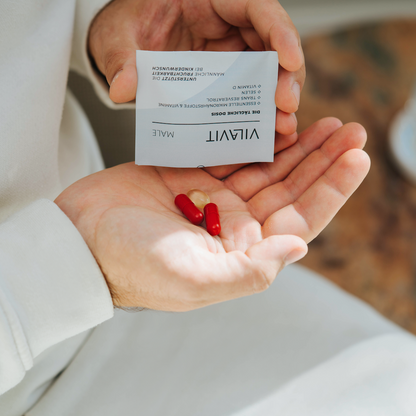
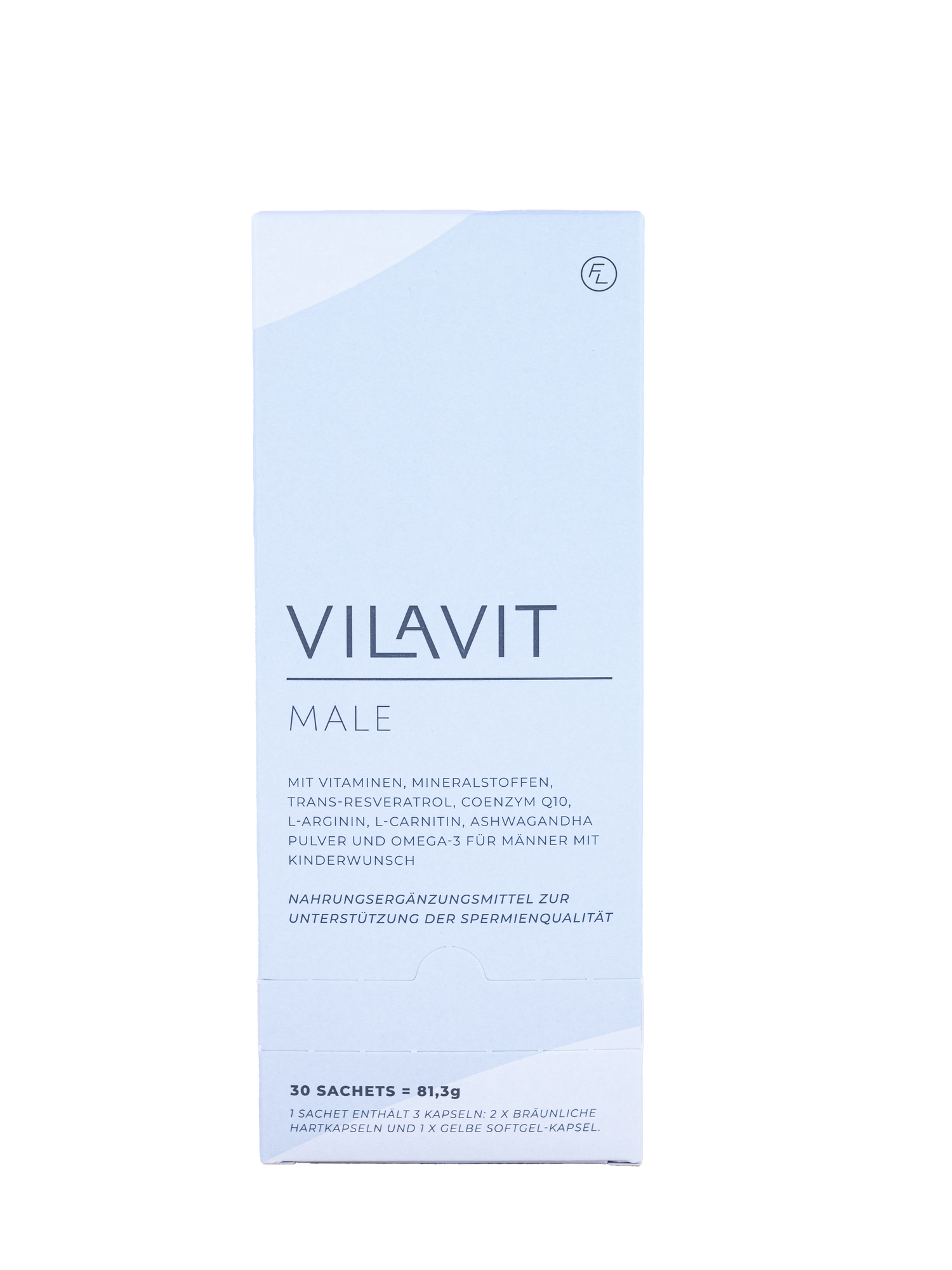
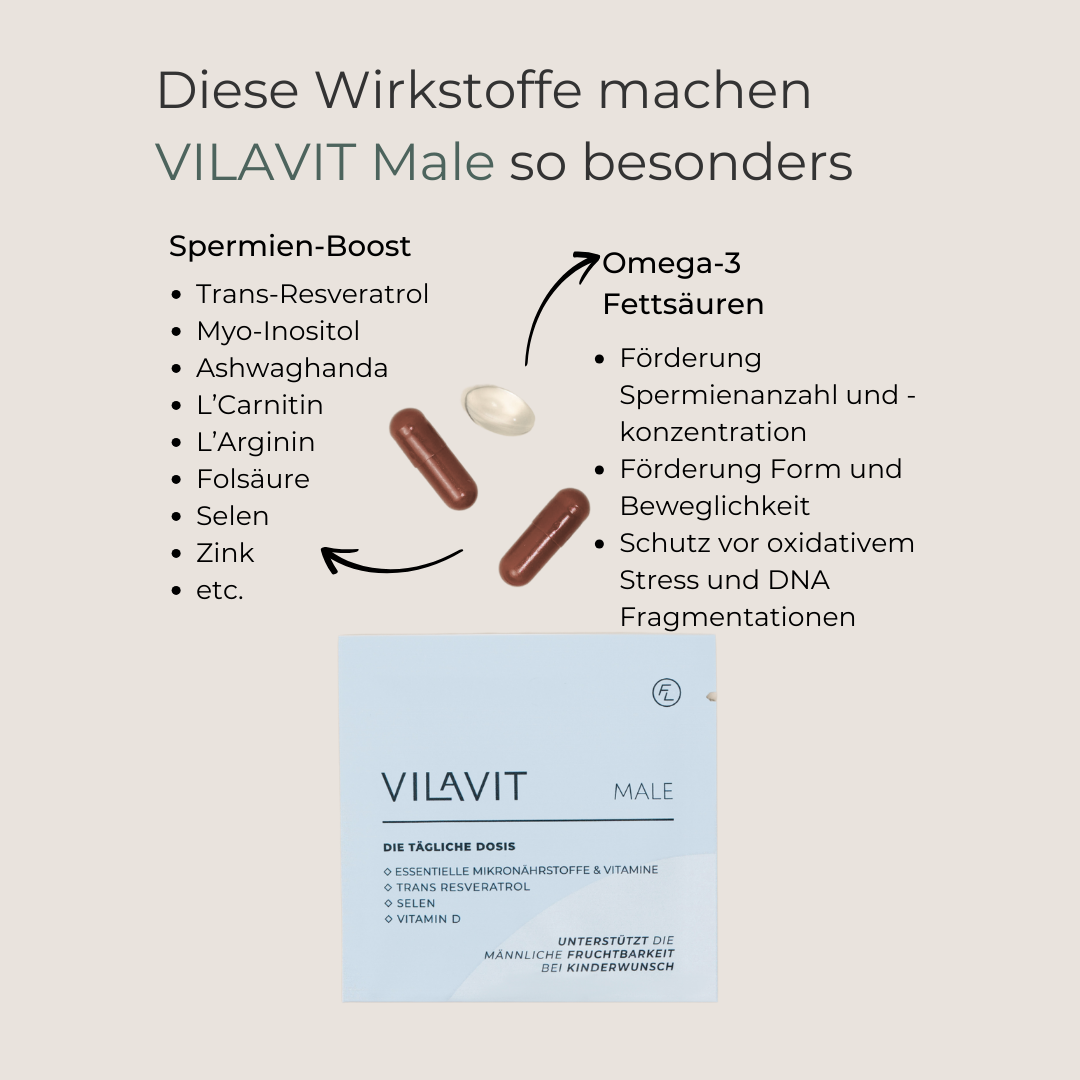
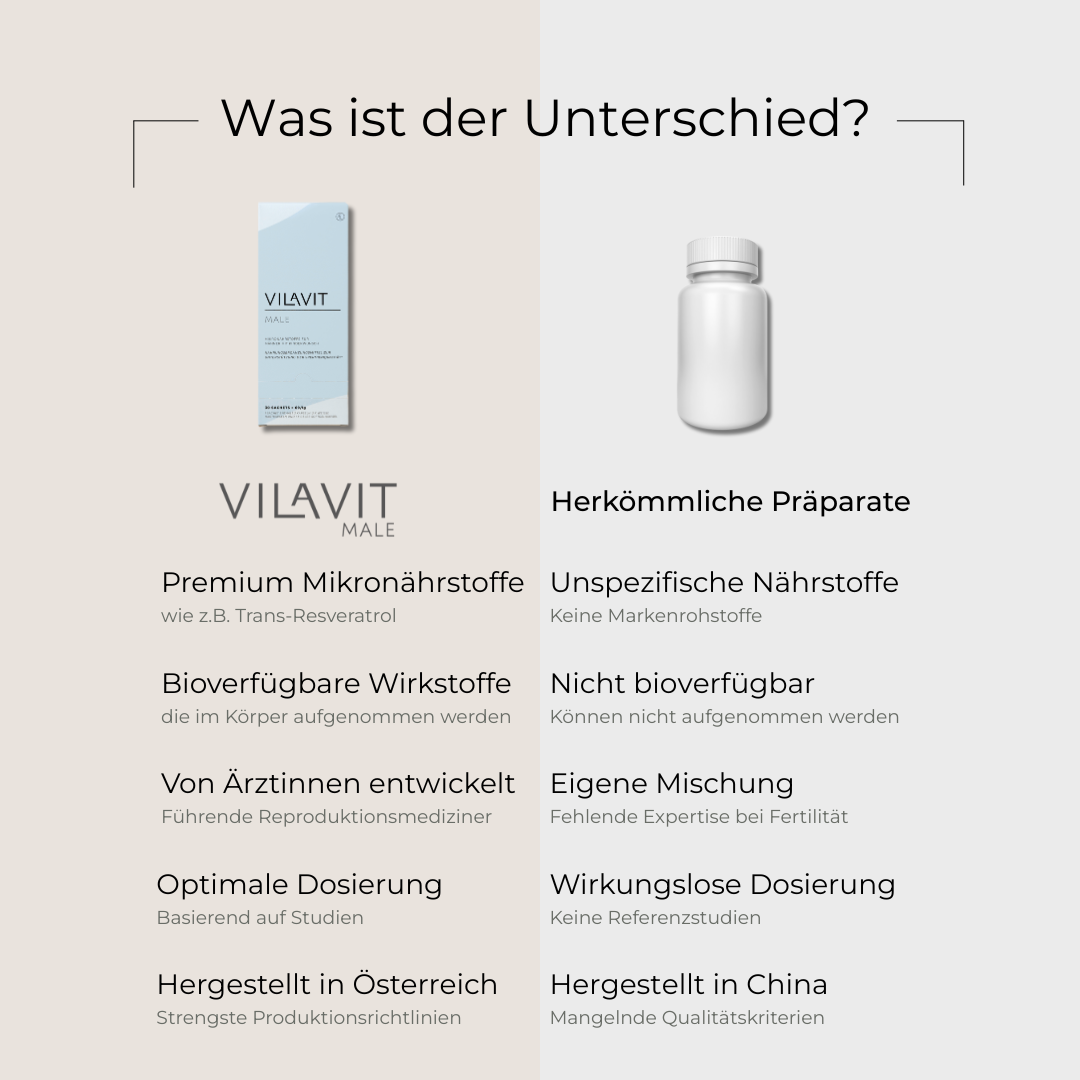
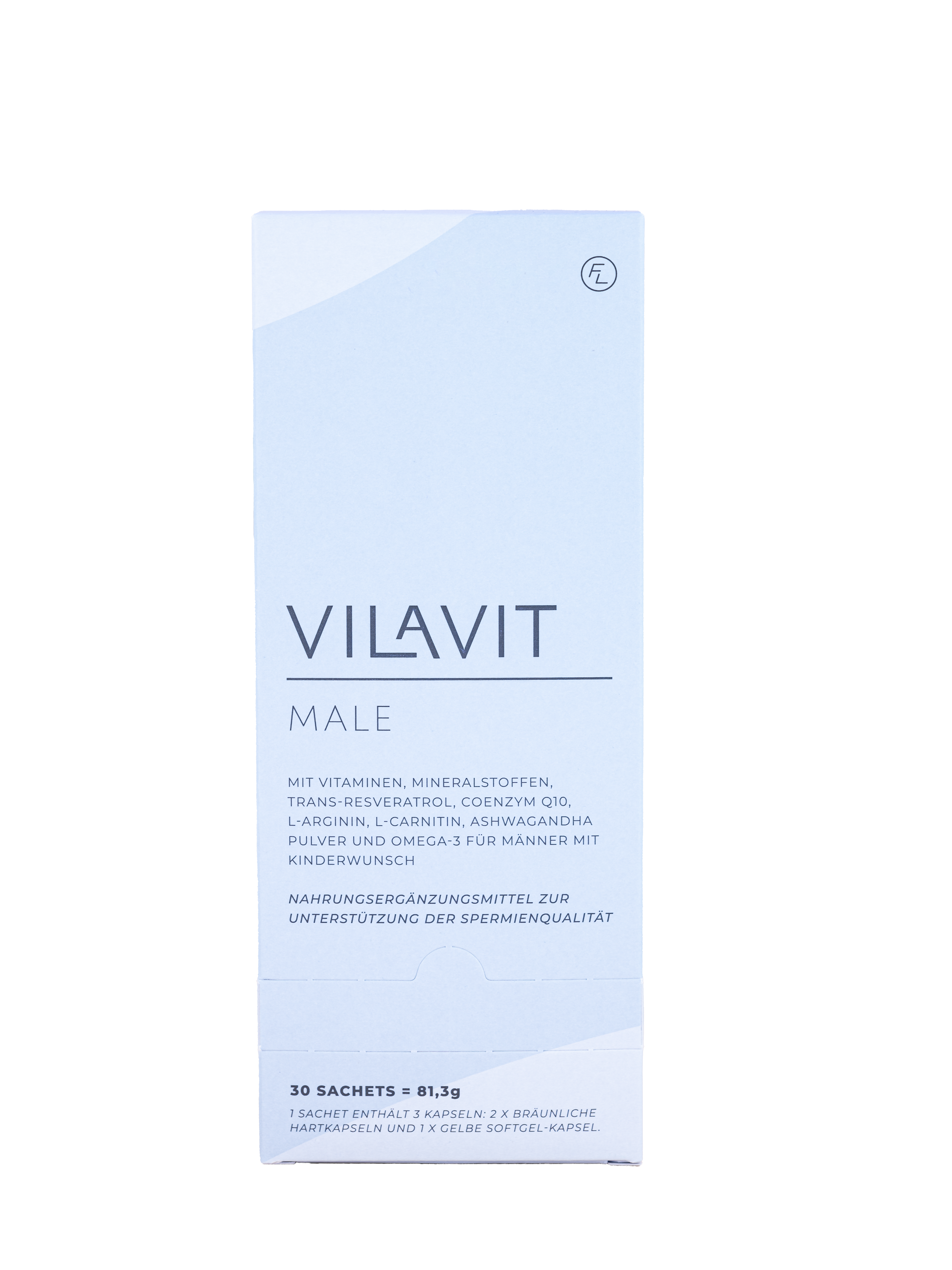
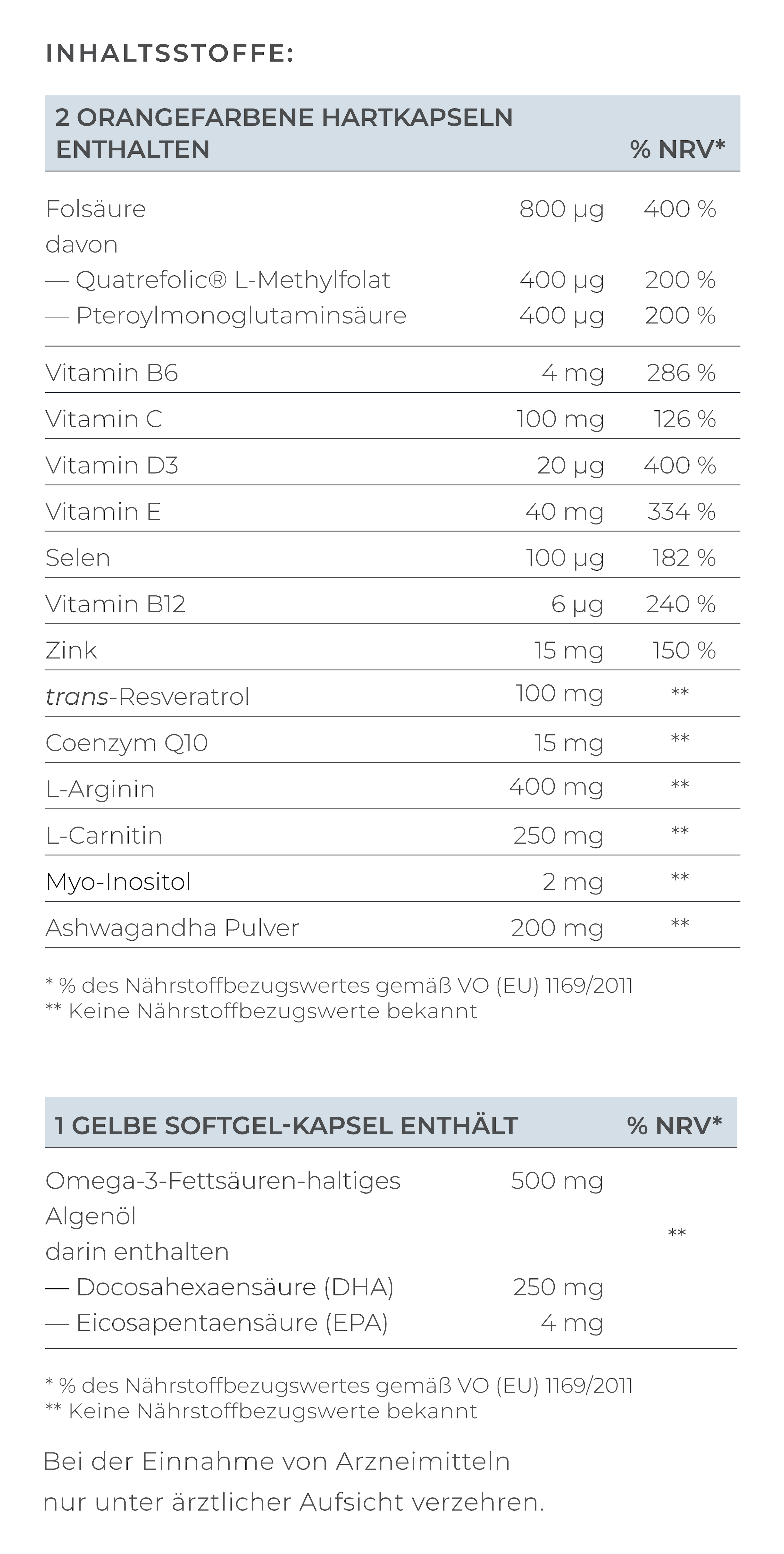
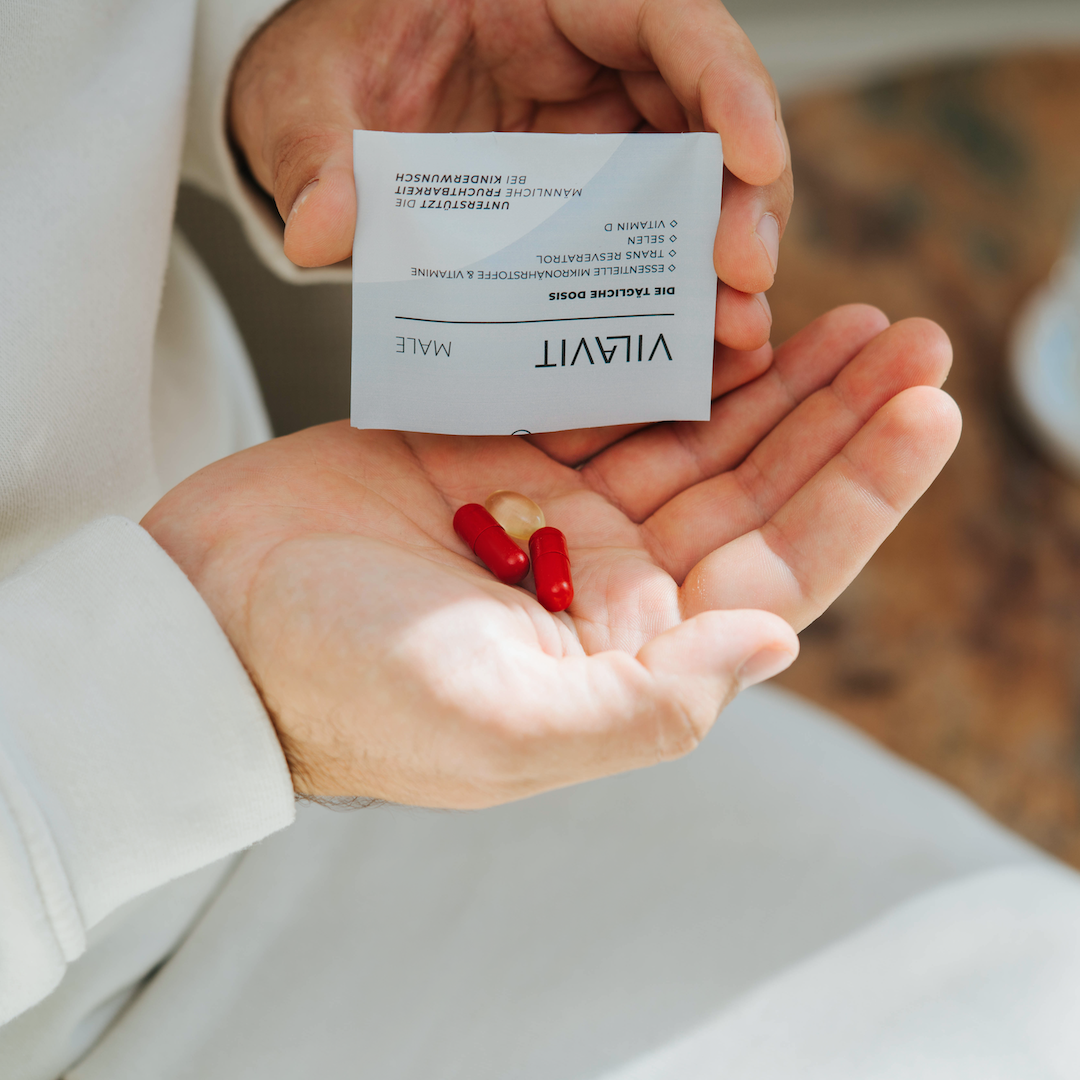
If you really want to do everything you can to support your desire to have children and improve your sperm quality, you can supplement with zinc, selenium, omega-3 fatty acids, and coenzyme Q10, among other things. When taken in sufficient doses through micronutrient supplements, these have been shown to improve sperm concentration, motility, and total count, among other things (Alesi, S., et al., 2022). Thus, they are not only an important building block on your journey to conception but can provide support precisely where highly processed foods cause harm. If you don’t want to take all these nutrients individually as supplements, we highly recommend VILAVIT Male—it contains all these ingredients and several other micronutrients to boost your sperm.
Frequently Asked Questions on the Topic
Which hormones are most commonly reduced by highly processed foods?
In most cases, testosterone and FSH levels drop significantly. Both are sex hormones and are important for sperm production.
Could my semen analysis actually be worse because I eat a lot of processed foods?
Yes, that’s absolutely possible! Fortunately, you can positively influence these changes through your diet, but that’s often easier said than done.
How should I eat to improve sperm quality?
The Mediterranean diet, in particular—with plenty of fruits and vegetables and limited red meat and saturated fats—is beneficial for sperm quality.
Should I take dietary supplements for my fertility?
Targeted intake of selected nutrients can definitely benefit your fertility. However, make sure to take high-quality supplements and still prioritize a healthy and balanced diet. VILAVIT Male contains everything that supports your fertility and sperm—completely free of additives!
References
- Preston, J. M., Iversen, J., Hufnagel, A., Hjort, L., Taylor, J., Sanchez, C., George, V., Hansen, A. N., Ängquist, L., Hermann, S., Craig, J. M., Torekov, S., Lindh, C., Hougaard, K. S., Nóbrega, M. A., Simpson, S. J., & Barrès, R. (2025). Effect of ultra-processed food consumption on male reproductive and metabolic health. Cell metabolism, 37(10), 1950–1960.e2. https://doi.org/10.1016/j.cmet.2025.08.004
- Petre, G. C., Francini-Pesenti, F., De Toni, L., Di Nisio, A., Mingardi, A., Cosci, I., Passerin, N., Ferlin, A., & Garolla, A. (2025). Role of Mediterranean Diet and Ultra-Processed Foods on Sperm Parameters: Data from a Cross-Sectional Study. Nutrients, 17(13), 2066. https://doi.org/10.3390/nu17132066
- Alesi, S., Villani, A., Mantzioris, E., Takele, W. W., Cowan, S., Moran, L. J., & Mousa, A. (2022). Anti-Inflammatory Diets in Fertility: An Evidence Review. Nutrients, 14(19), 3914. https://doi.org/10.3390/nu14193914
- Soltani, M., Ahmadi, M. R., Shateri, Z., Maghsoudi, Z., Rajabzadeh-Dehkordi, M., Askarpour, M., Asadi, A. H., & Nouri, M. (2025). The association between consumption of ultra-processed foods and sperm quality parameters: a cross-sectional study. BMC research notes, 18(1), 48. https://doi.org/10.1186/s13104-025-07107-4
- Valle-Hita, C., Salas-Huetos, A., Fernández de la Puente, M., Martínez, M. Á., Canudas, S., Palau-Galindo, A., Mestres, C., Manzanares, J. M., Murphy, M. M., Marquès, M., Salas-Salvadó, J., & Babio, N. (2024). Ultra-processed food consumption and semen quality parameters in the Led-Fertyl study. Human reproduction open, 2024(1), hoae001. https://doi.org/10.1093/hropen/hoae001
- Ceretti, E., Bonaccio, M., Iacoviello, L., Di Castelnuovo, A., Ruggiero, E., Donato, F., Lorenzetti, S., Zani, D., & Montano, L. (2024). Consumption of Ultra-Processed Foods and Semen Quality in Healthy Young Men Living in Italy. Nutrients, 16(23), 4129. https://doi.org/10.3390/nu16234129
- Pecora, G., Sciarra, F., Gangitano, E., & Venneri, M. A. (2023). How Food Choices Impact on Male Fertility. Current nutrition reports, 12(4), 864–876. https://doi.org/10.1007/s13668-023-00503-x