


- During the first trimester, the foundations for many important organs are laid, and your baby is developing rapidly.
- Your diet and exercise routine may need to be adjusted—but it’s especially important to ensure you’re getting enough essential micronutrients.
- Organizationally, the first to-dos are also a top priority.
First and foremost, we’d like to congratulate you from the bottom of our hearts on your pregnancy! You have exciting months ahead of you that will stay with you for the rest of your life. To help you know exactly what to expect during this exciting time and to share tips and tricks that can make it even more enjoyable, we’ve summarized the most important information for you here.
By the way, mathematically speaking, pregnancy begins on the first day of your last period before conception. Although there isn’t a baby yet at that point, the exact time of conception is nearly impossible to determine—but the start of your period is not. This often leads to confusion, as many women don’t take a positive pregnancy test until between the third and sixth weeks of pregnancy.
Milestones in the Baby’s Development
Overall, the first 12 weeks of pregnancy are entirely devoted to organ formation, or organogenesis. During this time, the basic structures for all vital organs—such as the brain, spinal cord, heart, gastrointestinal tract, lungs, and sensory organs—are formed. The limbs and head also become increasingly recognizable. Initially, the baby is still nourished via the yolk sac, before the placenta gradually takes over sole responsibility for supplying nutrients through the umbilical cord.
Up until the 9th week of pregnancy, the developing baby is referred to as an embryo; after that, it is called a fetus.
Implantation
Around the 4th week of pregnancy, the fertilized egg implants itself into the uterine lining. It will remain there for the next few months and be supplied with sufficient nutrients. At the time of implantation, your little one is about one millimeter in size—roughly the size of a poppy seed.
First Visible Heartbeat
Around the 8th week of pregnancy, a heartbeat can be detected for the first time on an ultrasound. For this reason, ultrasounds are not typically offered before the 8th week. By this time, the little miracle is about the size of a raspberry and weighs around 1.5 grams.
Completion of Major Organ Formation
The critical phase of major organ formation, also known as organogenesis, is complete by the 12th week of pregnancy. At this point, the baby is already about the size of a lime and weighs about 15–20 grams.
Changes in the Mother’s Body
Having a little one growing inside really turns your body upside down, and pregnant women definitely feel it. At the start of pregnancy, levels of the pregnancy hormone hCG (human chorionic gonadotropin) and progesterone rise sharply. You can read more about the effects of hCG on your body here. The rise in hCG, in particular, often leads to nausea and vomiting. The only good news is that these symptoms usually improve after the first trimester. We’ve compiled some tips for relieving morning sickness for you in this article.
At the beginning of pregnancy, many expectant mothers also experience extreme fatigue. Their breasts often begin to feel tender or grow as well. However, the speed and intensity of these changes vary from woman to woman.
Lifestyle Adjustments
Diet
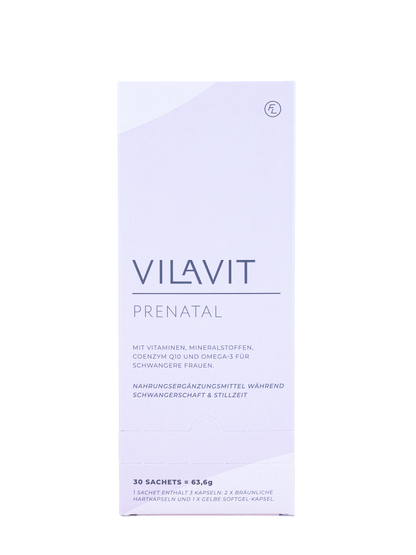
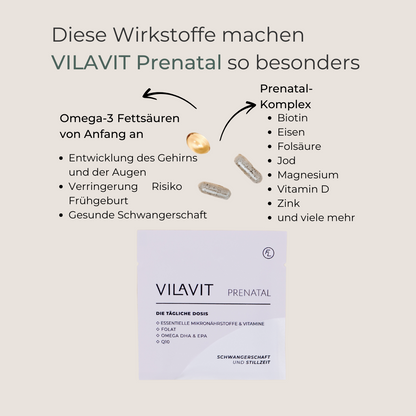
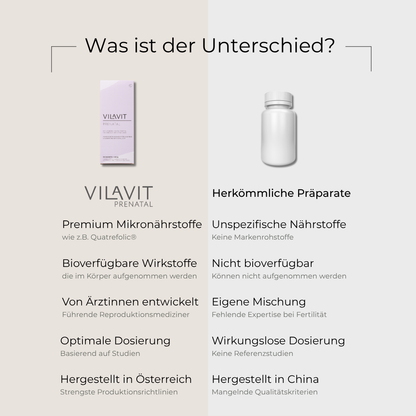
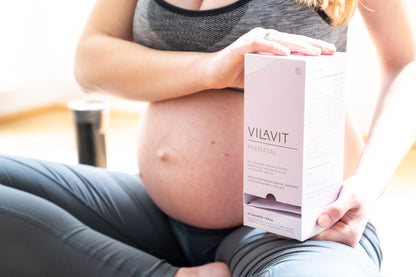
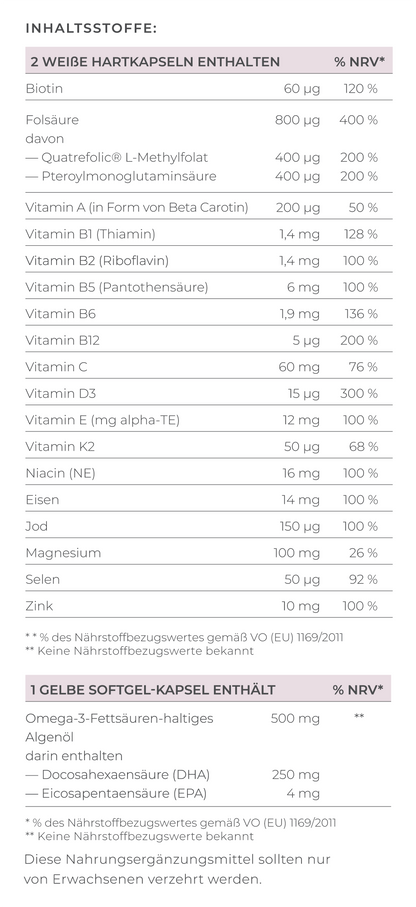
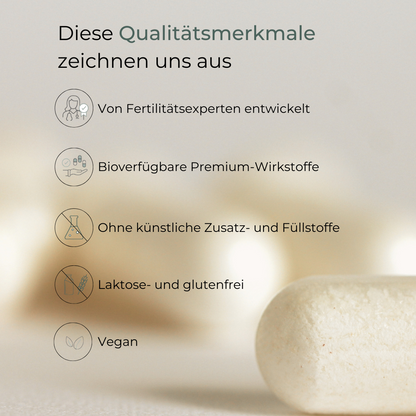
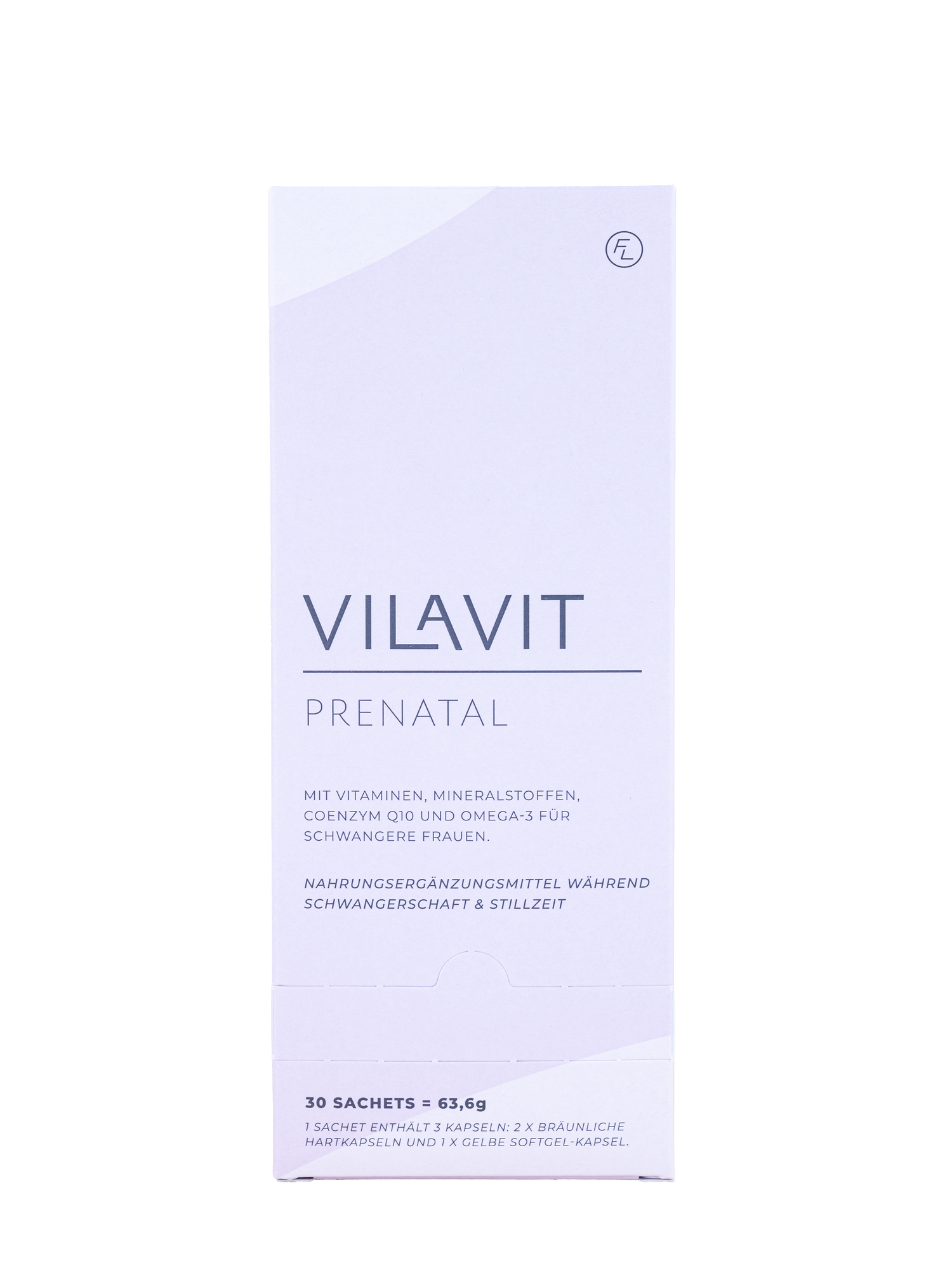
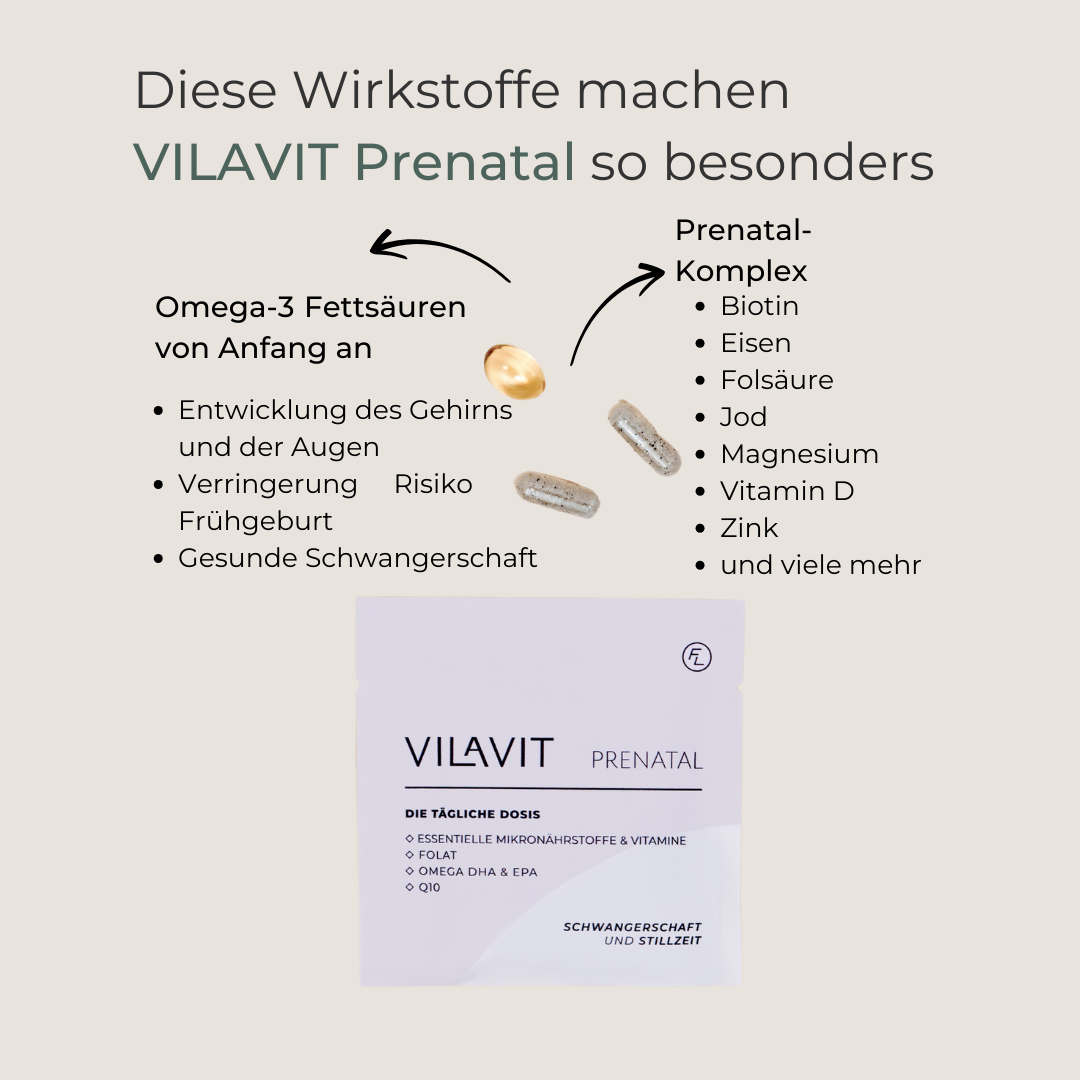
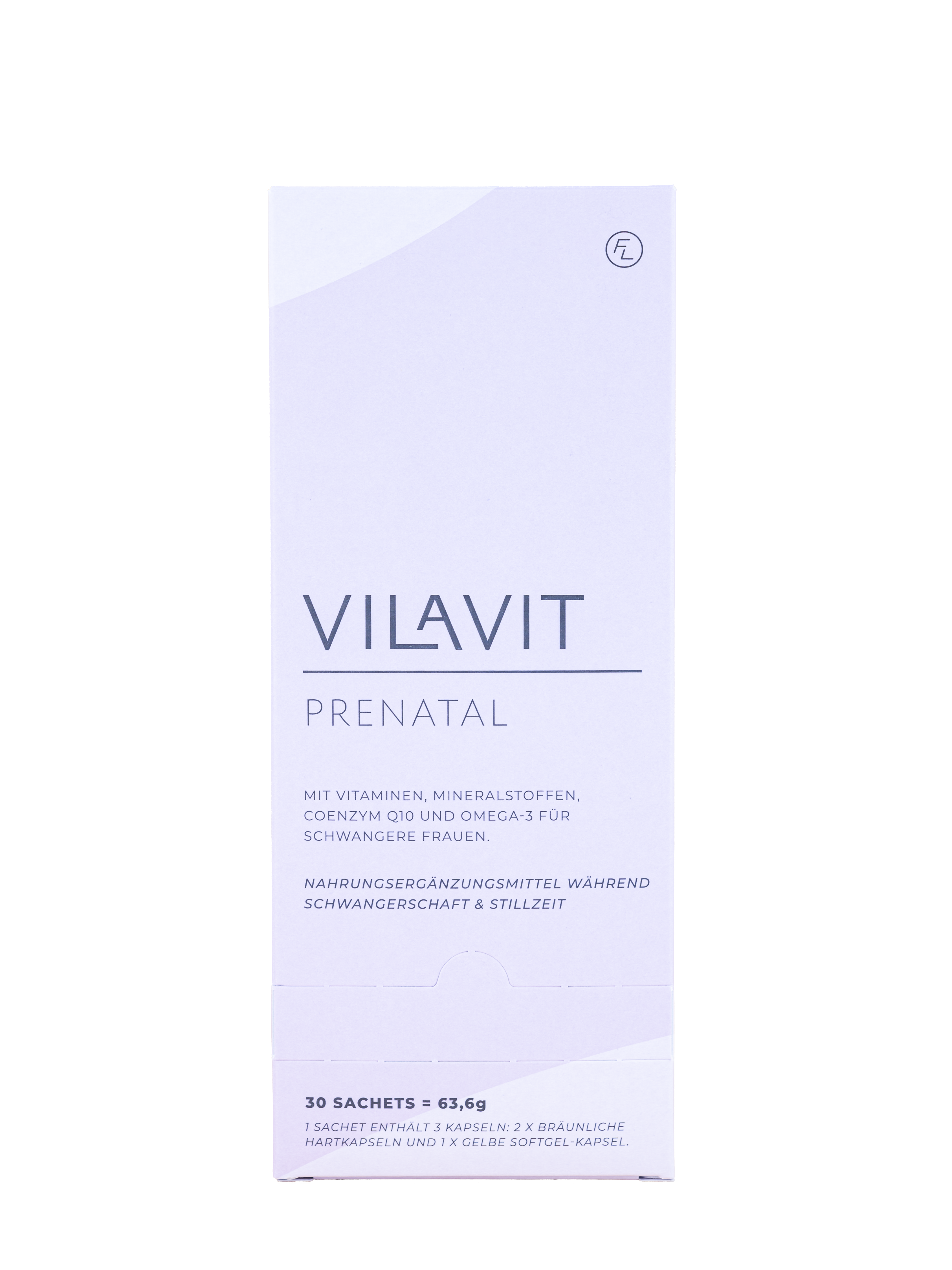
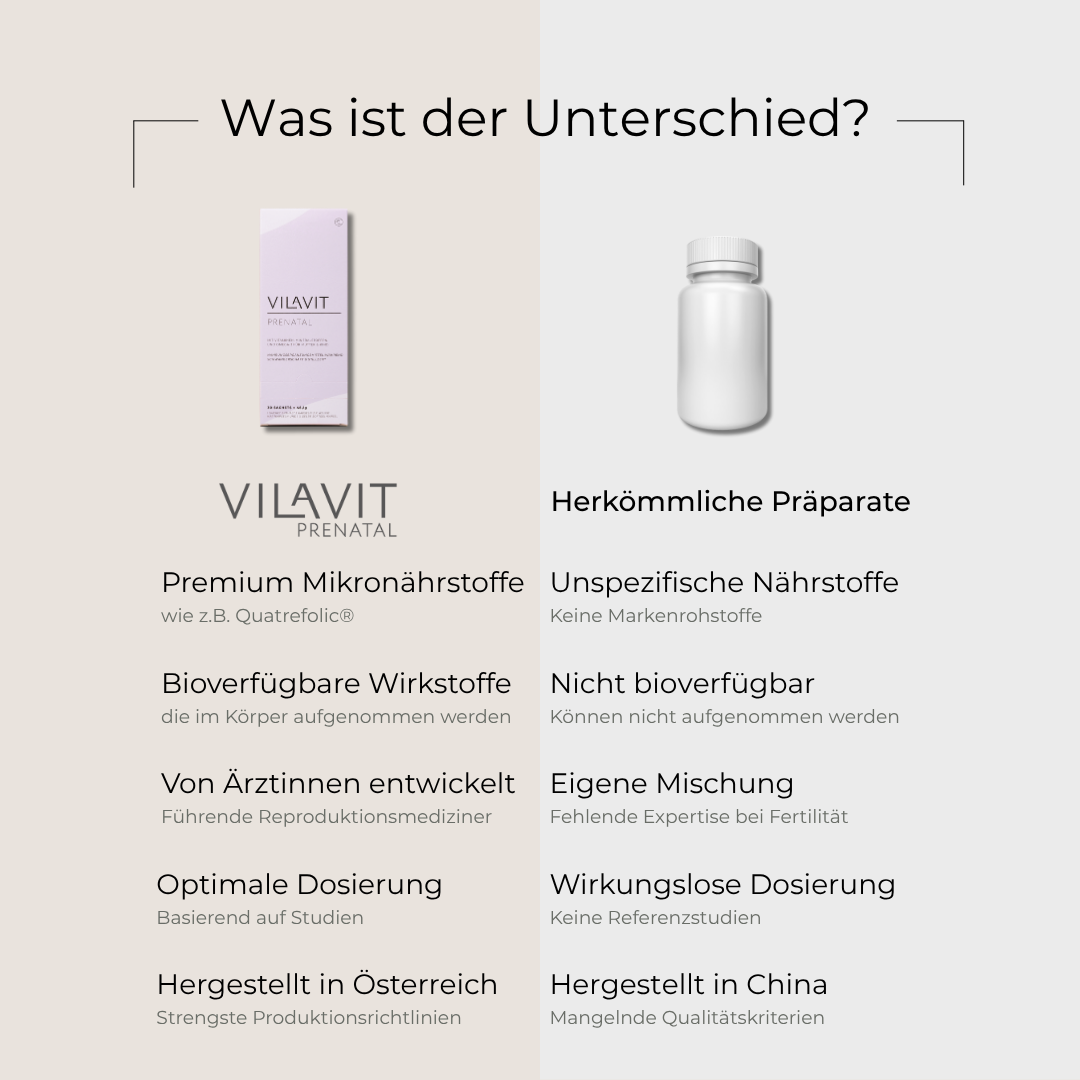
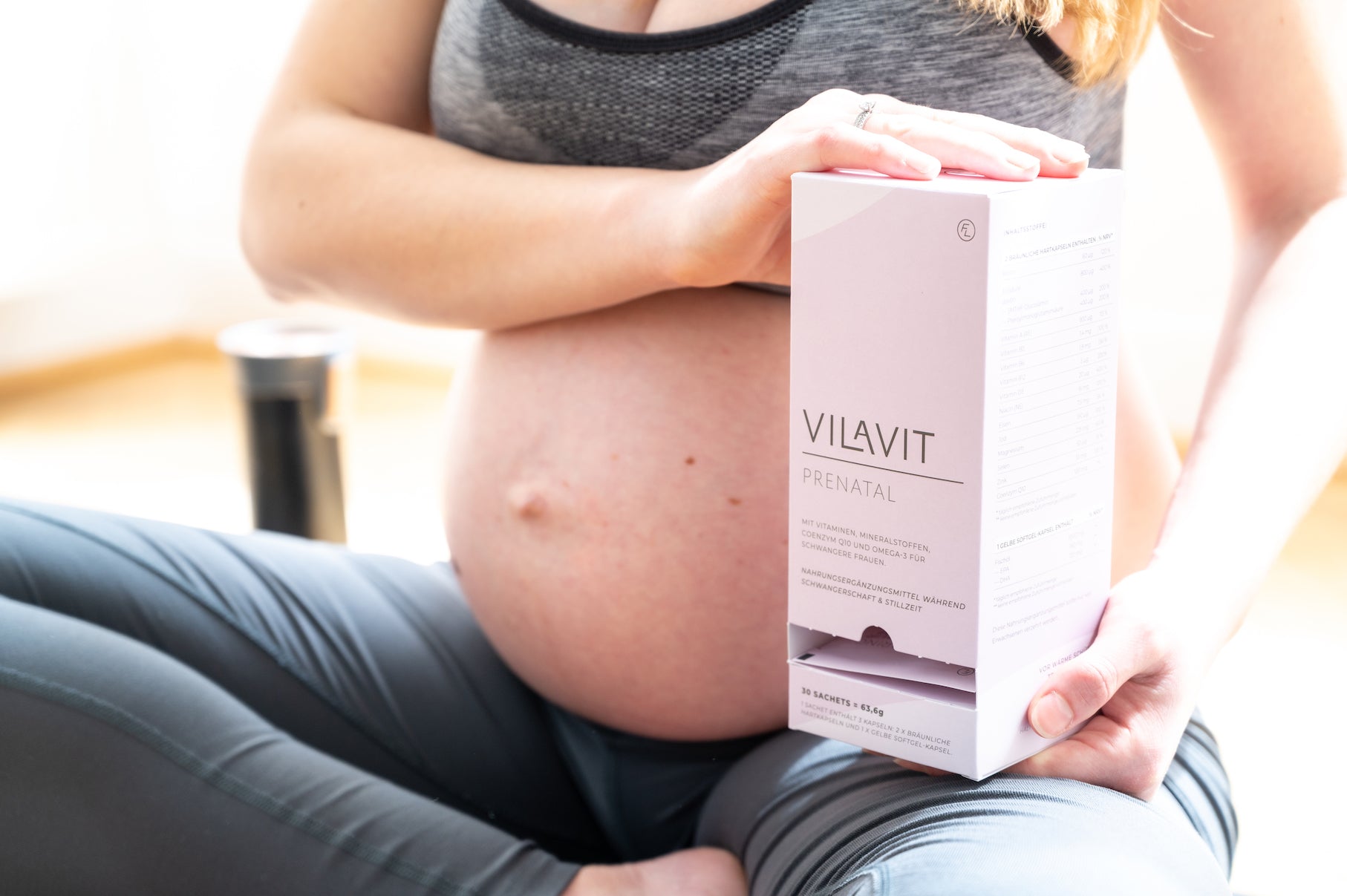
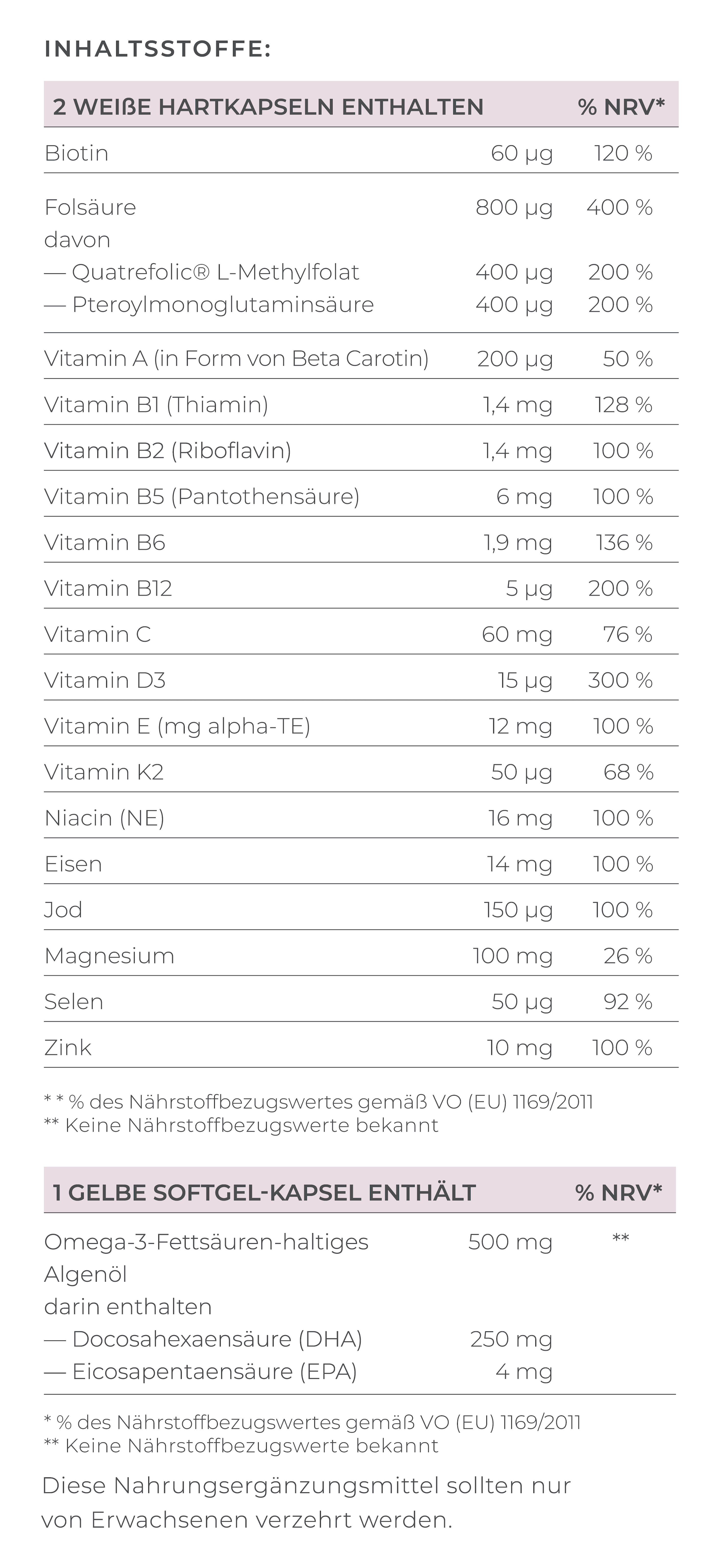
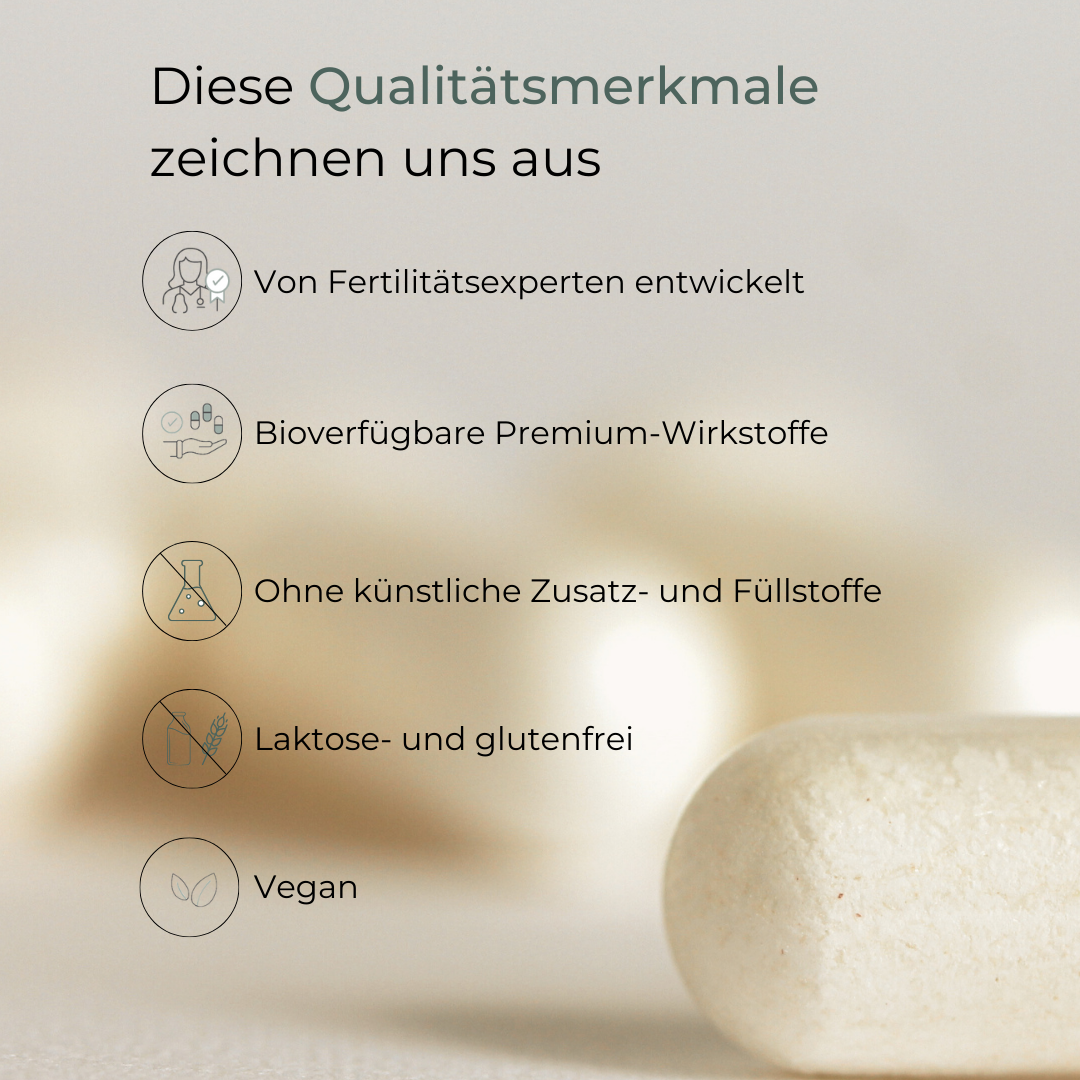
To ensure your baby receives the best possible nutrition while also avoiding unknown risks, you should be more mindful of your diet in the coming months and avoid certain foods or at least limit your intake of them. Of course, alcohol, nicotine, and other (illegal) substances are strictly off-limits during pregnancy. Raw meat, fish, and raw milk products should also be avoided due to the risk of infection with listeria or toxoplasmosis. Caffeine intake should also be reduced, though it’s not absolutely necessary to cut it out completely. Certain nutrients—such as folic acid, iodine, iron, omega-3 fatty acids, and vitamin D—are now essential for the healthy development of your little miracle. Experts strongly recommend taking supplements to ensure you’re getting these essential nutrients to prevent potential developmental problems. If you’re looking for a supplement that contains all the important nutrients in one product, we recommend VILAVIT Prenatal. You can find more information about nutrition during pregnancy here.
Exercise
Whether and how much exercise expectant mothers should or are allowed to do is a much-debated question. However, scientific studies clearly show that exercise during pregnancy has extremely positive effects—both for you and your unborn baby. Of course, extreme caution is advised in cases of high-risk pregnancies or extreme sports. Sports involving a high risk of falls, intense physical contact, or high impact should also be avoided. You can find recommendations on exercise during pregnancy based on scientific studies here.
Sex During Pregnancy
Generally speaking, from a medical standpoint, there’s usually no reason to avoid intimacy during pregnancy. Of course, there are exceptions here as well, which you should discuss with your doctor. Due to hormonal fluctuations, it’s completely normal for a pregnant woman’s sexual desire to change over the course of her pregnancy. But expectant fathers are also affected by their partner’s physical changes. As always when it comes to intimacy and sexuality, the most important thing is that it feels right and comfortable for you—regardless of how much—or how little—intimacy there may be during this time.
Medications and Chronic Conditions
If you’re taking medication long-term, it’s advisable to discuss the best course of action with your doctor before you become pregnant. So, if you haven’t done this yet, please do it right away—some medications can, unfortunately, cause serious side effects for your baby. Of course, this also applies to medications you take as needed—from herbal supplements to pain relievers, everything should be checked to ensure it is safe to take during pregnancy. If you have a chronic condition, you may also need more frequent checkups or regular doctor’s appointments. Be sure to consult with medical professionals about this as well. We’ve put together a general overview for pregnant women with diabetes here, and you can find information for pregnant women with asthma, eczema, or allergies here. However, this information is by no means a substitute for medical advice and is intended only as additional guidance for you!
Organizational Preparations
Gynecologist Appointment
During the first trimester, you should also have your first checkup with a gynecologist. During this visit, the pregnancy can be confirmed via ultrasound, your blood type and Rh factor can be determined, and the general health of both mom and baby can be assessed.
Finding a Midwife
Unfortunately, there are very few independent midwives, so you should start your search as early as possible. Independent midwives can support you during pregnancy, childbirth, and the postpartum period. They are important companions during pregnancy and true experts. Depending on your insurance coverage or preferred care, a midwife will be there for you and your baby in the way that best suits your needs.
A Personal Message from Claudia
Dear expectant mom, dear expectant dad,
My husband and I will probably always remember the first few weeks of this magical time of pregnancy! The anticipation of our little miracle was simply overwhelming and filled us with a love and excitement we’d never experienced before. The feeling of our child growing inside my belly is indescribable and incomparable. I hope you get to experience an equally wonderful time and that the joy always outweighs any tiredness, nausea, or other discomforts. The most extraordinary time of your lives has begun—enjoy every moment!
With love,
Claudia
Frequently Asked Questions on the Topic
How big is my baby in the first trimester, and what happens during this time?
During the first 12 weeks (organogenesis), the basic structures of all vital organs, the brain, and the limbs develop. During this time, your baby grows from the size of a poppy seed (about 1 mm in the 4th week of pregnancy) to the size of a raspberry (around the 8th week of pregnancy, with the first visible heartbeat on an ultrasound) and finally to the size of a lime (about 15–20 g in the 12th week of pregnancy).
Why is pregnancy calculated to begin on the first day of your last period?
Since the exact time of conception is usually difficult to determine, the first day of your last menstrual period serves as a reliable starting point for calculating the weeks of pregnancy (WOP).
What helps relieve typical pregnancy symptoms like nausea and fatigue?
These symptoms are primarily caused by the rapid rise in the hormones hCG and progesterone. They usually improve significantly after the first trimester. Rest, small, regular meals, and a balanced diet can help alleviate the symptoms.
What foods should I avoid during the first trimester?
To protect against infections such as listeriosis or toxoplasmosis, you should avoid raw milk products, raw meat, and raw fish. Alcohol, nicotine, and other substances are off-limits. Caffeine intake should be reduced.
Which nutrients are especially important now?
In the first few weeks, nutrients such as folic acid, iodine, iron, omega-3 fatty acids, and vitamin D are essential for the baby’s healthy development. Folic acid, for example, helps prevent neural tube defects. It is recommended that you take appropriate dietary supplements to ensure your baby receives sufficient nutrients.
Are exercise and sex allowed during the first trimester?
Yes, in an uncomplicated pregnancy, there’s no reason to avoid moderate exercise or intimacy. Exercise has many positive effects on both mother and child, as long as sports with a high risk of falls or injury are avoided. If you have any questions or are experiencing a high-risk pregnancy, you should consult your gynecologist.
What organizational steps should you take during the first trimester?
You should schedule your first prenatal appointment with your OB/GYN (usually starting at the 8th week of pregnancy to confirm the heartbeat) and start looking for a private midwife as early as possible.
References
- Austria's Public Health Portal. (n.d.). Pregnancy. Gesundheit.gv.at. Retrieved July 29, 2026, from https://www.gesundheit.gv.at/leben/eltern/schwangerschaft.html
- Federal Center for Health Education. (n.d.). Familienplanung.de: Topic Overview. Familienplanung.de. Retrieved July 29, 2026, from https://www.familienplanung.de/uebersicht/