


- The number of eggs required for a genetically healthy (euploid) blastocyst increases significantly after age 40 (from approximately 8 to 23 eggs).
- Statistically, the highest chance of a live birth (approximately 35%) occurs when 16 to 25 eggs are retrieved.
- More than 20–25 eggs do little to further increase success rates but do raise the risk of dangerous ovarian hyperstimulation syndrome (OHSS).
- Modern methods (e.g., PRP) and a healthy lifestyle (diet, sleep) can also positively influence egg quality.
IVF fertility treatments often seem very technical, complicated, and confusing. Doubts often arise, especially after the first failed cycle. But what are realistic numbers, and is it normal to need more than one IVF cycle to achieve a successful pregnancy? Furthermore, is it possible to have not only too few but also too many eggs per cycle?
Quality Over Quantity: Euploid Blastocysts and the Number of Eggs
The required number of eggs can be determined based on various “success criteria” and varies depending on these factors, among others. In 2024, scientists investigated how many eggs are needed to produce a euploid blastocyst. A euploid blastocyst is an egg that has fused with a sperm and exhibits a normal set of chromosomes on day five or six. These are identified through preimplantation genetic testing (PGT). Normally, euploid blastocysts are associated with a relatively good chance of a successful pregnancy, but unfortunately, there is no guarantee.
In any case, the researchers found that women under 35 require about five eggs to produce a euploid blastocyst. As women age, this number increases. A notable jump occurs between the ages of 39 and 40: the number of eggs required rises from eight to 12. After that, the increase becomes even more extreme, and women aged 42 already require around 23 eggs before a euploid blastocyst forms. Unfortunately, according to experts, this decline at the age of 44 is due to insufficient data and not to a medical miracle (Rodríguez-Varela, C., et al., 2024).

Statistics of Hope: How Many Eggs Are Needed for a Successful Live Birth?
Unlike the study discussed earlier, other studies have examined the number of eggs required to achieve a successful live birth. This eliminates the biggest source of uncertainty in the first study.
In 2023, experts determined that the best chance of a successful live birth occurs when 16 to 25 eggs are retrieved. In this case, the chance is around 35%! The odds are similarly good—with about a 33% probability of having your dream baby—when 6 to 15 eggs are retrieved. Interestingly, neither extremely high nor extremely low egg counts (more than 26 or fewer than six eggs) are conducive to a successful live birth, with the probability in each case being around 18% (Bahadur, G., et al., 2023).
Another study found that the chances of a successful pregnancy and birth increase up to a number of 11 eggs and then plateau. At this point, the probability of a live birth is around 30% for a 34-year-old woman. If cycles in which embryos are frozen are also taken into account, the chances increase up to around 20 retrieved eggs and then reach a success rate of approximately 45%. However, the risk of ovarian hyperstimulation also rises sharply in these cases, which is why this approach is not recommended. The risk of thromboembolism—that is, a blockage of a blood vessel caused by a blood clot—also increases; this, of course, must be avoided at all costs to ensure the expectant mother’s safety. You can read more about ovarian hyperstimulation syndrome (OHSS) here (Magnusson, Å., et al., 2018).
How many embryo transfers are needed for success?
Of course, it is also possible to determine the average number of embryo transfers required to achieve a successful live birth. This is usually closely related to the number of eggs needed, though there are also cases where this is not the case.
For example, some researchers investigated the live birth rate in relation to the number of transferred embryos required for success. They concluded that when one to three embryos were transferred, the live birth rate was around 35%. When four to six embryo transfers were required, the rate dropped slightly but remained relatively high at around 33%. In the group requiring seven to nine embryo transfers, the live birth rate actually rose to just under 38%. However, for more than 10 transfers, the live birth rate unfortunately drops to only around 20%. One reason for this could be the extremely high miscarriage rate of around 40% (Zhang, M., et al., 2019).

Another study found that as women age, more embryo transfers are required to achieve a successful live birth. For example, women under 35 need an average of about five transfers before they can hold their little miracle in their arms, while women between 38 and 40 require around 15 transfers. Unfortunately, in this study, women over 40 never achieved a live birth rate of more than 40%—regardless of the number of transfers performed (Garrido, N., et al., 2011).
However, there is hope thanks to another study from 2021, which concluded that the best live birth rates are achieved after approximately four embryo transfers or nine retrieved eggs in mild IVF when fresh eggs are used. If, on the other hand, frozen eggs are used, an average of nine transfers and 12 eggs is most advantageous (Datta, A. K., et al., 2021).
Take Action: Improve Your Chances of a Successful Pregnancy
We know full well that these statements and results can feel discouraging at first. There are currently a rapidly growing number of exciting developments in the field of reproductive medicine, such as PRP therapies, mitochondrial donation, and assisted hatching. Many of these methods have been little or not at all represented or utilized in the studies presented. In addition, lifestyle and its impact on fertility have become increasingly important in recent years. From holistic approaches like osteopathy to proper nutrition—including the effects of energy drinks—to sleep and dental health. These factors shouldn’t be overlooked either, and the best part is: they’re at least partly within your control, and you can actively improve your fertility!
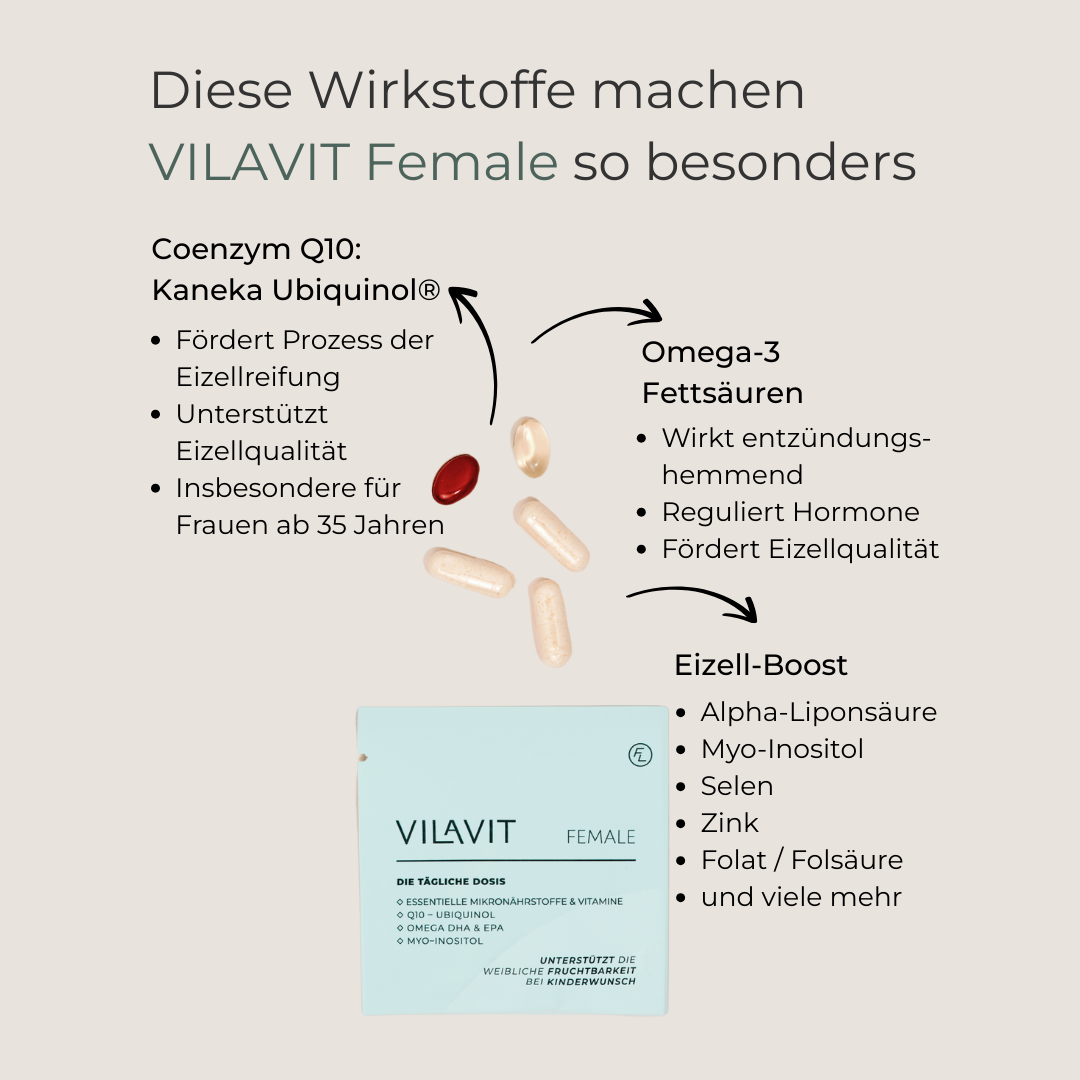
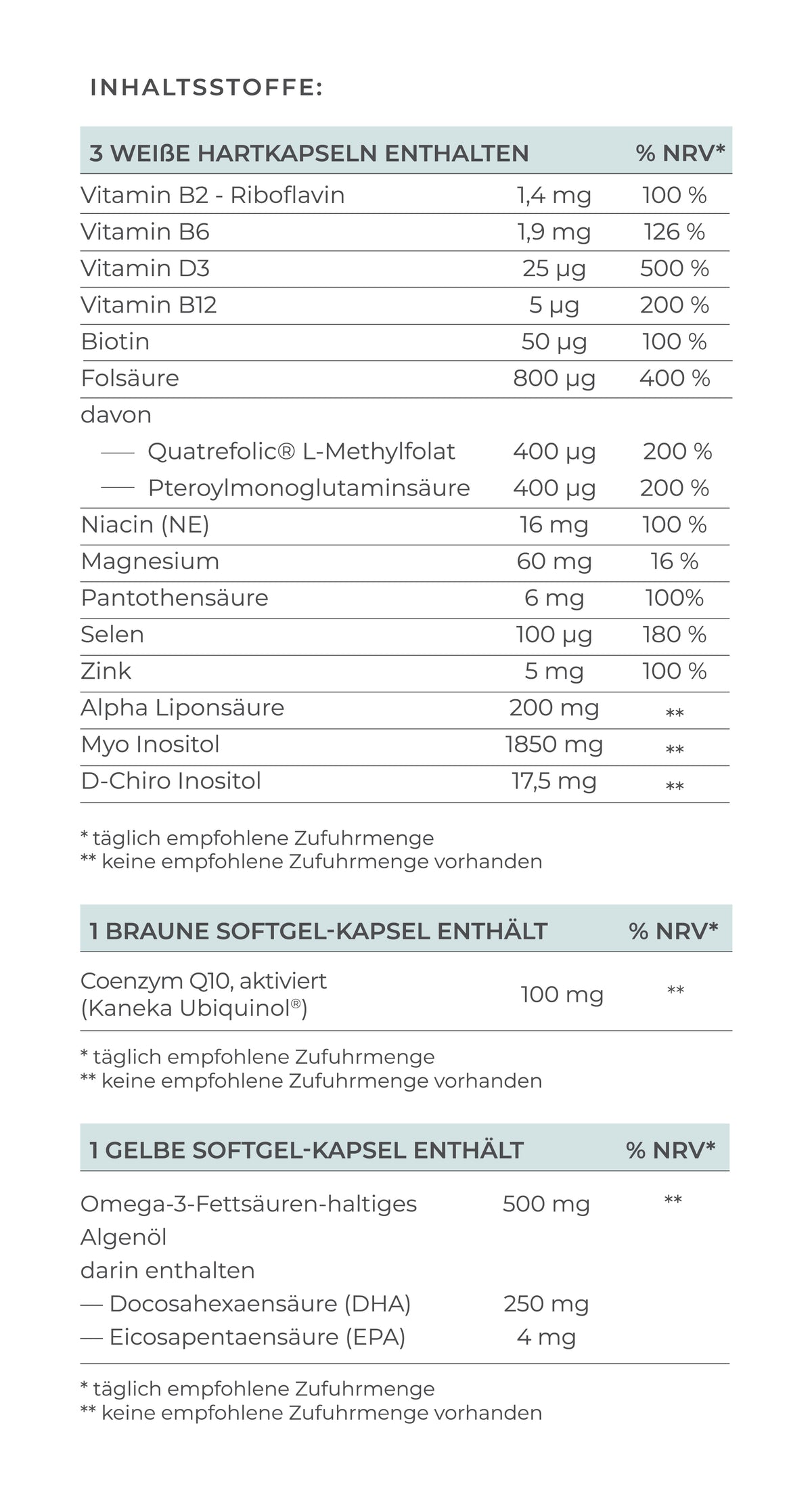
To improve the quality of your eggs or sperm (or those of your partner), you can also turn to dietary supplements designed for people on their fertility journey. Whether you’ve already undergone one or more IVF cycles or are still “trying”—supplements like VILAVIT Female and Male have been specifically developed for you and your fertility.
In conclusion, however, we can only say once again that you shouldn’t give up hope, because even if the situation sometimes doesn’t seem particularly encouraging, miracles are always possible. And true to our motto, “Bring your dream to life”, we’ll continue to keep our fingers crossed for you and are, of course, always available to answer any questions you may have.
Frequently Asked Questions: How many eggs needed in order to get pregnant
How many eggs are “normal” during an IVF egg retrieval?
The goal is usually to retrieve between 8 and 15 eggs. This offers a good balance between a high chance of success and a low risk of hyperstimulation.
Why is a woman’s age so crucial for the number of eggs?
As a woman ages, not only does her egg reserve decrease, but more importantly, the genetic quality of her eggs declines. Therefore, more eggs are needed to statistically ensure that at least one has a normal set of chromosomes.
Do more eggs automatically mean a higher chance of success?
Only up to a certain point. Studies show that the chances plateau at around 15–20 eggs. An extremely high number (over 26) can actually reduce quality and pose health risks for the woman.
What can I do if no egg was fertilized the first time?
A failed attempt is often an important source of information for doctors to adjust the protocol. In addition, lifestyle changes and specific dietary supplements can help improve egg quality for the next cycle.
References
- Rodríguez-Varela, C., Mascarós, J. M., Labarta, E., Silla, N., & Bosch, E. (2024). Minimum number of mature oocytes needed to obtain at least one euploid blastocyst according to female age in in vitro fertilization treatment cycles. Fertility and sterility, 122(4), 658–666. https://doi.org/10.1016/j.fertnstert.2024.06.002
- Bahadur, G., Homburg, R., Jayaprakasan, K., Raperport, C. J., Huirne, J. A. F., Acharya, S., Racich, P., Ahmed, A., Gudi, A., Govind, A., & Jauniaux, E. (2023). Correlation of IVF outcomes and number of oocytes retrieved: a UK retrospective longitudinal observational study of 172 341 non-donor cycles. BMJ open, 13(1), e064711. https://doi.org/10.1136/bmjopen-2022-064711
- Magnusson, Å., Källen, K., Thurin-Kjellberg, A., & Bergh, C. (2018). The number of oocytes retrieved during IVF: a balance between efficacy and safety. Human reproduction (Oxford, England), 33(1), 58–64. https://doi.org/10.1093/humrep/dex334
- Zhang, M., Bu, T., Tian, H., Li, X., Wang, D., Wan, X., Wang, Q., Mao, X., & La, X. (2019). Use of Cumulative Live Birth Rate per Total Number of Embryos to Calculate the Success of IVF in Consecutive IVF Cycles in Women Aged ≥35 Years. BioMed research international, 2019, 6159793. https://doi.org/10.1155/2019/6159793
- Garrido, N., Bellver, J., Remohí, J., Simón, C., & Pellicer, A. (2011). Cumulative live-birth rates per total number of embryos needed to reach newborn in consecutive in vitro fertilization (IVF) cycles: a new approach to measuring the likelihood of IVF success. Fertility and sterility, 96(1), 40–46. https://doi.org/10.1016/j.fertnstert.2011.05.008
- Datta, A. K., Campbell, S., Felix, N., Singh, J. S. H., & Nargund, G. (2021). Oocyte or embryo number needed to optimize live birth and cumulative live birth rates in mild stimulation IVF cycles. Reproductive biomedicine online, 43(2), 223–232. https://doi.org/10.1016/j.rbmo.2021.02.010